
Belt conveyors
Belt conveyors are widely used for moving bulk materials and unit loads in production and logistics processes. They provide continuous conveying over a wide range of capacities and lengths.
Each belt conveyor is designed to order and adapted to the material, the required capacity, the length and the operating conditions.
This means belt conveyors can be integrated into existing lines as well as new production systems, without disrupting the process. The design is matched to the available space and the technical requirements of the site. We design and build belt conveyors for plants and warehouses – as a stand-alone machine or as part of a process line.
Where belt conveyors are used
Belt conveyors are used to convey many different materials in production, warehouse and logistics systems.
Depending on the process, they can run continuously, indoors or outdoors.
Types of belt conveyors
Belt conveyors are built in different designs, depending on the conveying method and the layout of the line.
Straight belt conveyor
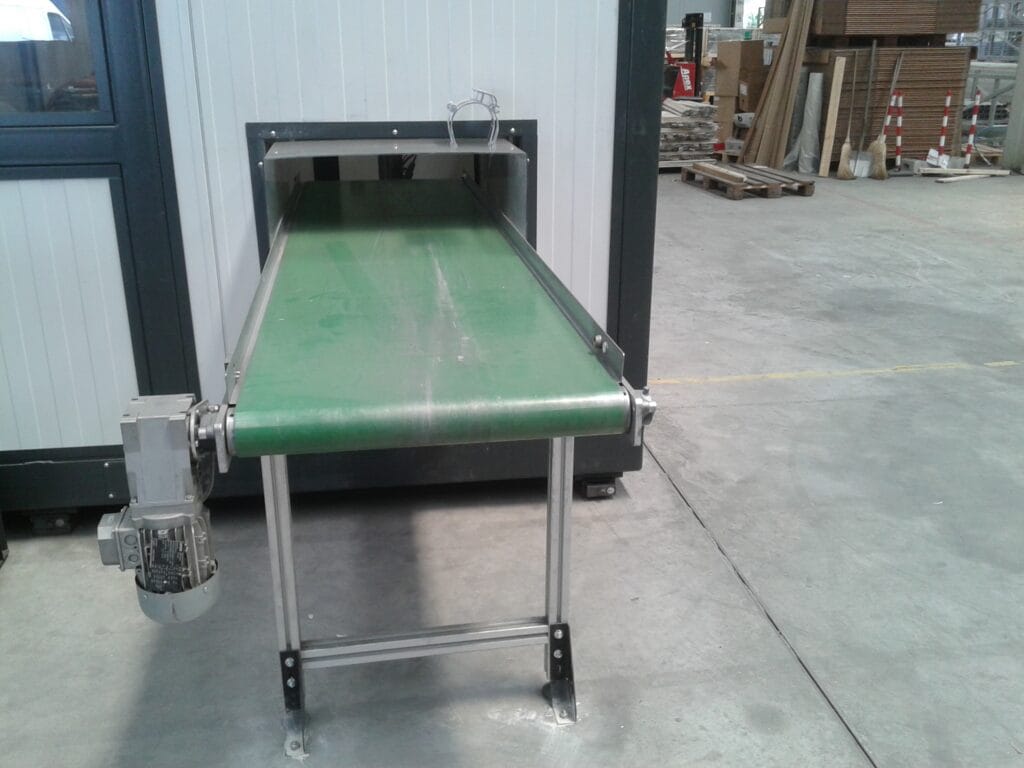
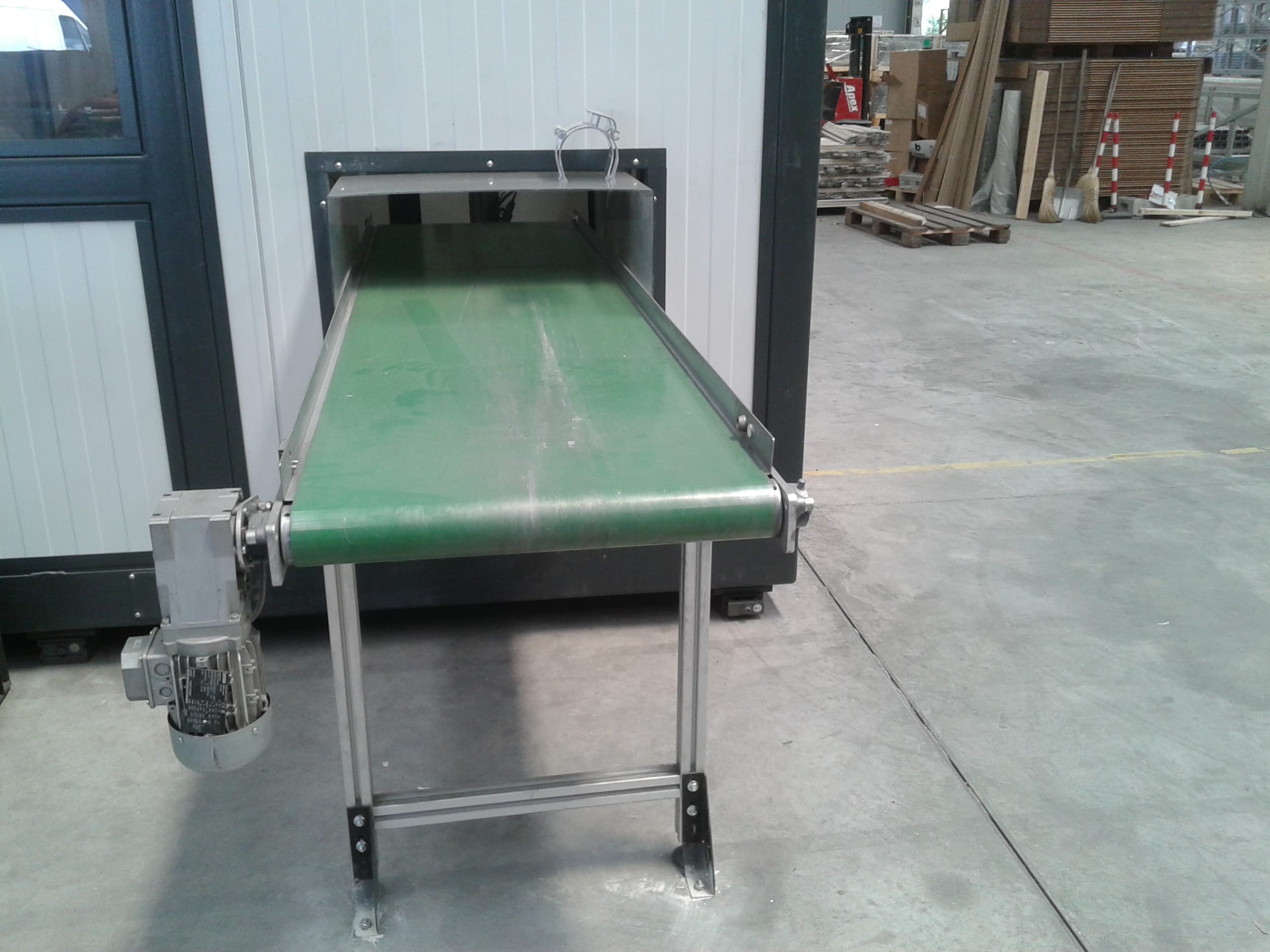
For horizontal conveying of bulk materials, packaged goods and cartons, including in the food industry. PVC, rubber or chevron belt, width 200 to 900 mm, length up to 50 m.
Rubber belt conveyor
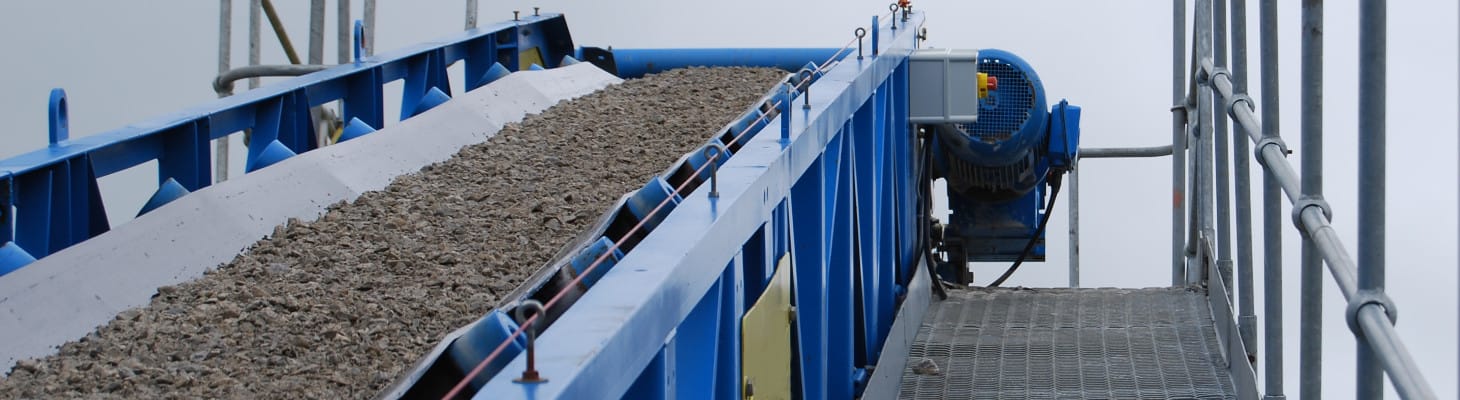
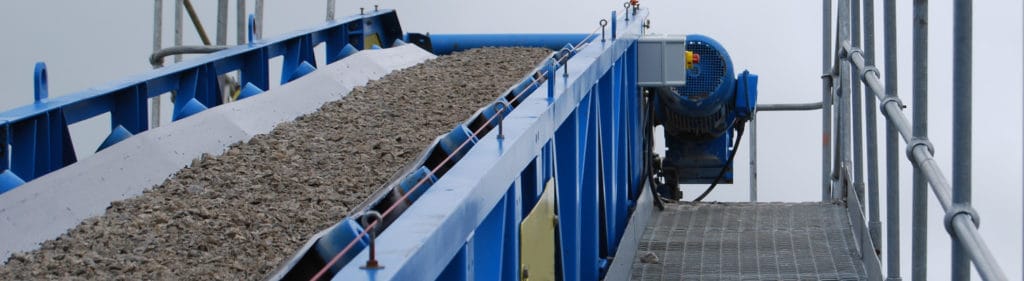
For heavy, coarse and abrasive materials – sand, gravel, crushed stone, fertilisers. Rubber-textile belt, width 100 to 1100 mm, horizontal or inclined up to 75°, open or enclosed design.
Which belt conveyor for which job
| Material or task | Suitable type |
|---|---|
| Packaged goods, cartons, food products | Straight belt conveyor |
| Products between the stages of a production line | Straight belt conveyor |
| Granules, grain, wood chips | Straight belt conveyor, or a rubber belt conveyor for high capacity or long distances |
| Sand, gravel, stones, crushed stone | Rubber belt conveyor |
| Fertilisers, minerals, powders – when dust must be contained | Rubber belt conveyor, enclosed design |
| Conveying at a steeper incline | Rubber belt conveyor with chevron belt or a straight conveyor with cleats on the belt |
Built to order
Our belt conveyors are not standard series products. Each project is matched to the material, the capacity and the operating conditions to give a reliable and stable process.
Everything is made in our own workshop in Bulgaria, inside the EU, which gives us direct control over quality, lead times and workmanship. The design and materials are selected for the specific application and process.
Each conveyor is built to an individual design, with a choice of width, length, belt type and additional components.
How to choose the right belt conveyor
When choosing a belt conveyor, we look at the main parameters that determine the design and the operation of the equipment.
The main factors are:
These parameters determine the design, the belt type and the drive. That is why we do not offer one universal belt conveyor – each one is adapted to the application.
Main components and configurations
Every belt conveyor consists of the conveyor belt, pulleys, idlers, the drive and the supporting frame. Depending on the application, we add side walls, covers, belt cleaners and electrical controls.
Completed belt conveyor projects
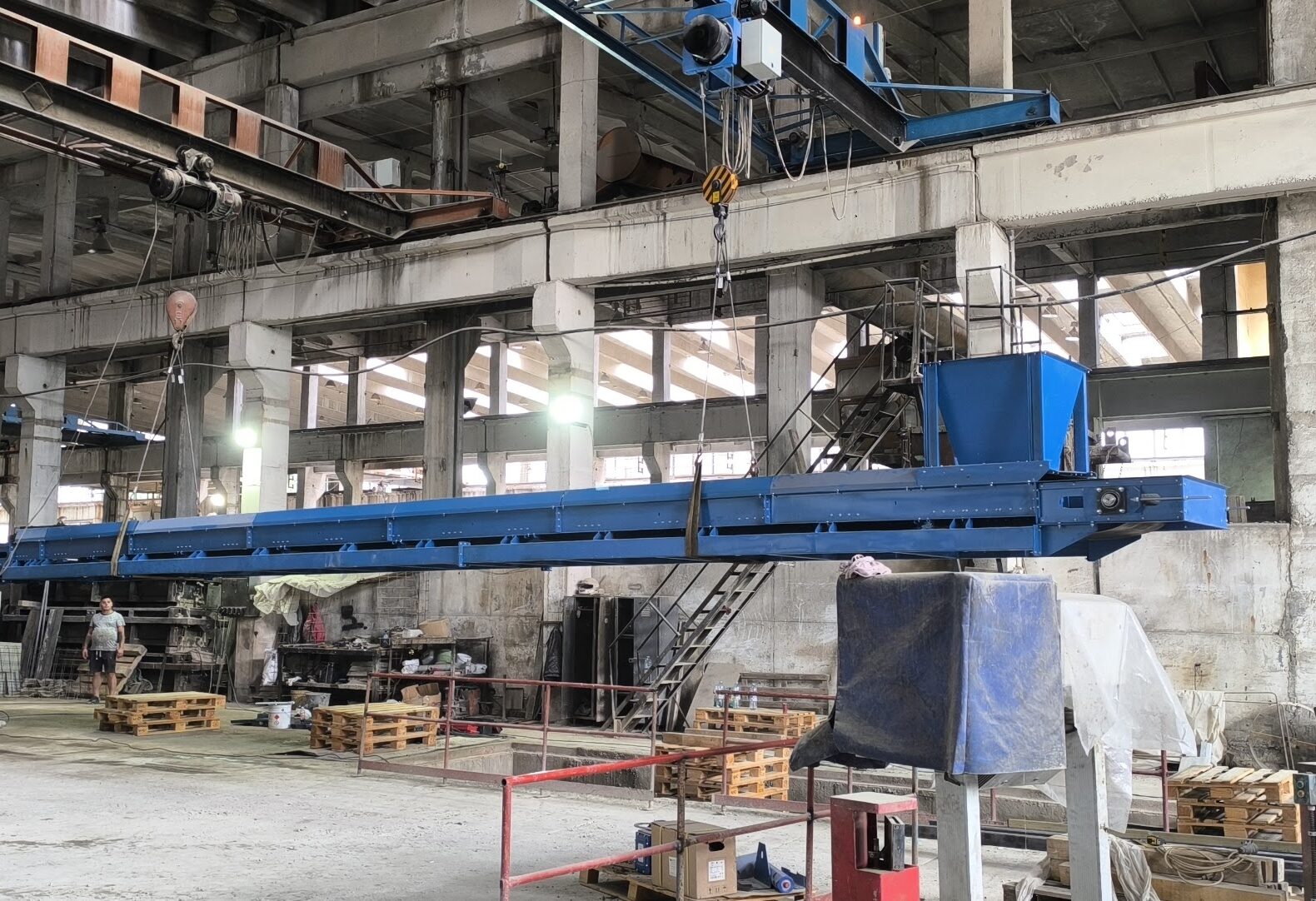
Belt conveyor with receiving hopper for concrete
Long rubber belt conveyor with an 800 mm belt and a receiving hopper for a precast concrete plant – sectional frame, installed in a working production hall.
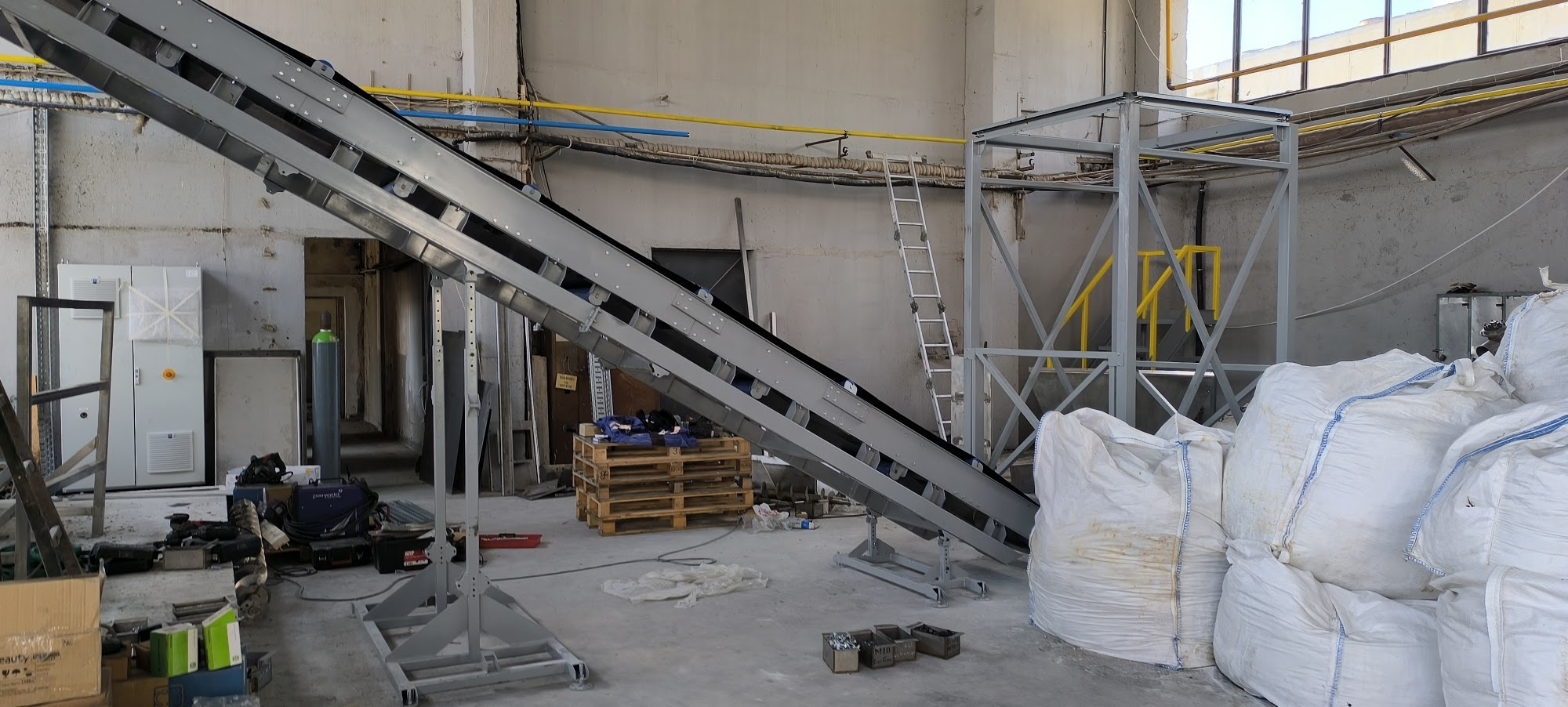
Process line for bulk granulate
Inclined belt conveyor with a 500 mm rubber belt and cleats, part of a production line with a receiving hopper and a twin dosing screw.
Belt conveyors – questions and answers
What does a belt conveyor cost, and do you have one in stock?
We do not keep belt conveyors in stock. Each one is built to order – for the material, capacity, length, incline and installation site, and the price depends on these. Once we have your site data, we send an offer with the price and the lead time. As a guide, a belt conveyor takes about 20 working days to build, plus transport.
How is the belt width chosen?
The width depends on the capacity, the type and particle size of the material and the belt speed. We calculate it for your application when we prepare the offer.
Is a belt conveyor suitable for moist, sticky or abrasive material?
Yes. For moist and abrasive materials – clay, sand, crushed stone – we use a rubber belt conveyor with a rubber-textile belt that withstands impact at loading and wear. For sticky material we add a belt cleaner.
Can the belt be replaced on an existing conveyor?
Yes. The belt can be replaced on the existing structure with a new one of the same or a different type – for example chevron, rubber-textile or PVC – depending on the material and the operating conditions.
What power supply is needed? Can it run on single-phase (230 V)?
Belt conveyors are built for single-phase (230 V) or three-phase (400 V) supply, depending on what is available on site. The drive power depends on the capacity, the length and the incline.
Do you build conveyors with a horizontal and an inclined section?
Yes. The conveyor can have a horizontal section where the material is fed and an inclined section that lifts it to the required height. For this layout we use a belt with cleats and side walls so that the material does not roll back or spill. The length of each section, the incline angle and the working height are designed for your site.
Is there a belt for high temperatures?
Yes. For hot materials we use heat-resistant belts. The belt type is chosen according to the operating temperature of the material.
Do you deliver and install? What is the warranty?
We deliver across Europe. The price includes packaging, CE marking and documentation; transport and, where needed, customs clearance are quoted separately on request. We do not install outside Bulgaria – the conveyor arrives ready for installation with drawings and instructions. The warranty is 12 months.
Contact
If you need a belt conveyor for a specific application, contact us to discuss your requirements and the possible solutions.