
Bucket elevators
Robust and reliable vertical conveyors for bulk and granular materials.
Bucket elevators are designed and built to order – height, capacity, material, bucket type and construction – so that they integrate easily into existing systems and run reliably in continuous operation.
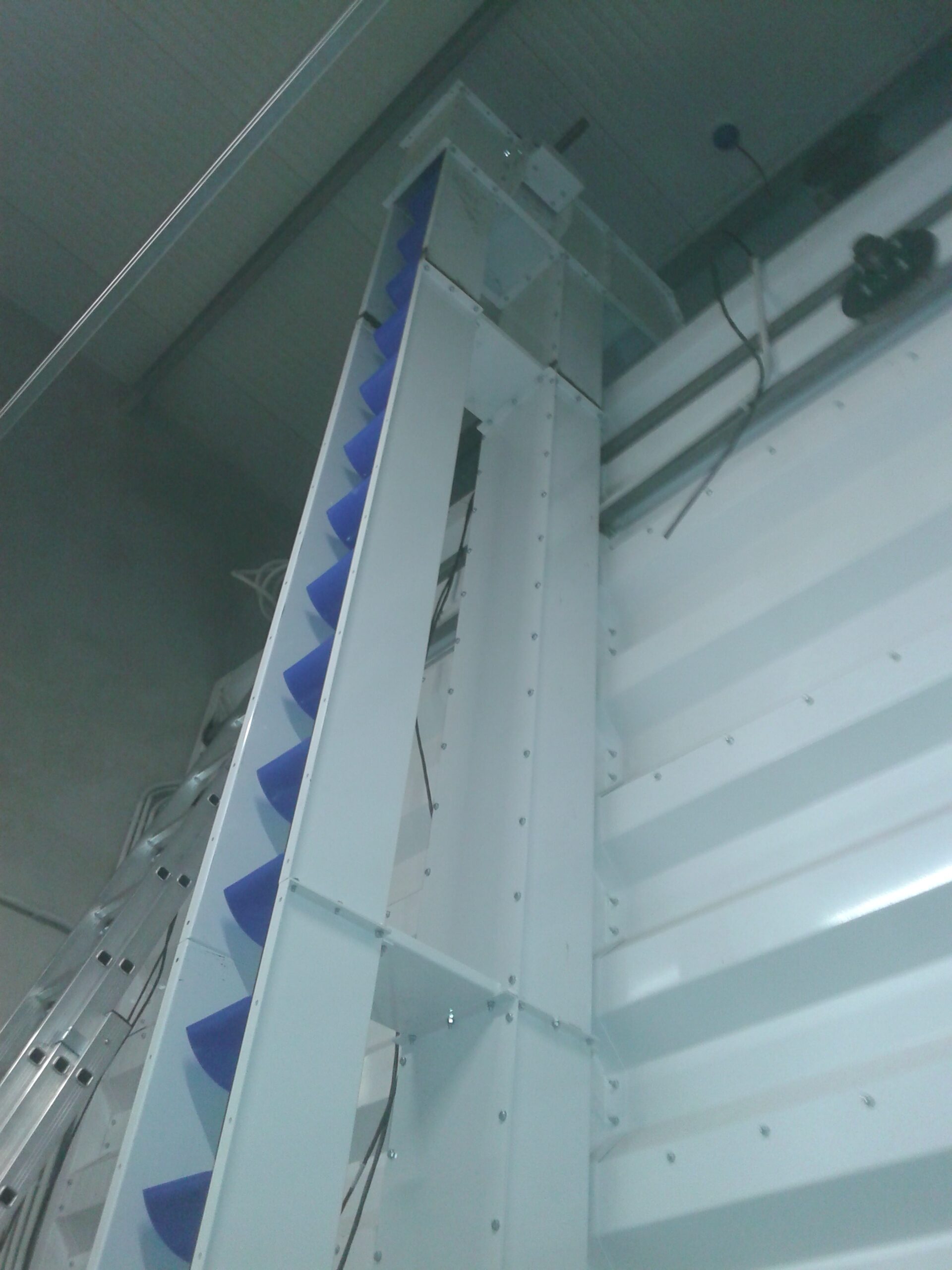
With every bucket elevator, Silozni Sistemi offers
Bucket elevators are built in up to 40 working days, plus transport.
Packed, CE marked and documented; transport and customs clearance arranged on request.
12-month warranty on reliable operation and workmanship.
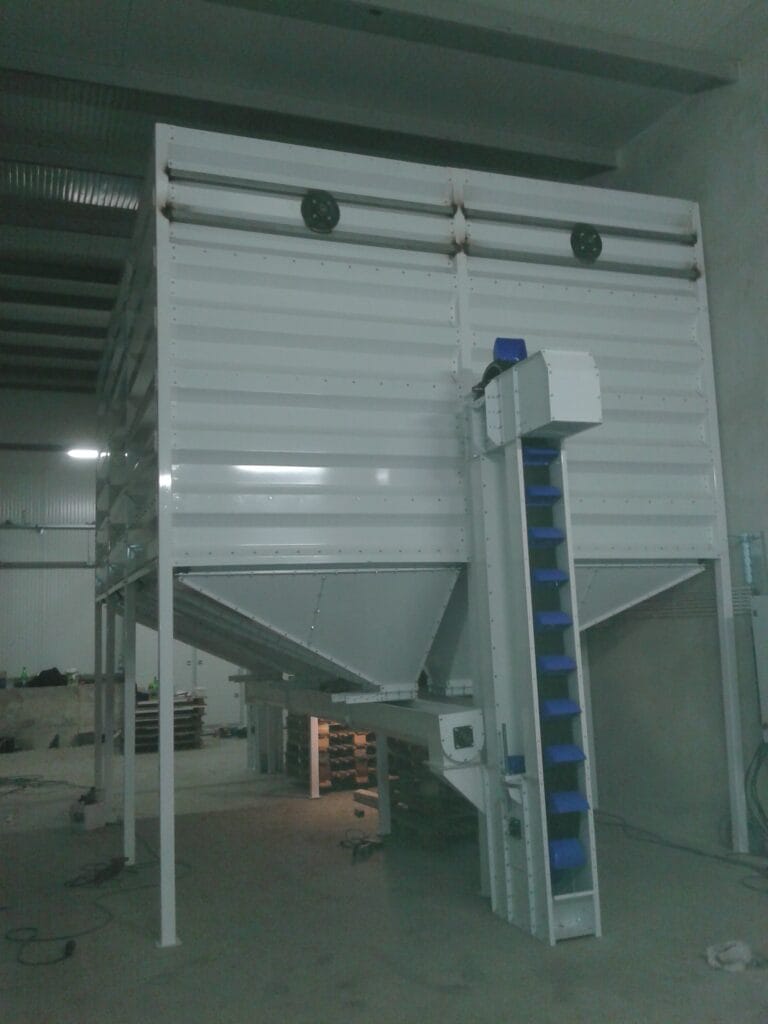
Bucket elevator applications
Bucket elevators are widely used in industrial systems for vertical conveying of bulk materials, especially where controlled speed, a large lifting height and high capacity are required.
Bucket elevators are used in:
Thanks to their flexibility and reliability, bucket elevators are a preferred choice in many industrial processes, giving efficient and safe material handling.
Bucket elevator components
The main components of a bucket elevator are:
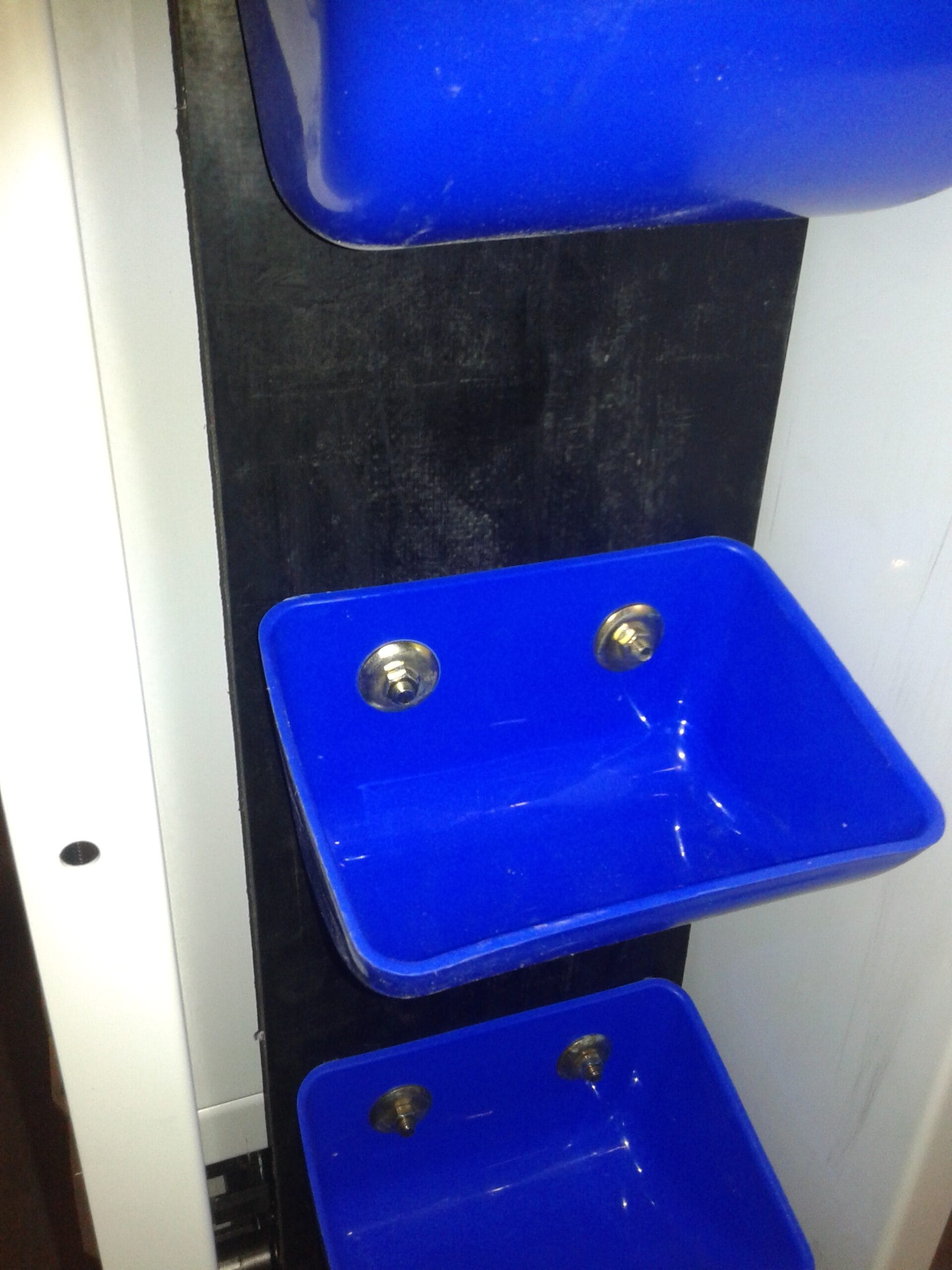
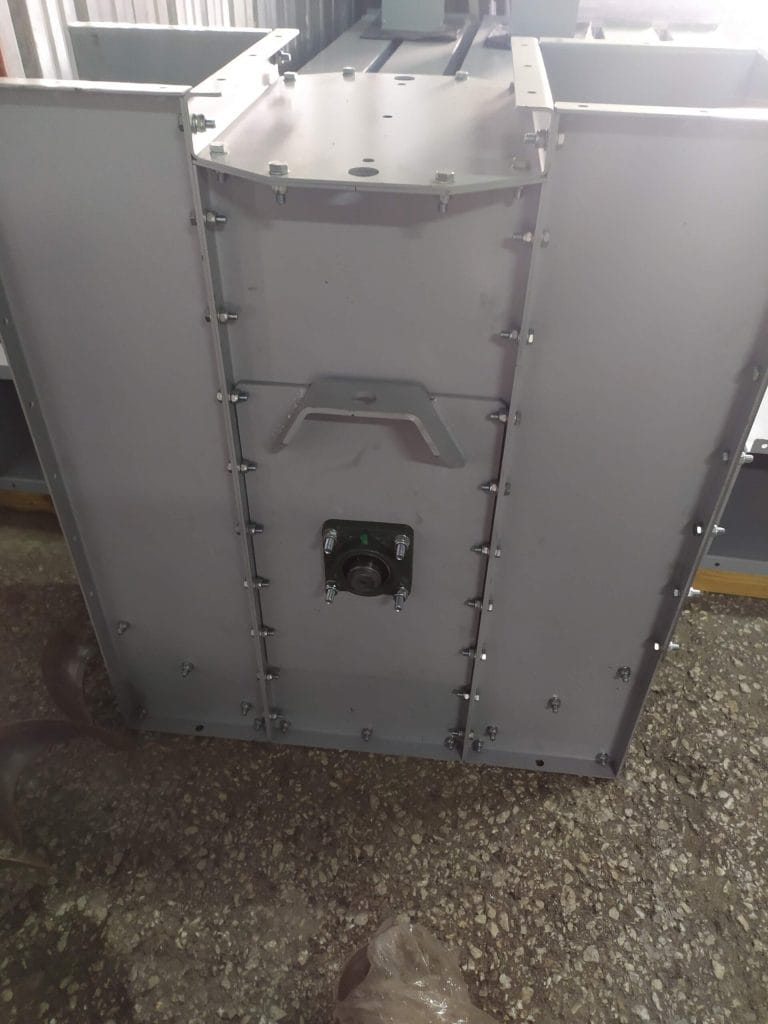
Bucket elevator materials
Our bucket elevators are made of:
As standard, the casing is made of carbon steel. The material is chosen according to the conveyed product, the operating conditions and the capacity. A well designed and well built bucket elevator gives stability, minimal wear and easy maintenance.
Options and configurations for bucket elevators
Depending on the site and the process line, bucket elevators can be supplied with additional components and mounting solutions:
All options are matched to the configuration and height of the elevator, so that it is easy to maintain, safe and efficient in real operation.
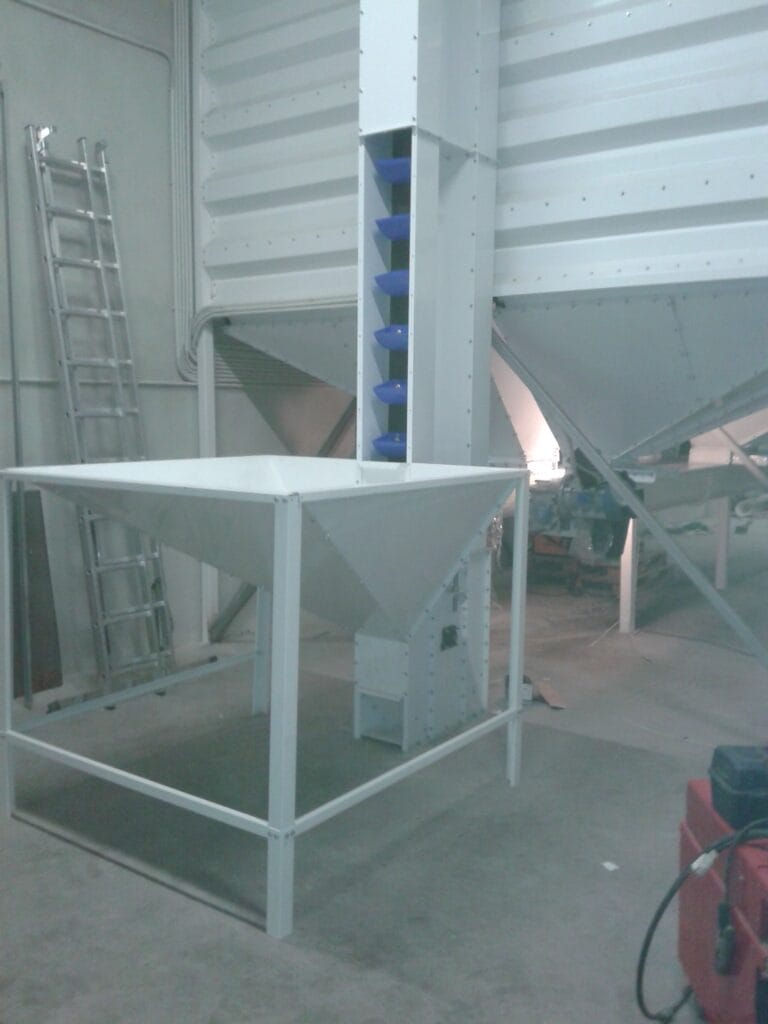
Bucket elevator photos
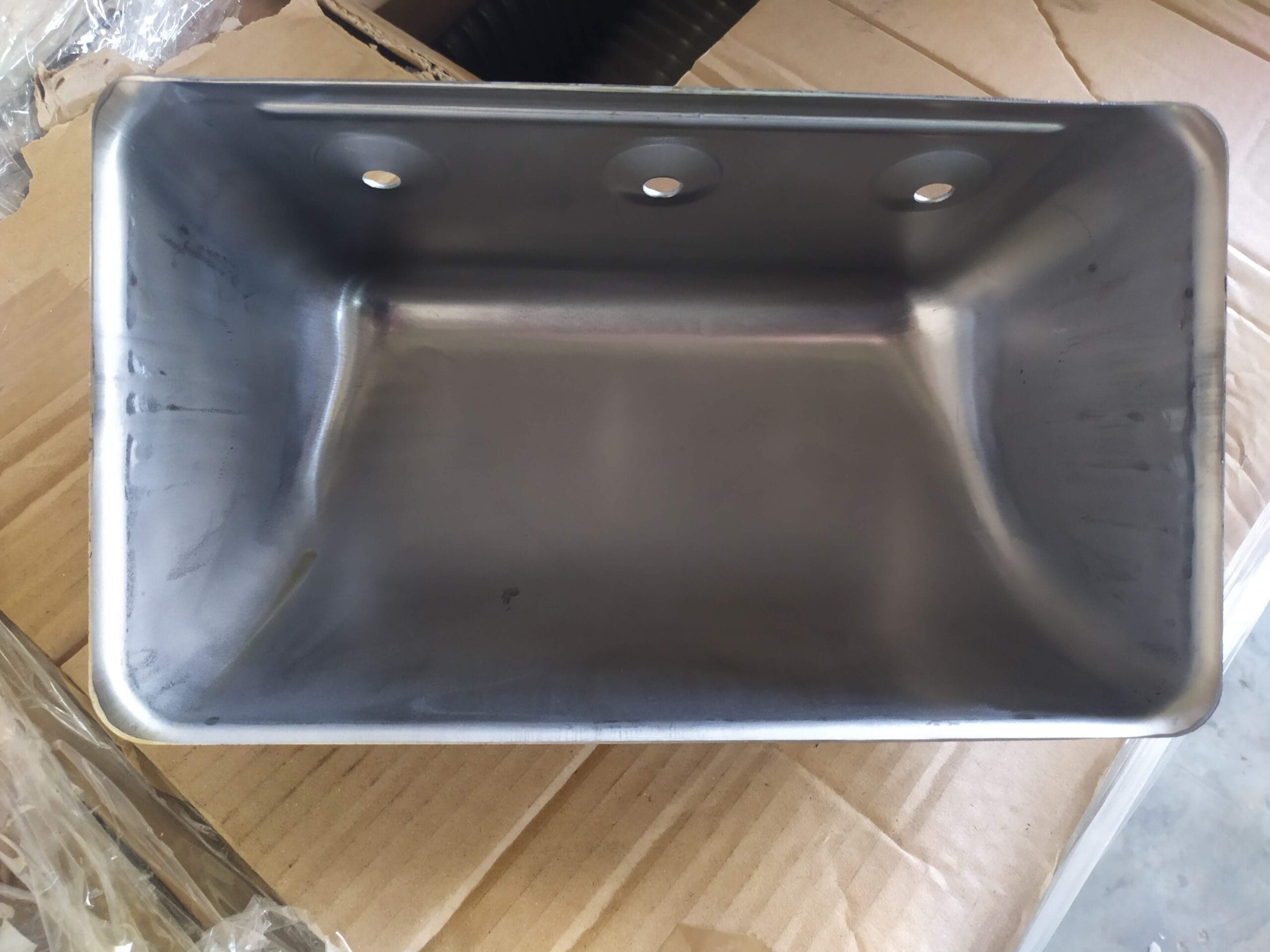
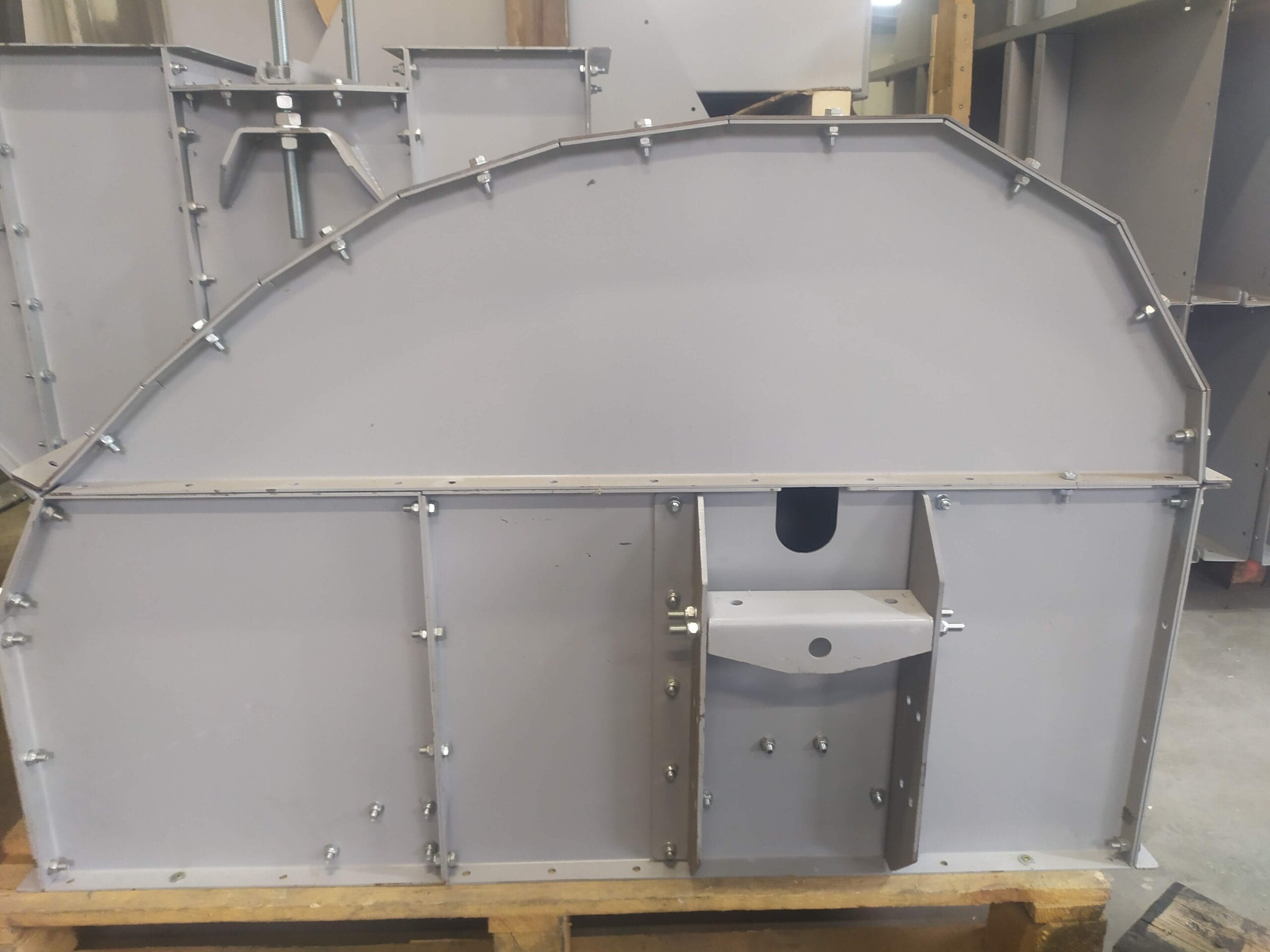
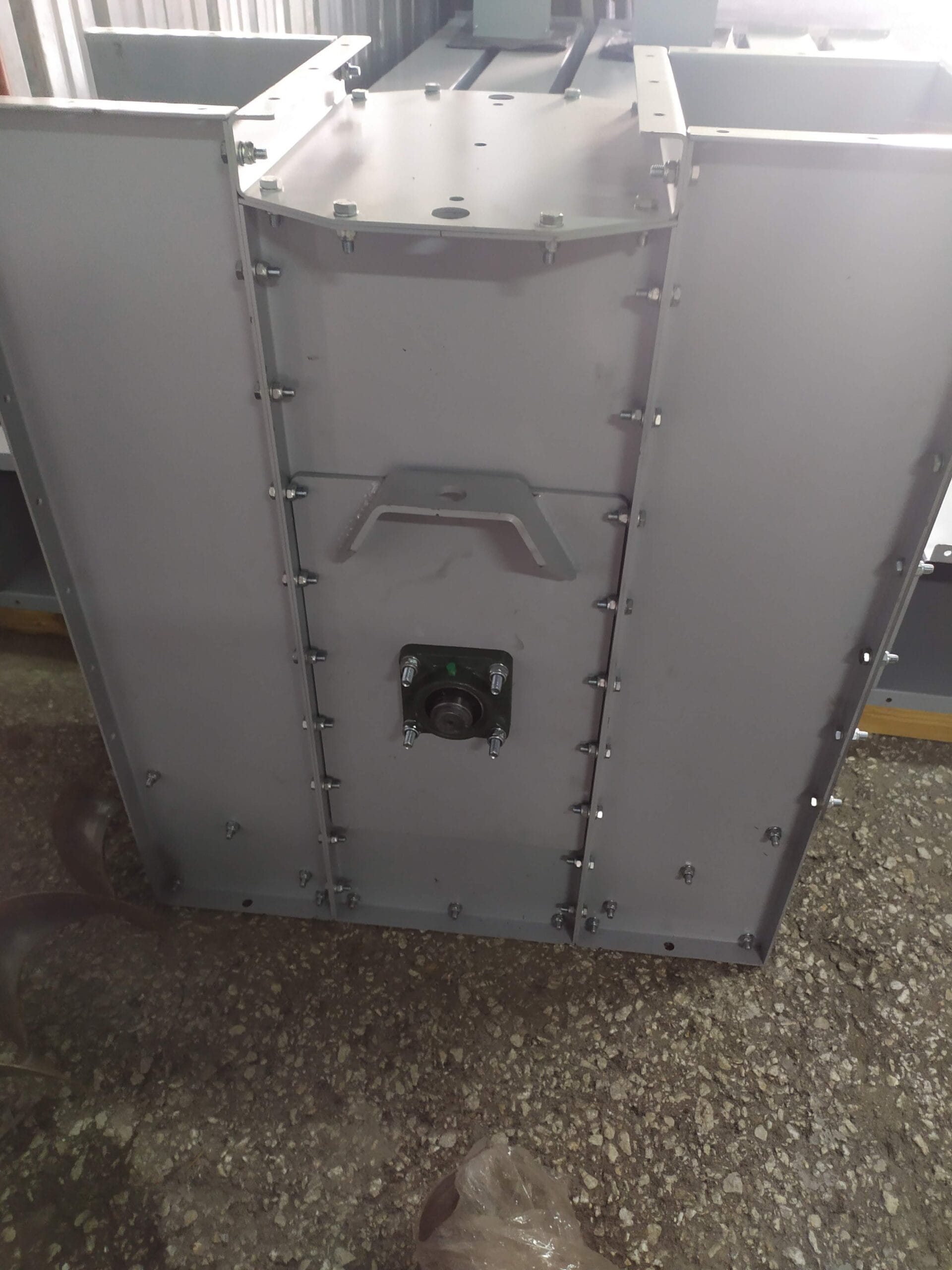
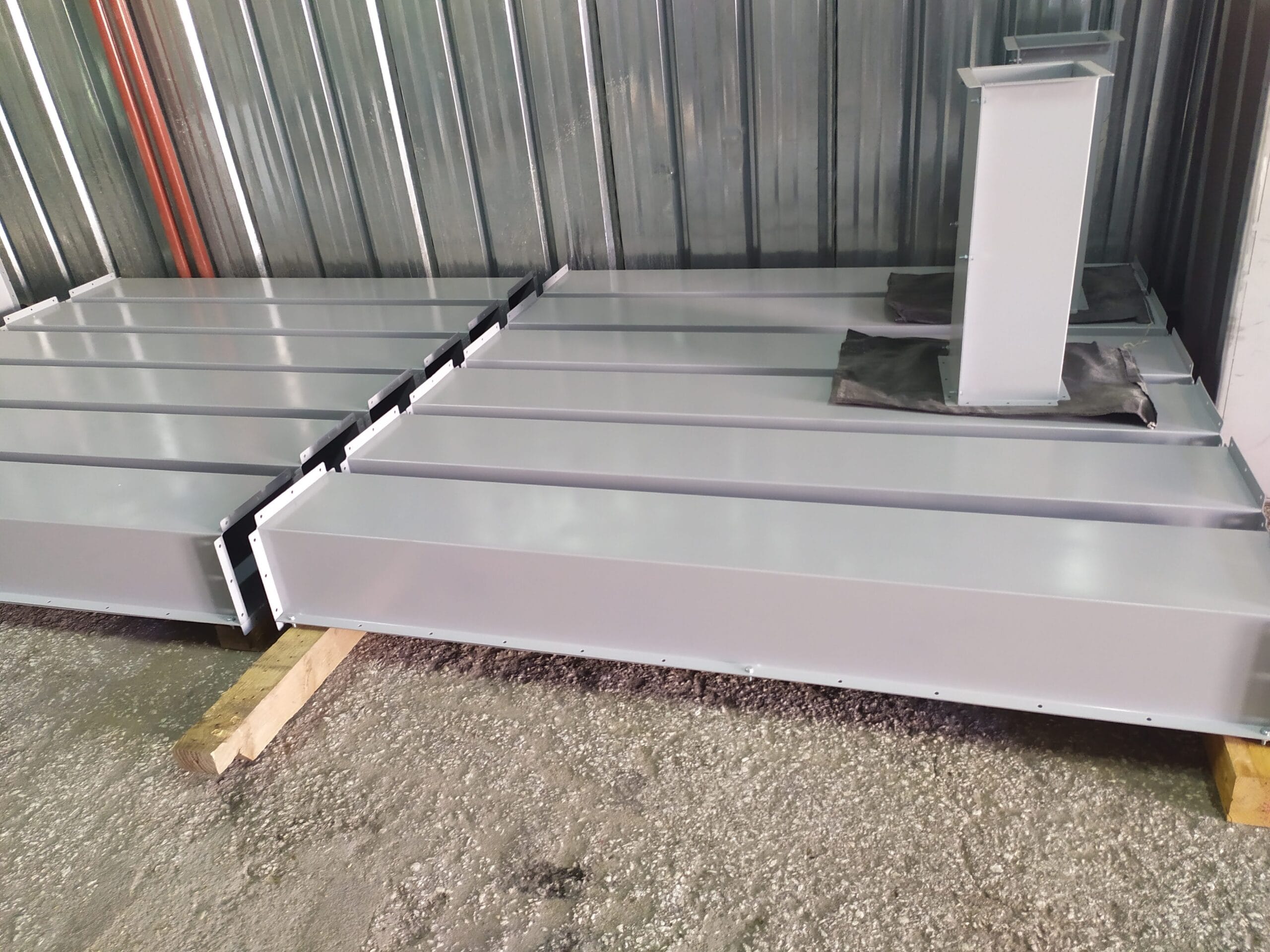
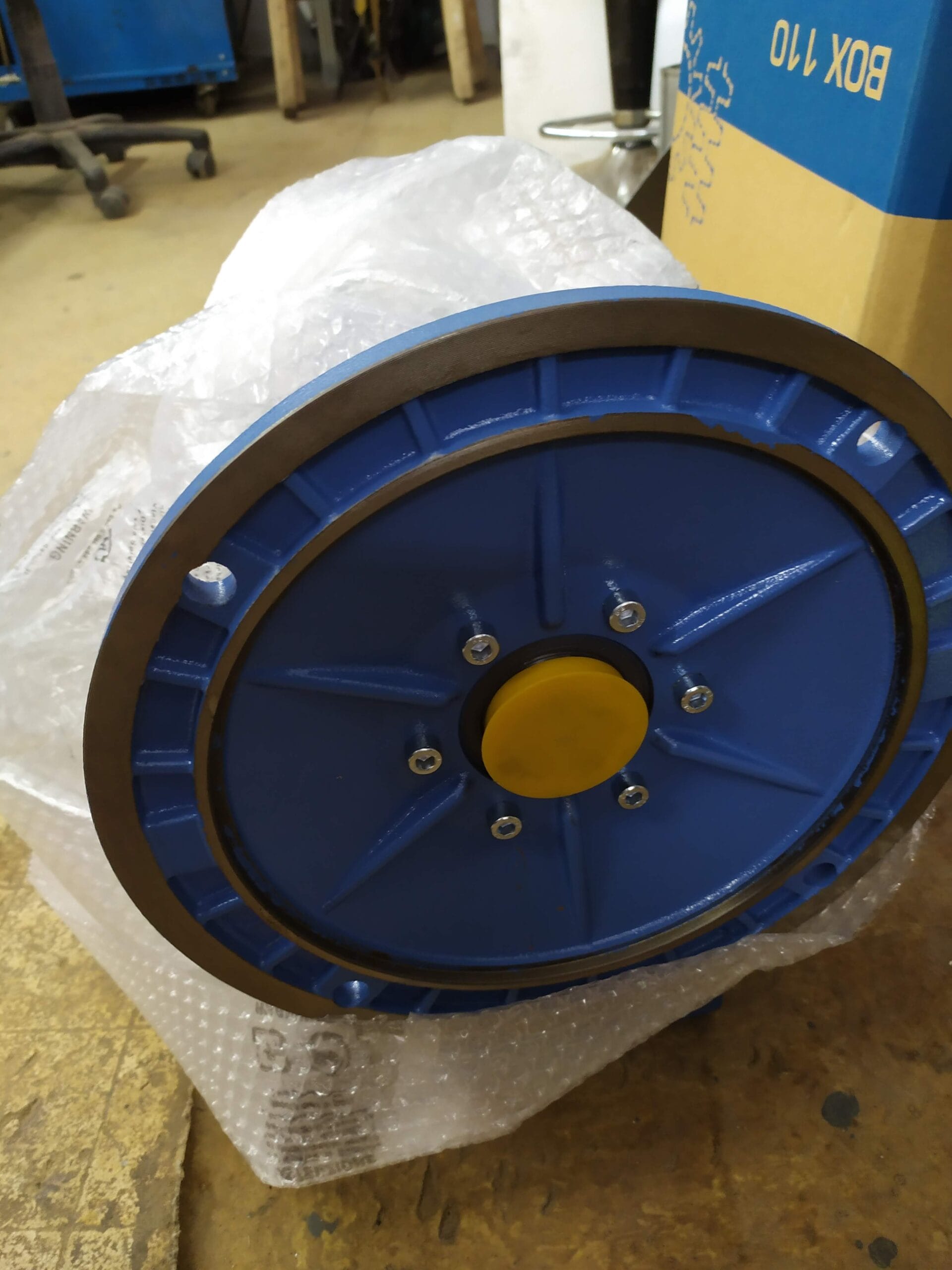
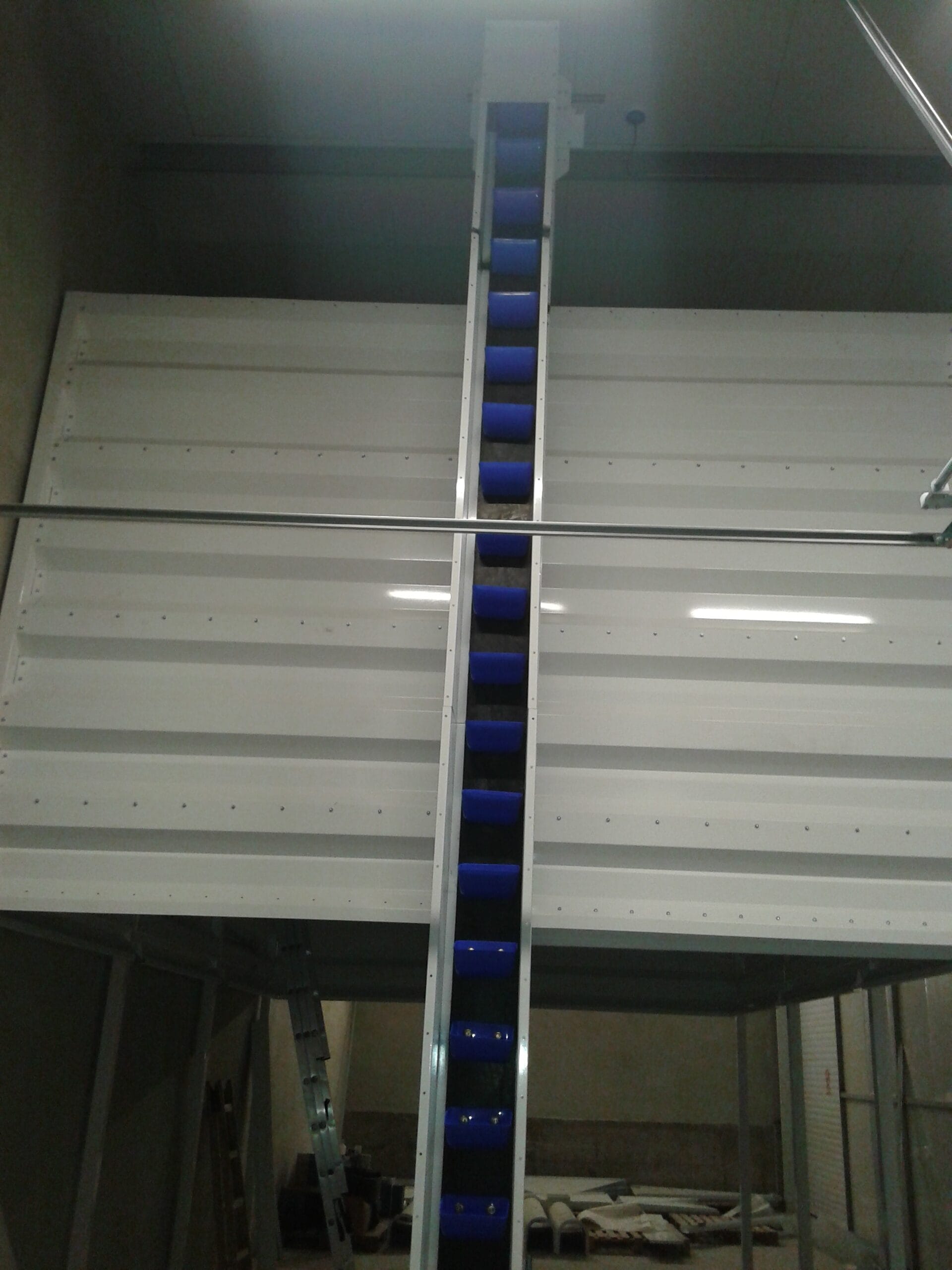
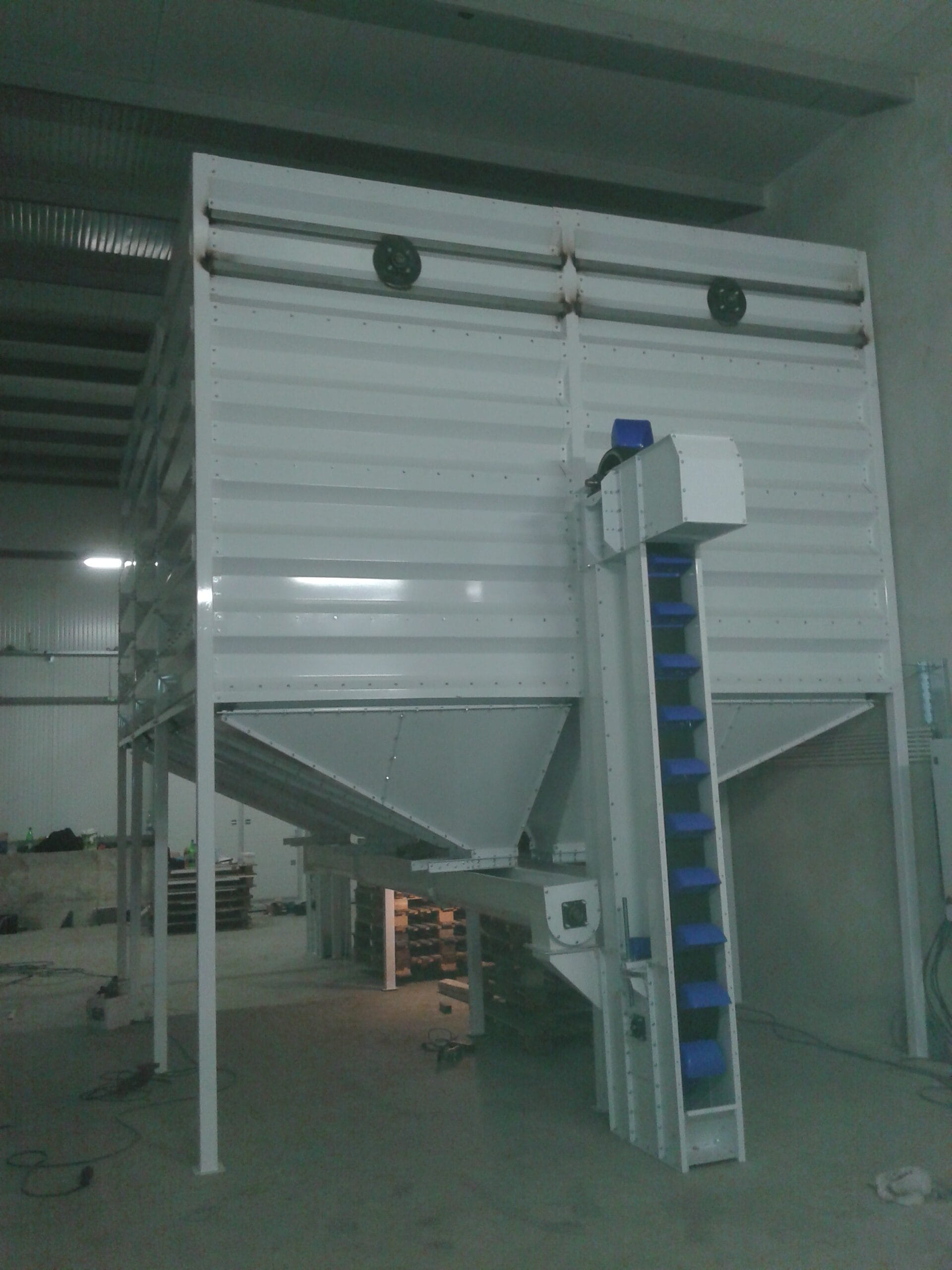
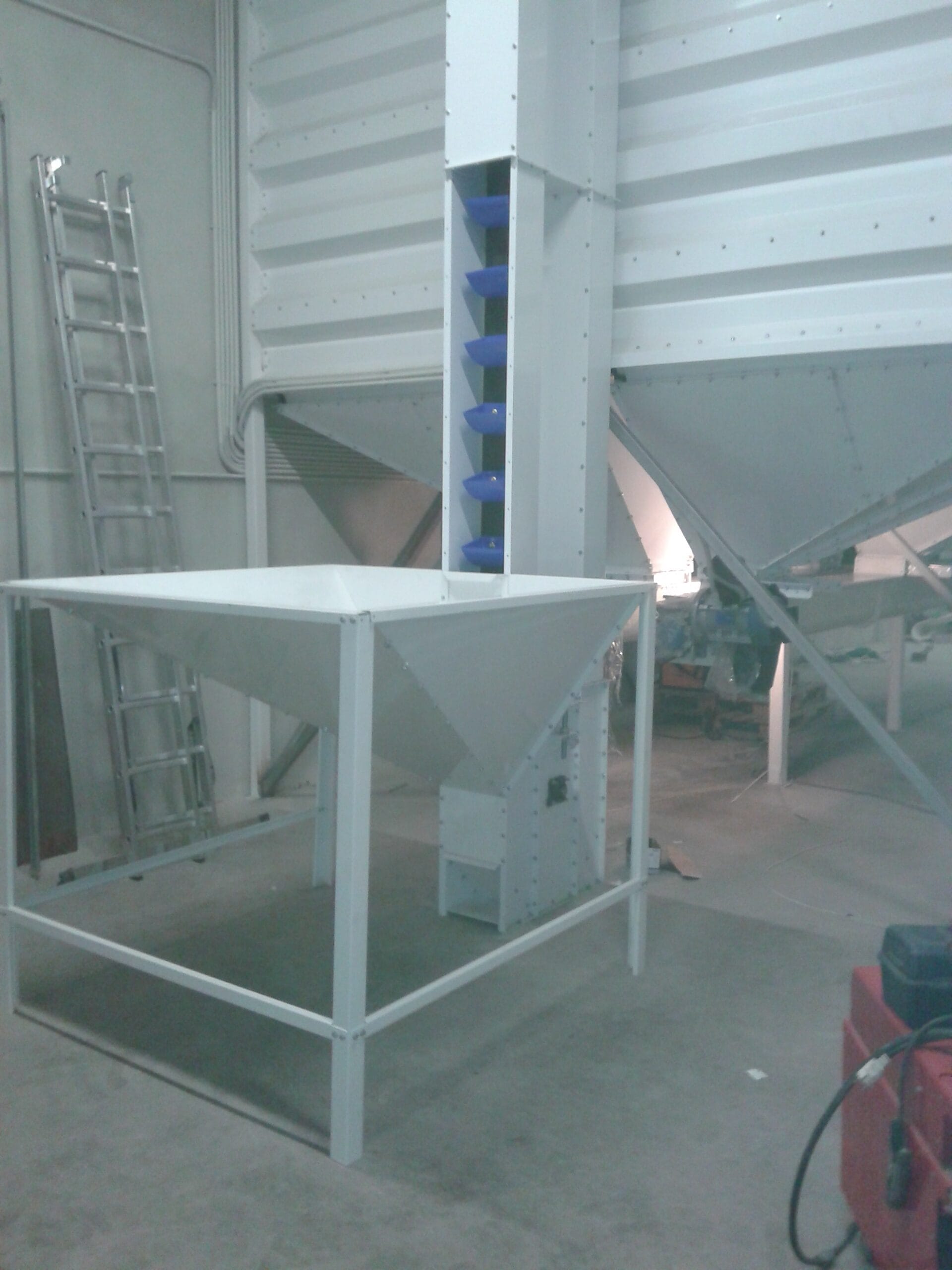
Photos and details from our projects, showing the equipment we have built.
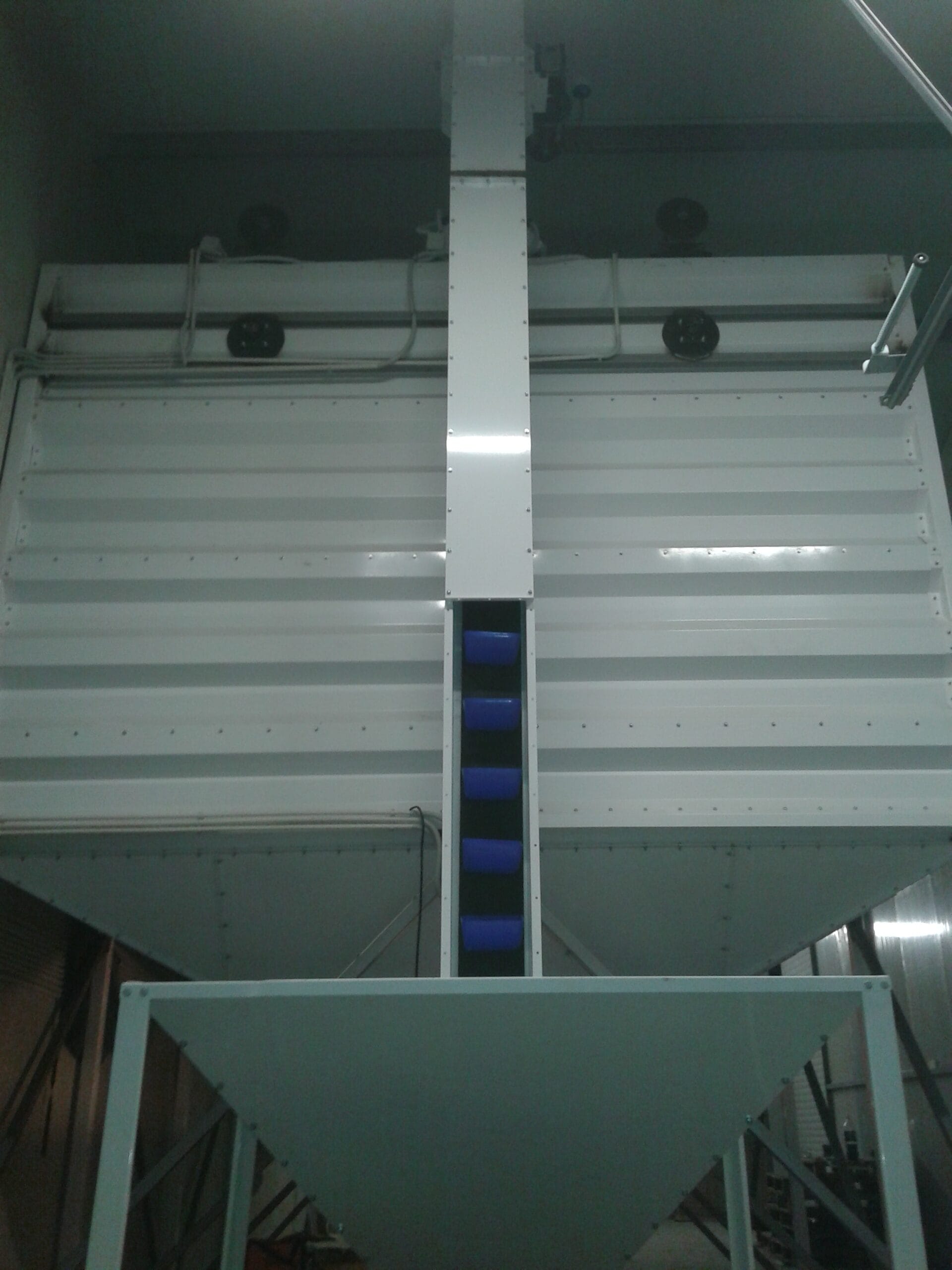
Bucket elevator technical data
Bucket elevators are designed for the specific application. The main technical parameters that define their design and capacity are:
Every bucket elevator is designed for its actual use – the material, the capacity and the space available on site. Already at the drawing stage we plan the installation, the inlet and discharge sections, the connections to other machines, the working environment and the loads. We propose options, fit everything to the centimetre and choose robust components.
All manufacturing is done in-house, so we work to tight schedules without unnecessary delays. The design is easy to install and maintain.
Why work with us
Choosing a supplier of industrial equipment matters – especially for conveying systems. Here is what our clients value:
Bucket elevators – questions and answers
What does a bucket elevator cost, and do you have one in stock?
We do not keep bucket elevators in stock. Each one is built to order – for the material, capacity, height and installation site, and the price depends on these. Once we have your data, we send an offer with the price and the lead time. As a guide, a bucket elevator takes about 20 working days to build, plus transport.
How tall can the elevator be?
Up to 50 m as standard, and higher on request. The height, capacity and drive power are designed together for the material and the site.
Belt or chain – which is better?
For most bulk and granular materials we use a rubber elevator belt. For heavy-duty applications and heavy materials we use a steel chain.
Is the elevator suitable for abrasive or powdered materials such as cement or bentonite?
Yes. The casing is fully enclosed, and for abrasive materials we add wear-resistant linings of Hardox, polyethylene or ceramics. The bucket type and the speed are chosen for the material.
Do you make spare buckets, belts and pulleys for an existing elevator?
Yes, including for elevators from other manufacturers. We make and supply buckets, belts, pulleys and casing parts to a sample or a drawing.
Can the elevator be fixed to a silo or a building?
Yes. The elevator can be self-supporting or fixed directly to a silo or building. On request we add a walkway with handrails and a service platform at the head section.
Do you send a drawing for approval before manufacturing?
Yes. Every machine has a technical design that we agree with the client before manufacturing, so the dimensions, height and connections to other machines are checked in advance.
Do you deliver and install? What is the warranty?
We deliver across Europe. The price includes packaging, CE marking and documentation; transport and, where needed, customs clearance are quoted separately on request. We do not install outside Bulgaria – the conveyor arrives ready for installation with drawings and instructions. The warranty is 12 months.
Contact
Contact us for a bucket elevator built to order for your application.