
Systems for conveying, dosing and storing bulk materials
The whole flow of material, not just one machine
When a plant has to receive raw material, move it to another point, dose it and feed it to the next operation, choosing a single conveyor is only part of the task. All the equipment has to match – with each other and with the way the plant works.
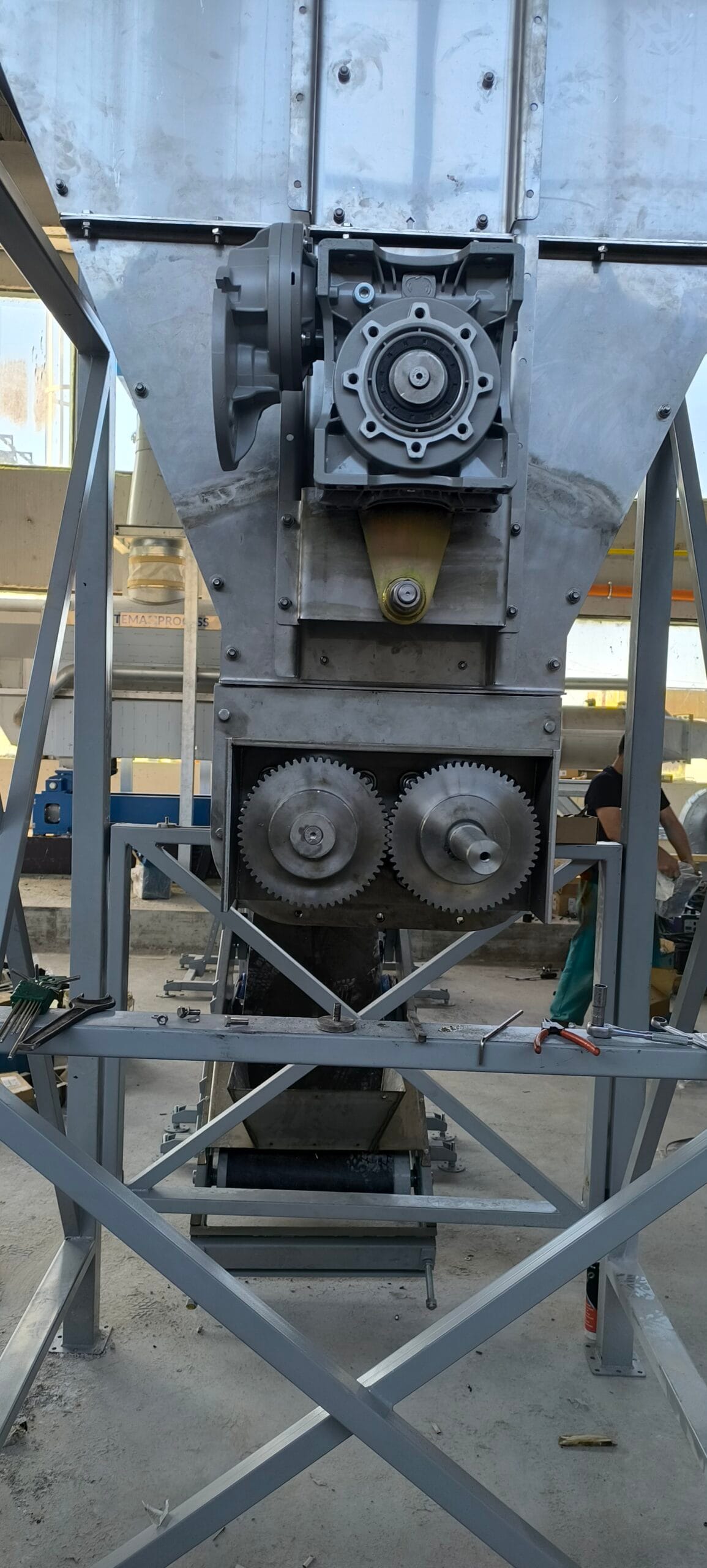
At Silozni Sistemi we design and manufacture systems made up of several connected machines. These can be big bag stations, intake hoppers, screw and belt conveyors, bucket elevators, dosing units and weighing equipment. We choose the combination according to the material, the required capacity and the equipment already on site.
We can take part both when a new section of a production line is being built and when an existing process has to be changed or extended.
When do you need a complete system?
Often the problem is not a missing machine. Material is moved by hand between two stages, the feed is uneven, the conveyor does not have enough capacity, or several separate machines do not work well together.
In other plants the task is to add a new machine to an existing line, to unload raw material from big bags, to provide buffer storage or to feed an exact amount of material.
In these cases we look at the process from the start point to the end point and define what equipment is needed in between – including the connections, the feeding method, measurement and control.
1. Intake and storage
Every process line starts where the material arrives: from a truck, from big bags or from a previous machine.
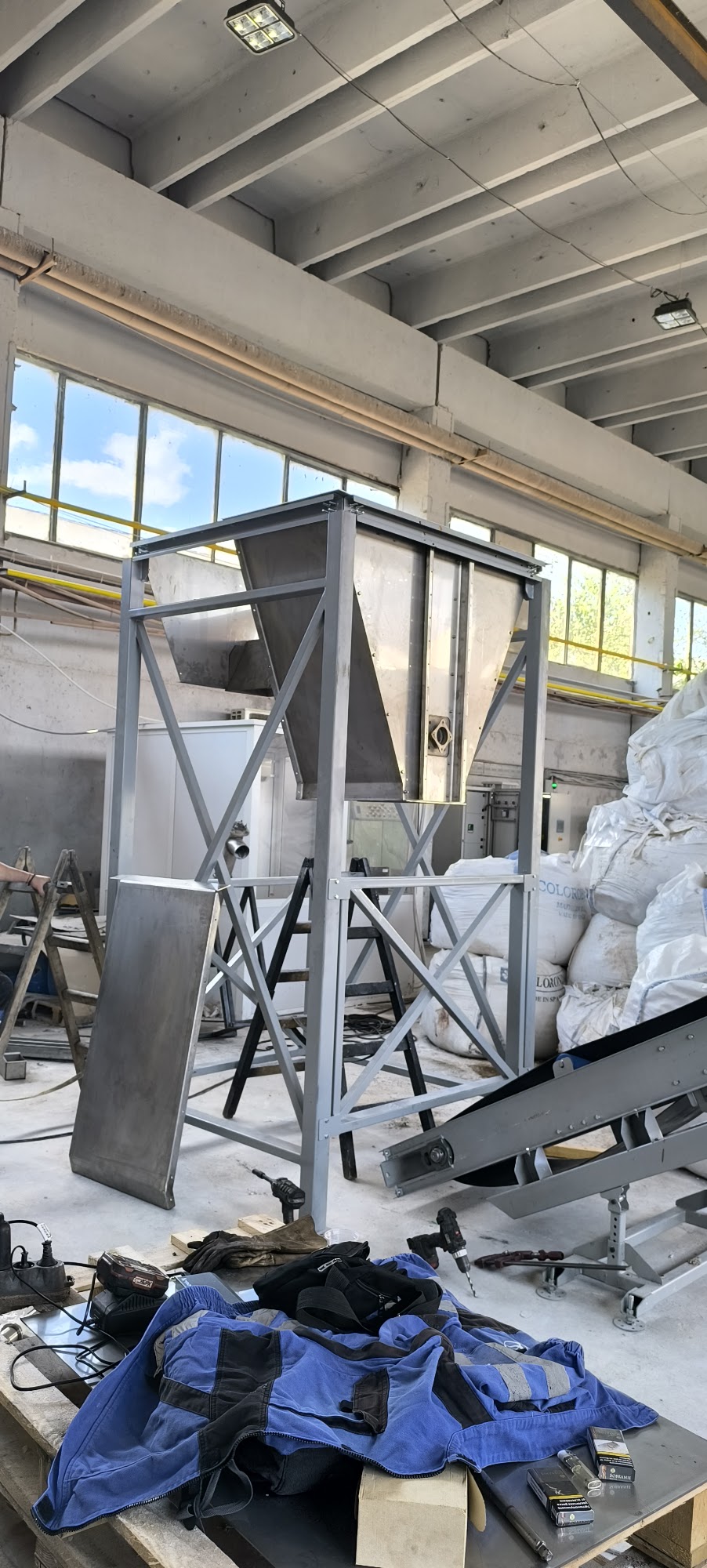
- Intake and storage hoppers – with agitators, anti-bridging cones and an outlet matched to the machine below.
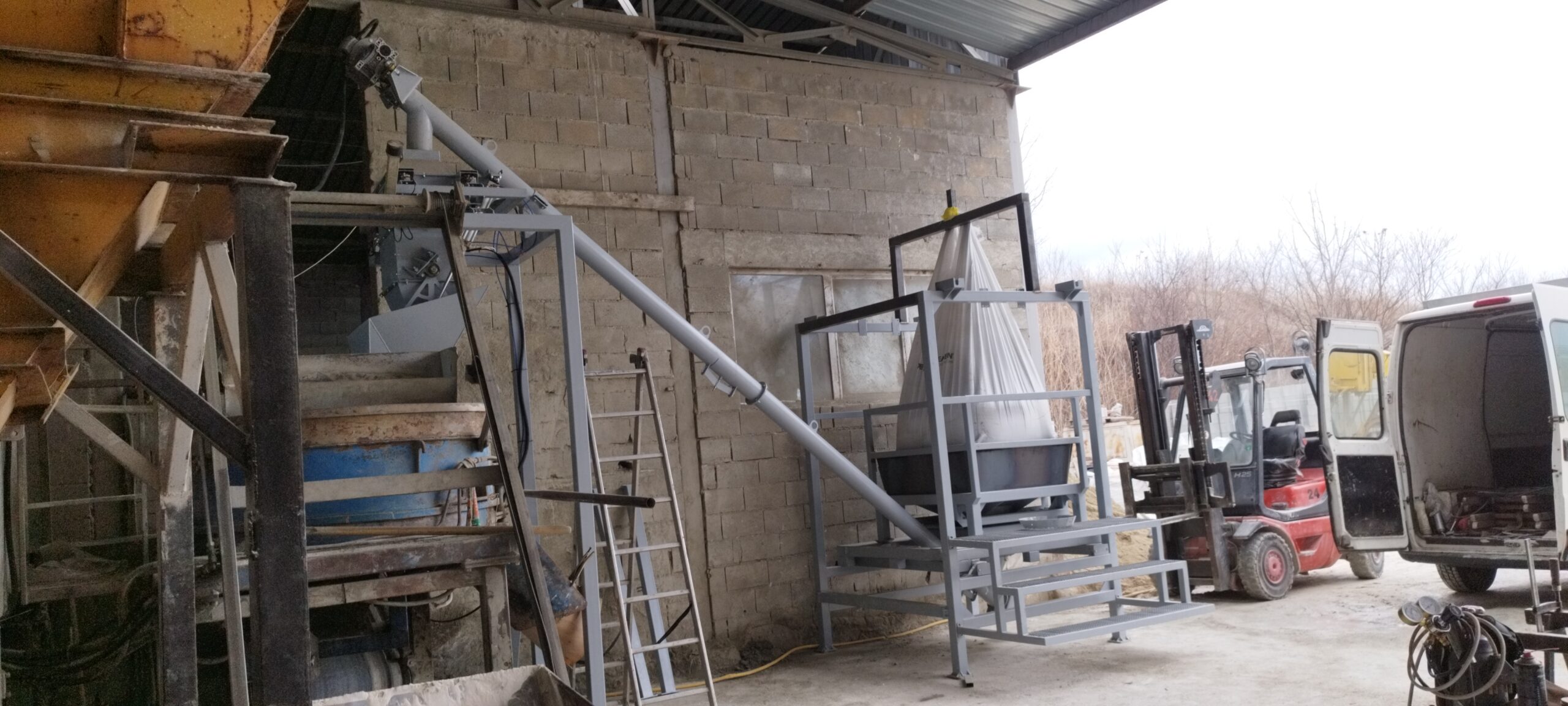
- Big bag stations – for filling and discharging big bags, connected to a screw conveyor and weighing.
2. Dosing and shut-off
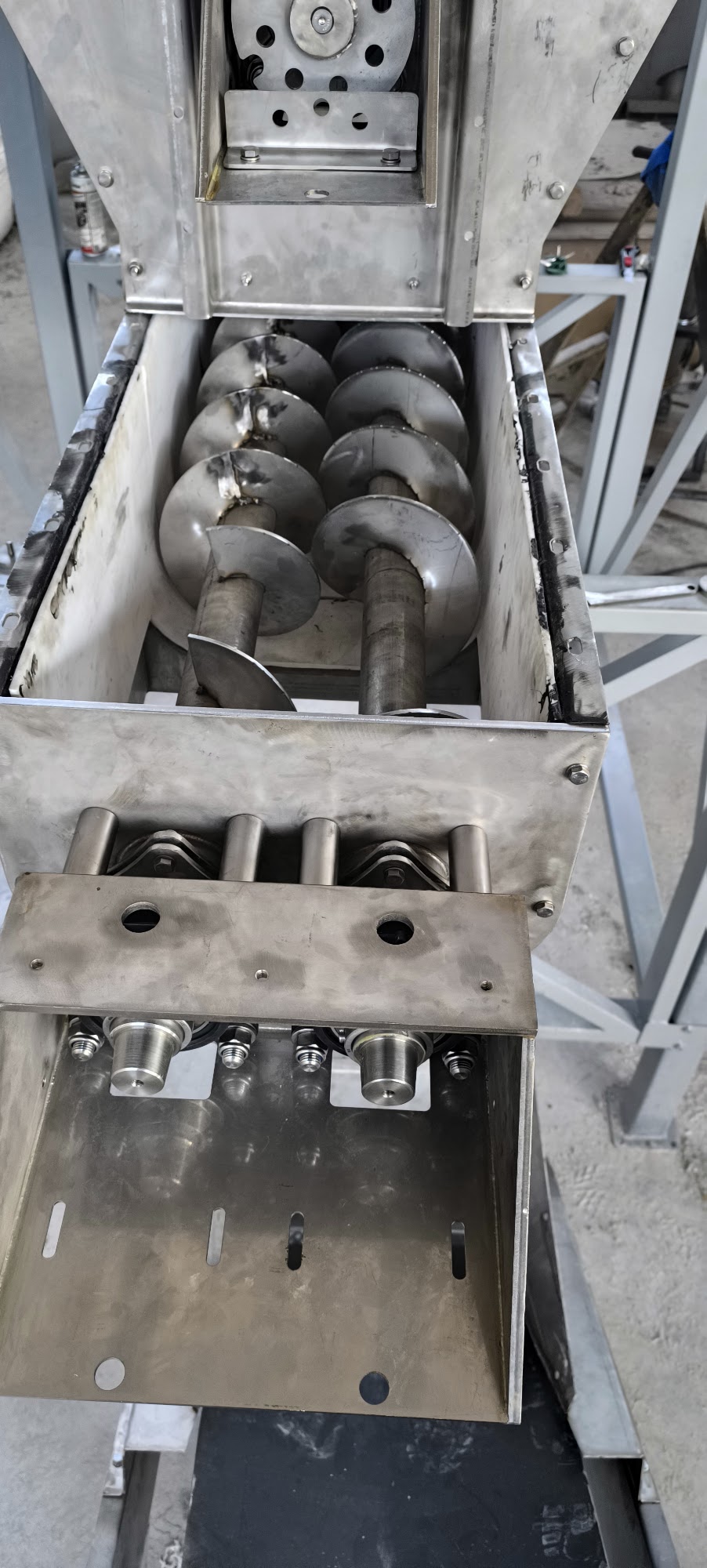
Material has to leave the hopper evenly and in the right amount, so that nothing piles up or runs short further down the line.
- Dosing screw conveyors, including twin screws, for even feeding.
- Rotary valves, slide gate valves and diverter valves for shutting off, dosing and splitting the flow.
3. Conveying
The choice depends on the material, the distance and the height.
- Screw conveyors – for powders and granular materials.
- Belt conveyors – for long distances and large lumps.
- Chain conveyors (redlers) – for high capacities and many outlets.
- Bucket elevators – for vertical lifting.
How to choose between them is explained in the article Screw, chain or belt conveyor.
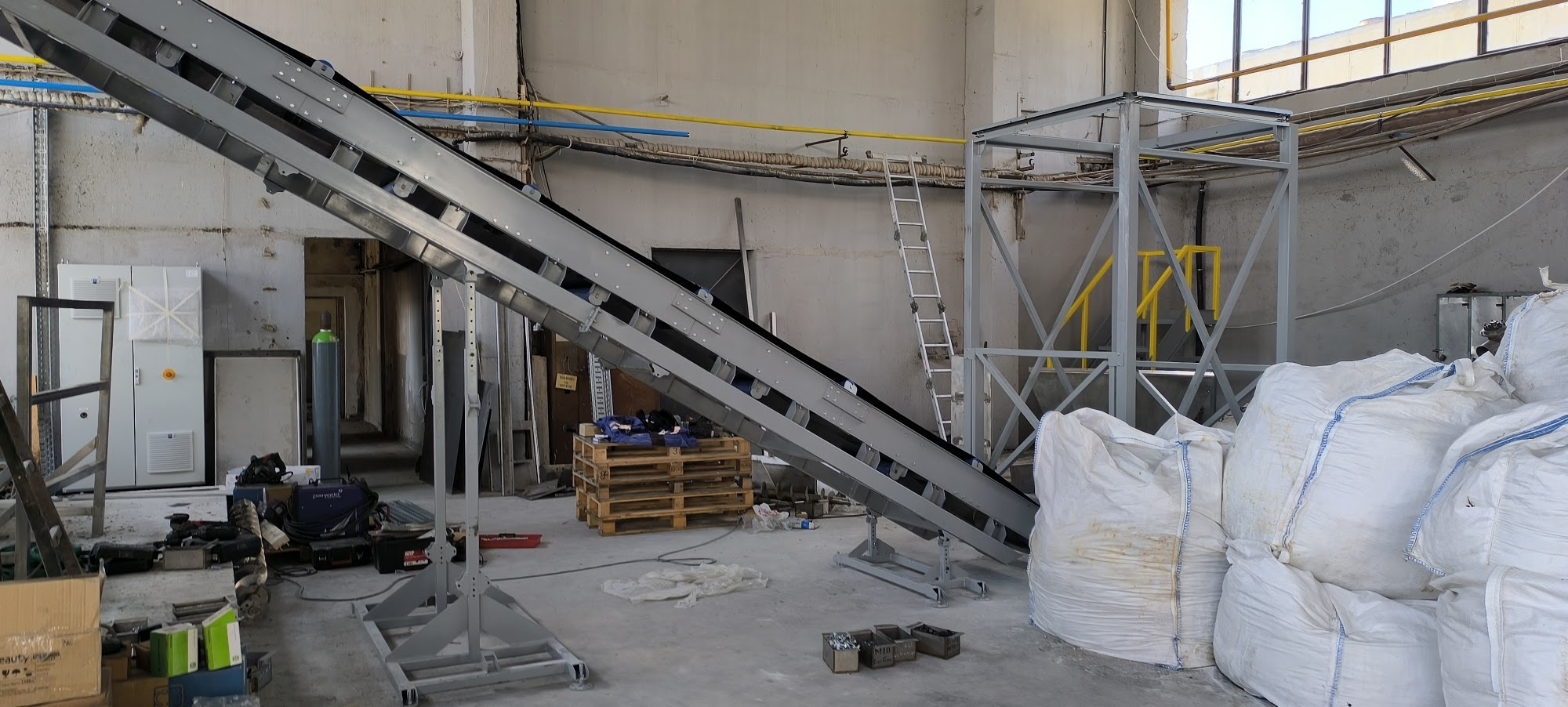
4. Complete process lines
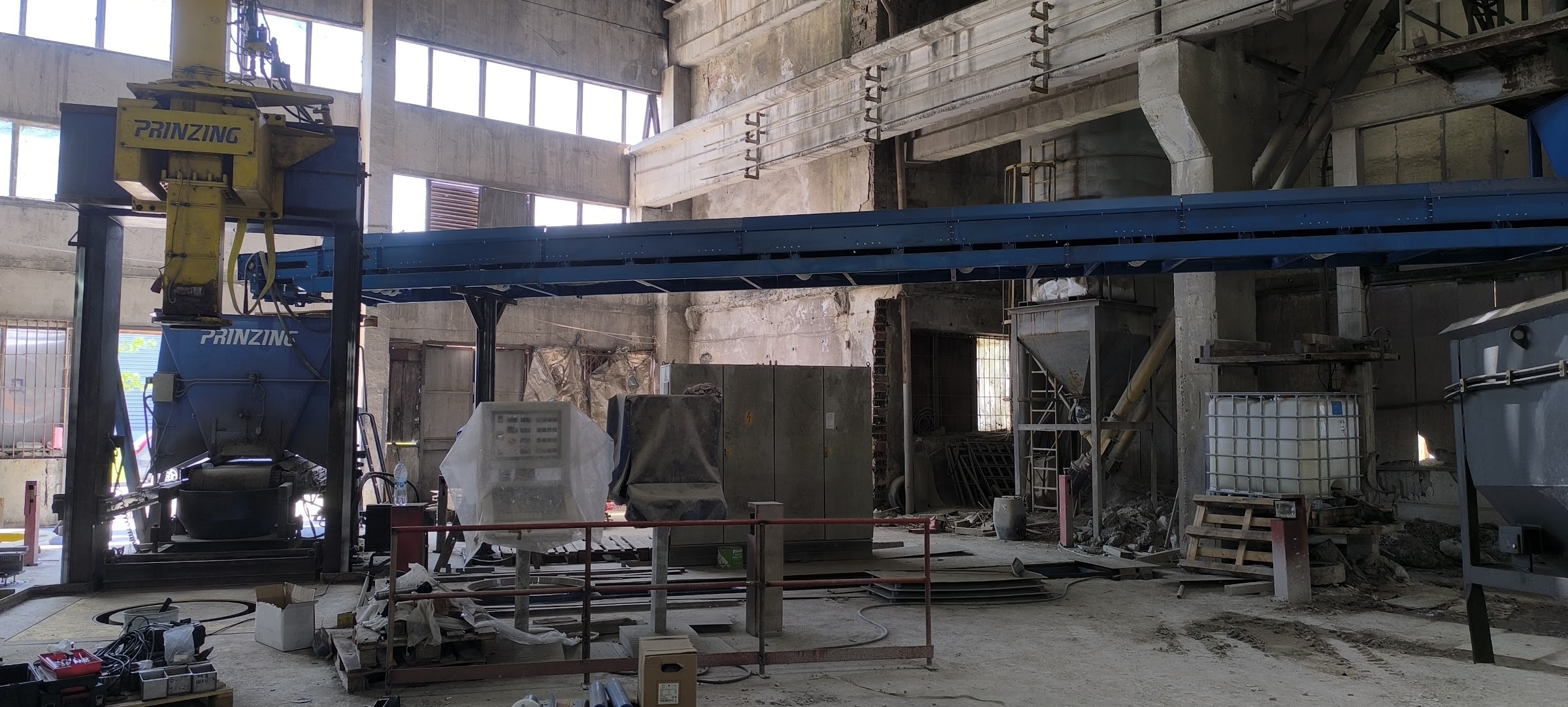
When material has to be received, dosed, conveyed and lifted, we connect the machines into one continuous line. We design it as a whole – hoppers, dosing screws, conveyors and elevators are sized so that their capacities match and the material does not get held up between them.
We can build the whole line or connect the new machines to your existing equipment. You will find completed projects in our Projects section.
5. Automation, measurement and control
The machines in a process line have to work together – start and stop in the right order, feed the right amount and give a signal when something is wrong. That is why we plan measurement and control already at the design stage.
Control can be provided for a single machine or for the whole line – depending on the equipment you already have and on how the operator needs to work.
What the control system can include
Line sequencing
Machines start and stop in the right order so that material does not pile up. When one machine stops, the machines before it stop too.
Weighing and measurement
Load cells for hoppers, big bags and conveyors, level sensors and dosing by weight – for the right amount at every step.
Operation monitoring
Encoders and speed sensors check that the machine is running. If it stops or slips, the operator gets a signal.
Speed control
Frequency inverters to change the capacity, for soft starting and less load on the drive.
Controllers and communication
PLC controllers, Modbus and other industrial protocols, and a link to SCADA for monitoring from the control room.
Protection and alarms
Emergency stops, blockage sensors and overload protection – for safe operation and less downtime.
Industries we work for
Cement and concrete
Powdery and abrasive materials. Enclosed screw conveyors, sealed bearings and wear-resistant parts.
Grain, feed and flour mills
High capacities and gentle handling. Screw and chain conveyors and bucket elevators linked to the silos.
Energy
Continuous operation and reliability in harsh conditions. Screw and chain conveyors for fuel and ash.
Aggregates and sand
Heavy and abrasive materials. Bucket elevators, belt conveyors and thicker screw flights.
Pellets and biomass
Fragile material and many feed points. U-trough screws and chain conveyors to burners and boilers.
Minerals and chemicals
Powders, granules and chemicals. Accurate dosing, dust-free conveying and big bag stations with load cells.
How a project starts
You do not need to have chosen all the machines in advance. We start from the process and work towards the specific solution.
1. Material and capacity
We clarify what material is handled, what its properties are, where it comes from, where it has to go and what capacity is needed.
2. Site and connections
We look at the available space, the heights, the inlet and outlet points, the existing equipment and the control requirements.
3. A solution as a system
We choose the type and number of machines and prepare the design so that all stages work together and are easy to maintain.
Planning a new process line?
Contact us – we will discuss the process, the capacity and the site and propose how the equipment can be connected into one system. We work for plants in Greece, Romania and across Europe.