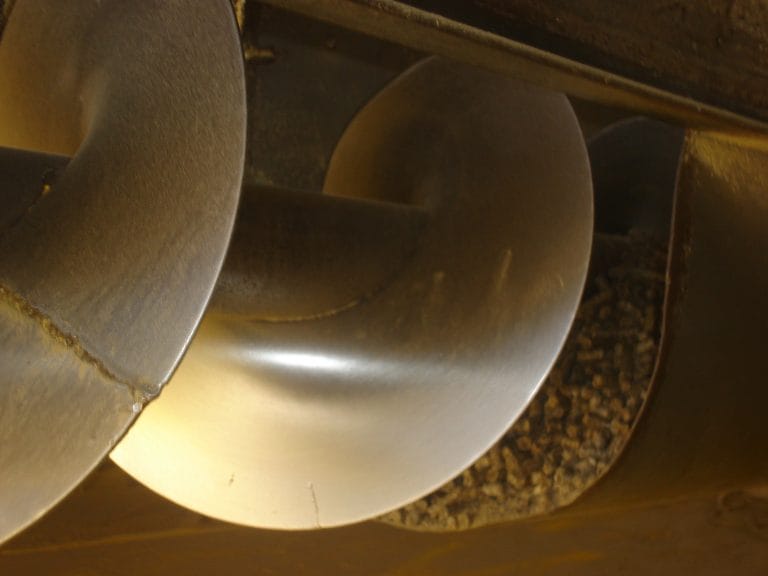
We are often asked whether a screw conveyor, a chain conveyor or a belt conveyor is better for a given job. All three convey bulk materials, but they work differently and each is strong in a different place. Here is how we choose when we design a machine to order.
In short
| Screw conveyor | Chain conveyor | Belt | |
|---|---|---|---|
| Distance | short and medium | medium and long | long |
| Capacity | small to medium | medium to large | large |
| Incline | up to 45° (with reduced capacity) | horizontal or slight incline | up to about 18°; more with cleats |
| Dust | enclosed | enclosed | open (covers possible) |
| Many outlets | yes | yes, easily | difficult |
| Large lumps | no | limited | yes |
| Dosing | yes, accurate | no | no |
The table is a guide – for each job, the material, the site and the required capacity decide.
Screw conveyor – for powders, dosing and short distances
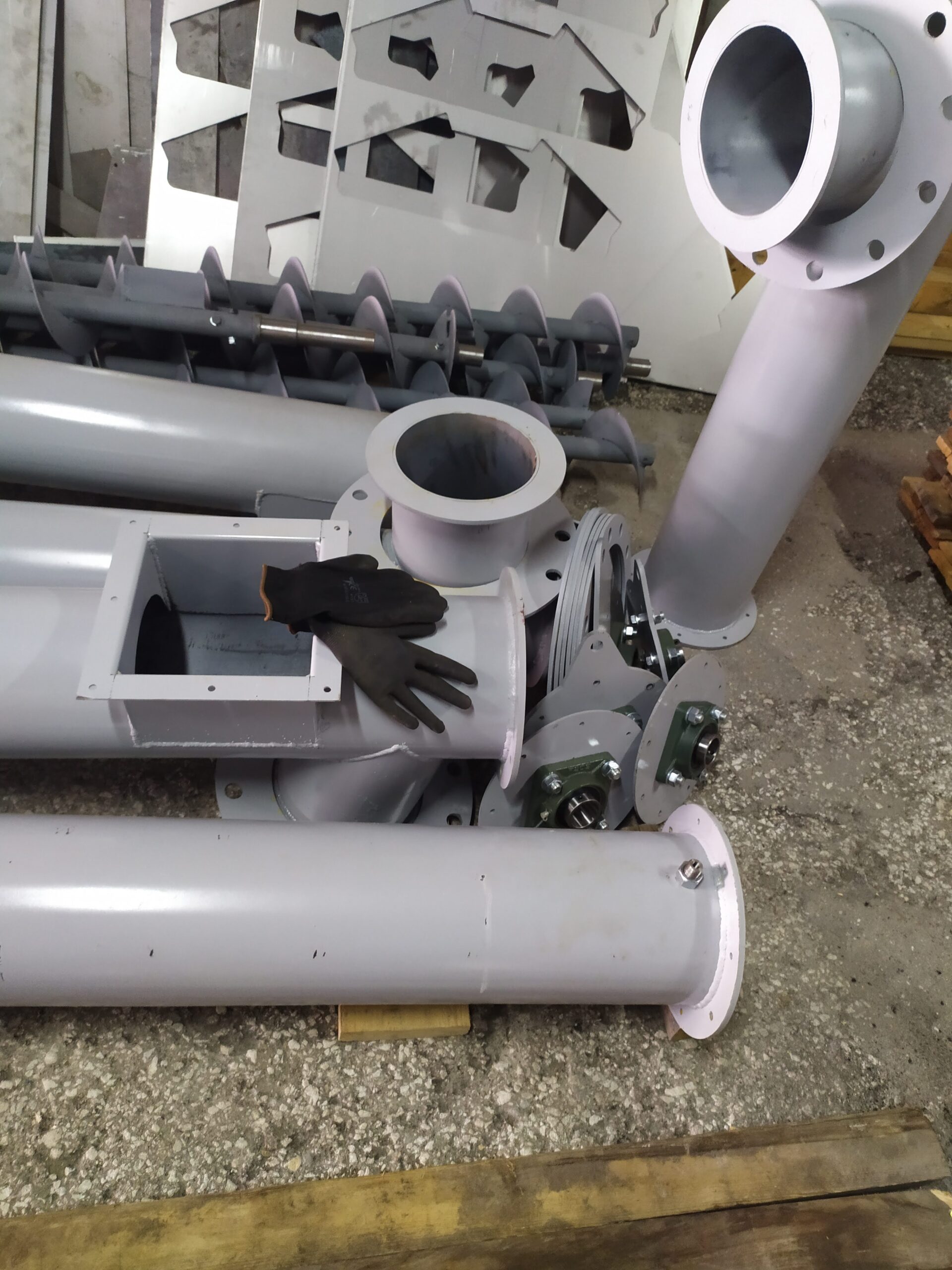
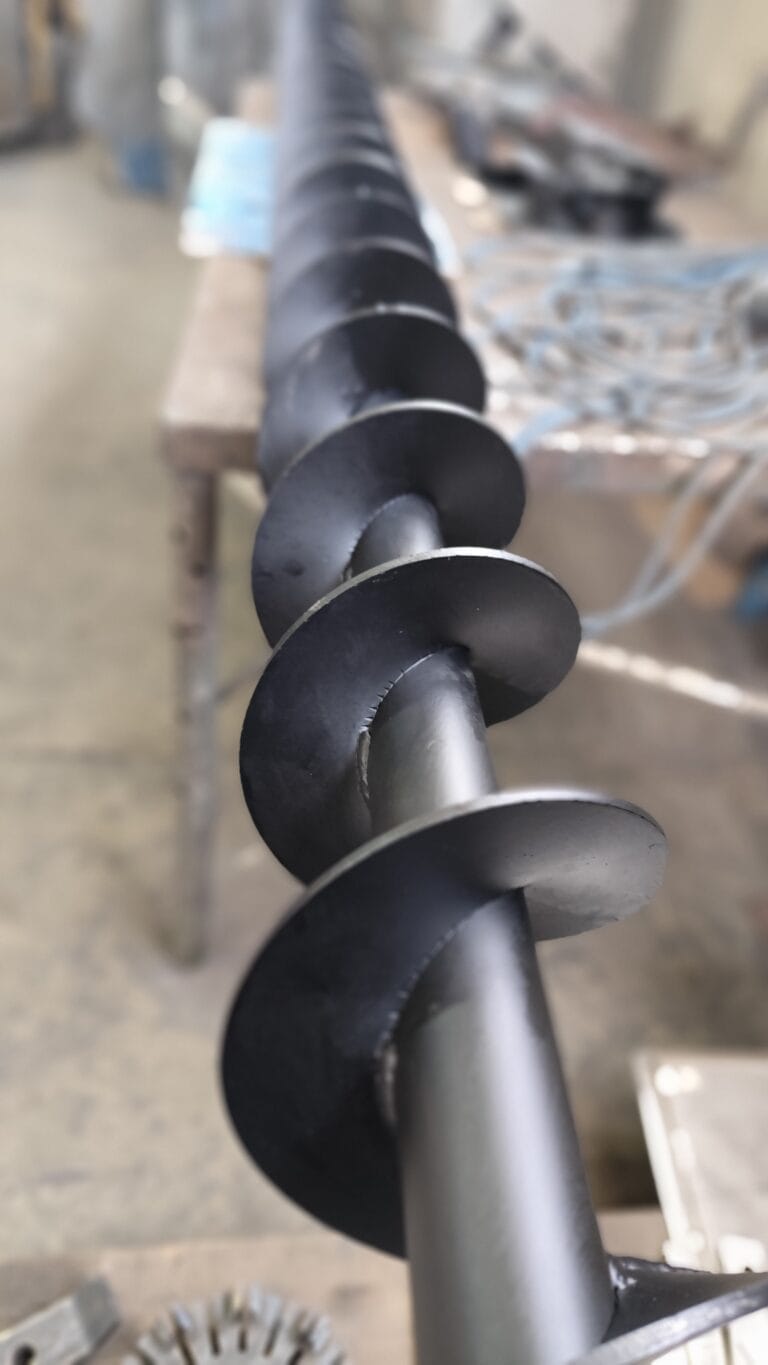
A screw conveyor is a rotating flight in a tube or trough. It is the simplest and cheapest machine for moving bulk material over a few metres up to a few dozen metres.
- Suitable for: cement, flour, grain, pellets, ash, lime, powders and fine granular materials.
- Pros: fully enclosed – no dust; can work on an incline; feeds evenly and can dose; compact.
- Cons: over long distances and at high capacity the power rises quickly; with abrasive materials the flight wears; not for large lumps or very sticky materials.
Chain conveyor – for large capacities, many outlets and heavy duty
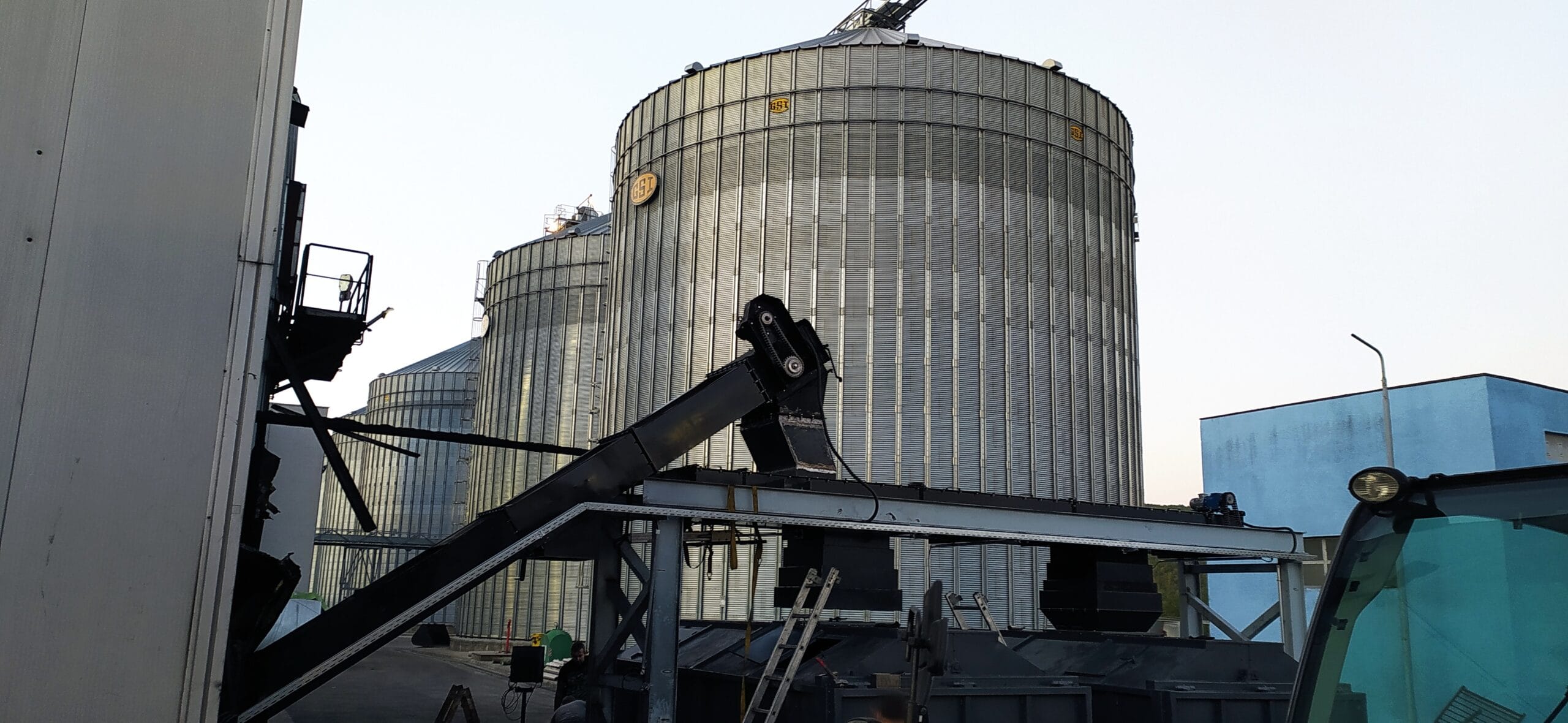
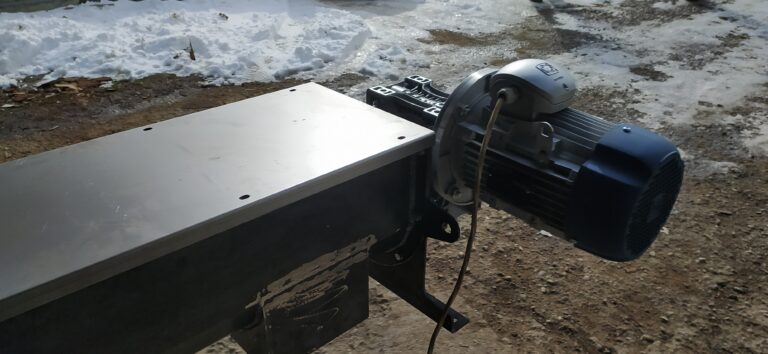
A chain conveyor is an enclosed trough in which a chain with paddles drags the material. The material moves as a dense layer together with the chain, so a chain conveyor moves a lot of material at relatively low speed.
- Suitable for: grain, feed, wood chips, ash, coal, sticky and difficult materials.
- Pros: enclosed; large capacity with less power than a screw conveyor over the same distance; several outlets with slide gates are easy to add; gentle on the material (less grain breakage); paddles and guides can be made of wear-resistant steel.
- Cons: more expensive than a screw conveyor; works horizontally or at a slight incline; the chain needs tensioning and maintenance.
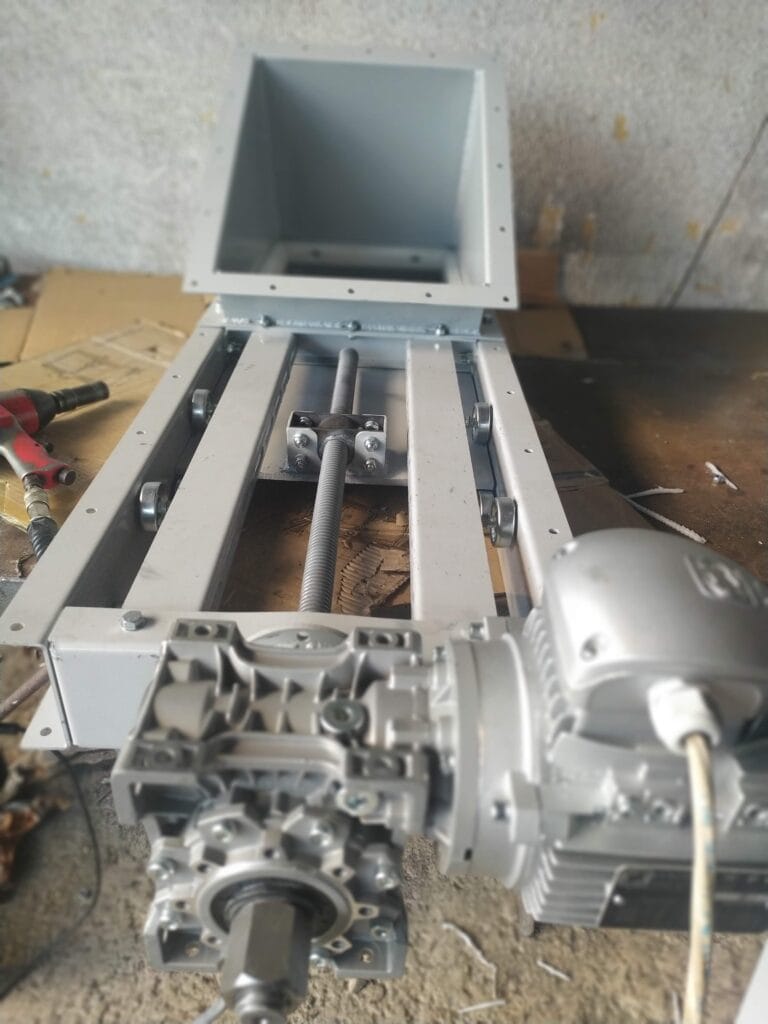
Example: a chain conveyor for very sticky material, designed for 24/7 operation, with Hardox paddles and guides.
Belt conveyor – for long distances and large lumps
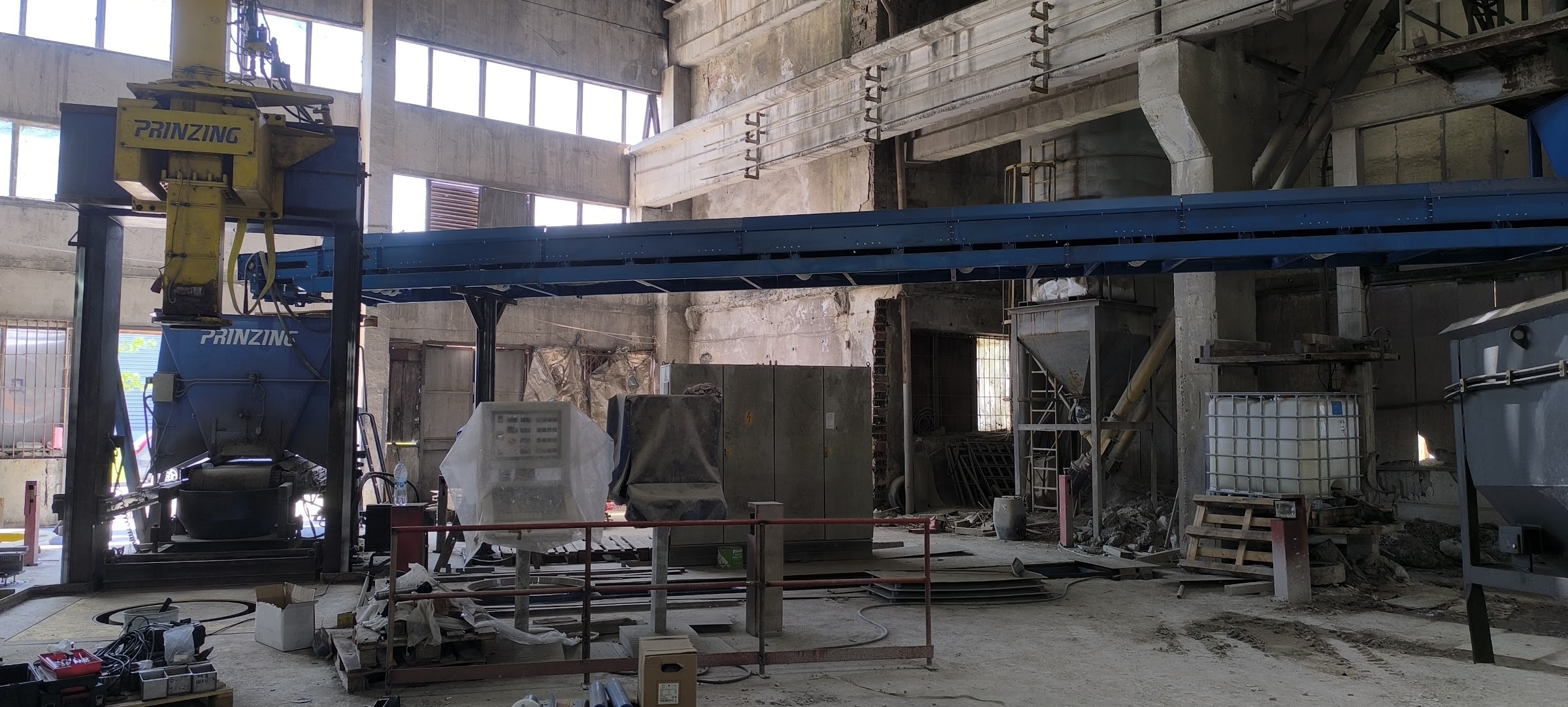
On a belt conveyor the material lies on a rubber belt that runs over rollers. The material does not rub against a casing, so the power is the lowest for a given distance and capacity.
- Suitable for: sand, crushed stone, concrete, granulates, fertilisers, coarse and heavy materials, packaged goods.
- Pros: the most economical over long distances; carries large lumps; gentle on the material; easy maintenance.
- Cons: open – powdered materials create dust (solved with covers); with a smooth belt the incline is limited – cleats are added for steeper angles; material is easiest to load and discharge at the two ends.
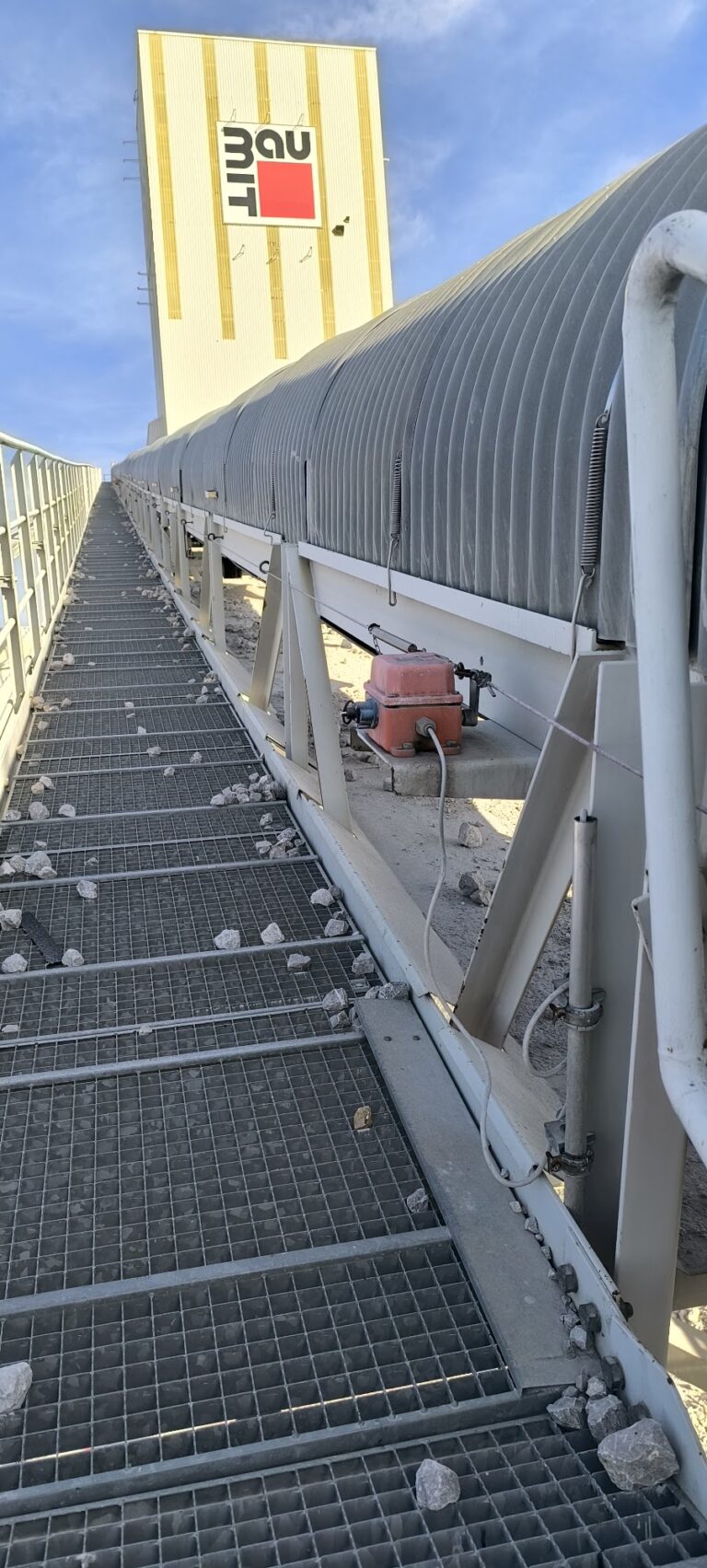
Example: a long belt conveyor with intake hopper for concrete, 800 mm belt.
And if the material has to go up vertically?
None of the three machines is good for large heights. For vertical conveying a bucket elevator is used – often combined with a screw or chain conveyor that feeds material to it and carries it away at the top.
How we choose in practice
- The material – powder, grain, lumps, sticky, hot, abrasive?
- The capacity – how many tonnes or cubic metres per hour.
- The route – length, height, incline, obstacles.
- Inlets and outlets – where it is fed and how many discharge points are needed.
- Dust and environment – indoor hall, outdoors, cleanliness requirements.
Sometimes the best solution is a combination – for example, a hopper with a dosing screw that feeds a belt conveyor. If you are not sure which machine you need, send us the material, the capacity and a photo of the site – we will propose a solution and a quotation.
See also: screw conveyors, chain conveyors, rubber belt conveyors.
Looking for a similar solution?
See the screw conveyors, chain conveyors and belt conveyors we manufacture, or contact us for a quotation to your specification.
Subscribe to our newsletter
Get news about completed projects, technical articles and practical solutions for conveying systems. We send only useful content – no spam.