Reading time
If you work with industrial conveying systems, you have probably heard the terms “screw flight segment” and “screw flight”. Although they are often used interchangeably, there are important nuances in what they are and how they are made. In this guide we look at the technical aspects of screw flights and segments – from the production process to choosing the right material and configuration.
What are screw flights and segments?
Their main role
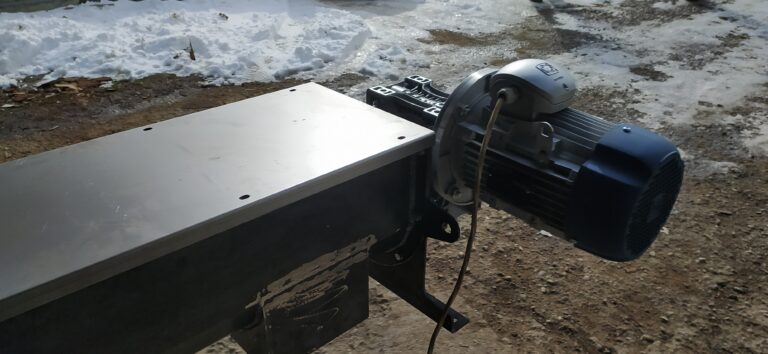
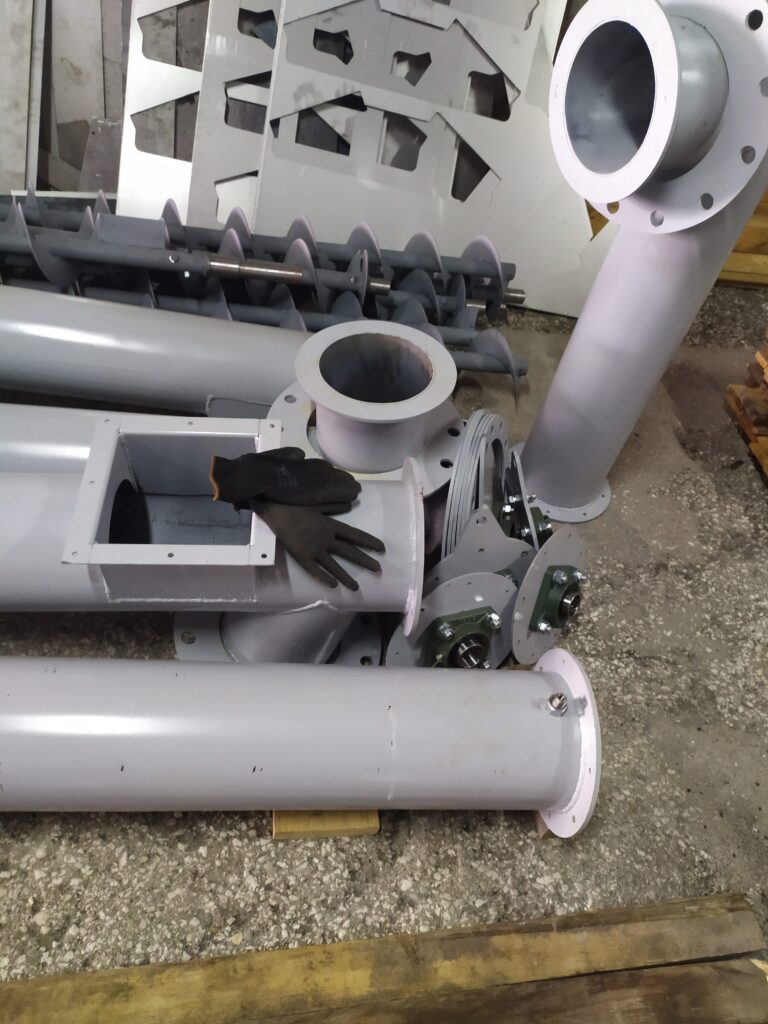
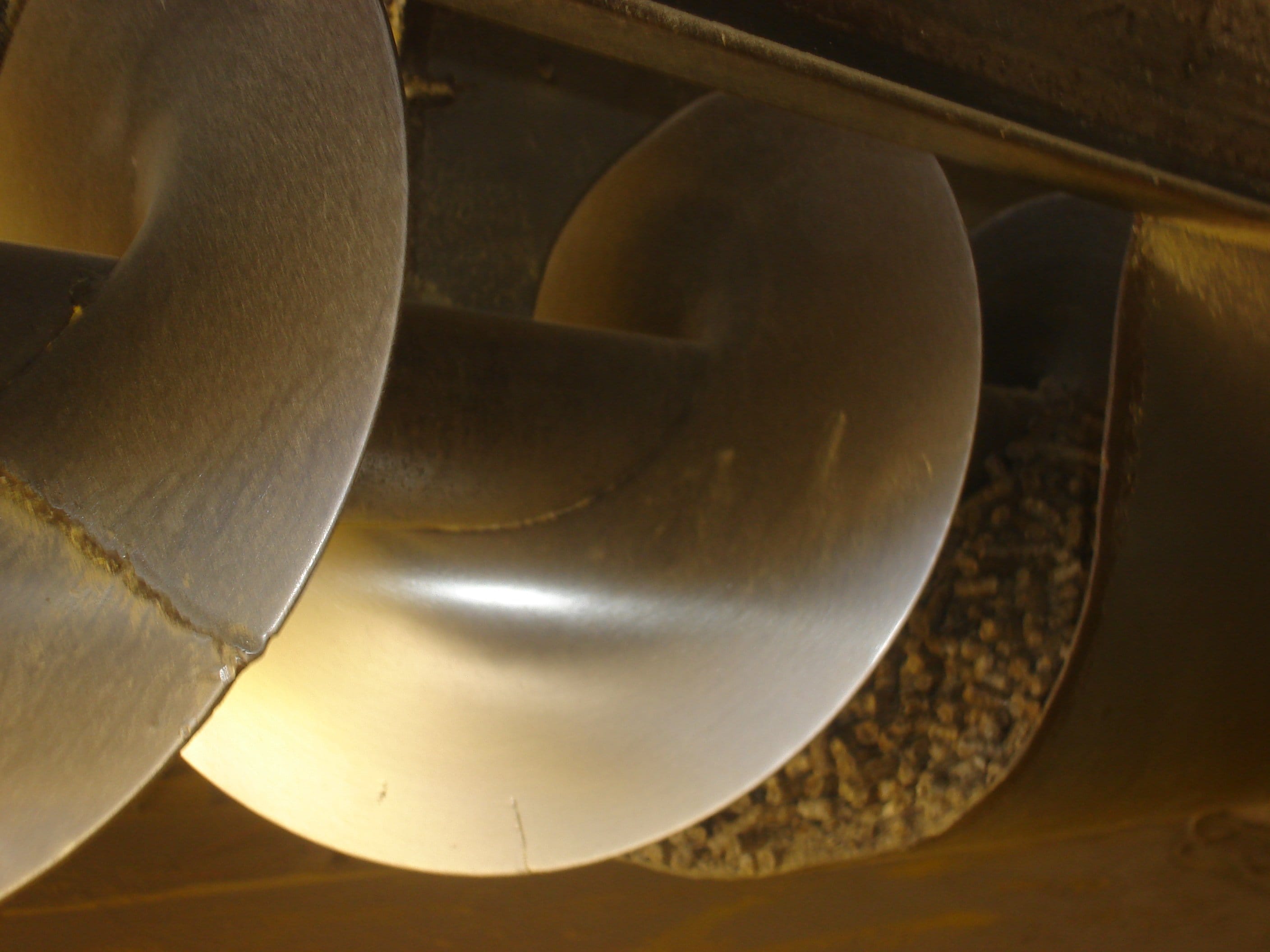
Screw conveyors are one of the most widely used systems for conveying bulk materials in industry. They consist of a rotating shaft with a metal flight welded around it. As the shaft turns, the flight pushes the material forward along a horizontal, inclined or vertical path.
The efficiency of the whole conveyor depends directly on the quality of the flight – a worn or poor-quality flight means lower output, higher energy consumption and frequent breakdowns.
Terminology – what is what?
Screw flight segment (auger flight)
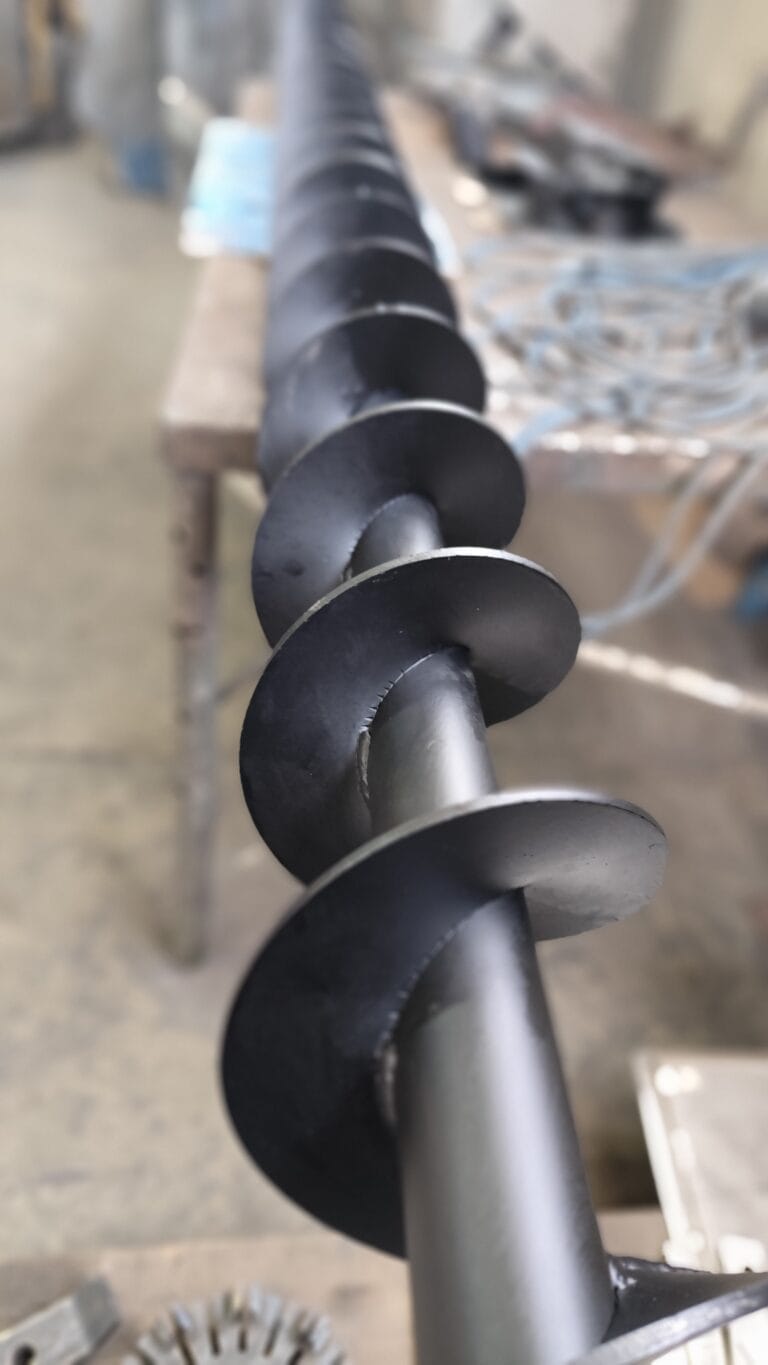
This is the individual metal element – one turn of the flight. It is a flat disc of sheet steel, cut along a radius and formed into a helix. One segment usually covers 360° (one full turn).
Screw flight (screw conveyor flight / continuous flight)
This is the term for the whole helix as a component. It can consist of one long formed segment or of many individual segments welded one after another along the shaft.
In practice: When we talk about manufacturing, we usually mean individual screw flight segments, which are then welded to the shaft when the conveyor is assembled. The term “flight” is used to describe the complete configuration.
Key terms
– Pitch – the distance between two consecutive turns of the flight
– Outer diameter – the diameter of the outer edge of the flight
– Inner diameter – the diameter of the centre hole (where it is welded to the shaft)
– Flight thickness – the thickness of the sheet material
– Hand – right-hand or left-hand
How a screw flight segment is made
Manufacturing screw flight segments involves several precise steps:
1. Choosing and preparing the material
Production starts with high-quality sheet steel – carbon (S235JR, S355JR) or stainless (AISI 304, AISI 316), depending on the application. Sheet thickness is chosen according to the expected load and the abrasiveness of the conveyed material – usually between 2 mm and 8 mm.
2. Cutting to size
A disc is cut from the sheet steel, sized to the outer diameter of the required segment. Modern production uses CNC plasma or laser cutting for maximum accuracy.
A hole is cut in the centre, matching the shaft diameter plus a small tolerance for welding.
3. Forming the helix
This is the most delicate part of the process. The flat, cut disc is placed in special flight-forming equipment. The machine gradually twists the material, pulling one end of the radial cut up and the other down, forming a helix.
The precision of forming determines the final pitch of the segment. Standard pitch is usually equal to the outer diameter, but segments with a shorter or longer pitch can be made as required.
4. Inspection and delivery
After forming, the segment is checked for:
– Dimensional accuracy (outer/inner diameter, pitch)
– Uniform forming
– No deformation or cracks in the material
The finished screw flight segments are delivered to the client, where they are welded to the shaft of the screw conveyor.
Technical parameters and dimensions
When ordering screw flight segments, you need to specify the following parameters:
Outer diameter
This is the diameter of the outer edge of the flight, and it sets the size of the conveyor. Standard industry sizes range from:
– Small diameters: Ø50 mm – Ø150 mm (compact conveyors, laboratory applications)
– Medium diameters: Ø200 mm – Ø400 mm (the most common in industry)
– Large diameters: Ø500 mm – Ø600 mm (heavy industry, high-capacity systems)
– Special diameters: above Ø600 mm (made to order)
The choice of diameter depends on the required capacity, the material properties and the available space.
Inner diameter
The inner diameter of the segment must match the diameter of the shaft it will be fitted on. A tolerance of 1–2 mm is usually left to make welding easier.
Pitch
Pitch is the distance along the shaft between two consecutive turns of the flight. It is a critical parameter that affects:
– Capacity: longer pitch = more material per turn
– Conveying speed: longer pitch = faster material movement
– Efficiency: shorter pitch = better control on inclined conveyors
Standard pitch: equal to the outer diameter (for example, with a Ø300 mm diameter the pitch is 300 mm)
Variable pitch: at the start of the conveyor, segments with a shorter pitch are sometimes used to ensure even feeding, after which the pitch increases for faster conveying.
Material thickness
Sheet thickness is chosen according to:
– Load: heavy materials need thicker material
– Abrasiveness: abrasive materials wear the flight faster
– Diameter: larger diameters usually need thicker material for structural strength
Standard thicknesses:
– 2–3 mm: light materials (grain, feed)
– 4–6 mm: medium materials (flour, sugar, light chemicals)
– 6–10 mm: heavy and abrasive materials (sand, gravel, minerals)
Hand of flight
Right-hand: when the shaft turns clockwise (viewed from the front), the material moves forward. This is the standard configuration.
Left-hand: the opposite configuration. Used when the motor requires anticlockwise rotation, or for special applications.
Important: the hand of the flight must match the direction of motor rotation, otherwise the material will move the wrong way!
Materials – what to choose
The choice of material for screw flight segments is critical for a long service life and efficiency.
Carbon steel (S235JR, S355JR)
S235JR (equivalent to the old St37 designation):
– The most widely used material for general applications
– Good weldability and machinability
– Best value for money
– Suitable for: grain, feed, light construction materials, dry products
S355JR (equivalent to the old St52):
– Higher strength than S235JR
– Used for heavier loads
– Better wear resistance
– Suitable for: heavy materials, high-capacity systems
When to choose carbon steel
– Dry, non-corrosive materials
– Moderate operating temperatures (-20°C to +80°C)
– Price is an important factor
– Galvanised versions can be used for extra protection if needed
AISI 304 stainless steel
– Excellent corrosion resistance
– Easy to clean
– Meets hygiene standards
– Suitable for food contact
When to choose AISI 304
– Food industry: flour, sugar, salt, coffee, cocoa
– Pharmaceutical industry: powdered products
– Humid environments: where corrosion is possible
– Hygiene requirements: where easy cleaning is required
AISI 316 stainless steel
– Even higher corrosion resistance than AISI 304
– Resistant to chemically aggressive environments
– Contains molybdenum for extra protection
– Suitable for marine and chemically aggressive environments
When to choose AISI 316
– Chemical industry: fertilisers, acids, chemical products
– Marine climate: coastal areas with high humidity and salty air
– Aggressive environments: where AISI 304 is not enough
– Pharmaceutical industry: for the highest purity requirements
Quick material selection table
Application | Material | Thickness |
|---|---|---|
Grain, feed | S235JR | 3–4 mm |
Food industry | AISI 304 | 3–4 mm |
Construction materials (dry) | S235JR | 4–6 mm |
Chemical products | AISI 316 | 4–6 mm |
Sand, gravel (abrasive) | S355JR | 6–10 mm |
Humid environment | AISI 304/316 | 4–6 mm |
Types of screw flights (configurations)
Besides the standard continuous flight, there are specialised configurations for different applications:
Standard flight
The most common type – a continuous flight with a uniform pitch. It provides even conveying along the whole length of the conveyor.
Applications: general use for most bulk materials – grain, flour, sugar, plastic granules.
Ribbon flight
Instead of a full metal surface, a ribbon flight has only an outer ring (ribbon) connected to the shaft by radial arms. This reduces weight and makes cleaning easier.
Applications: sticky materials, materials that tend to cake, and where easy cleaning matters.
Cut flight
The flight is cut into segments with gaps between them. This allows the material to mix while it is conveyed.
Applications: mixing conveyors, when you want to blend different components during conveying.
Cut and folded flight
The flight is cut and the sections are folded at an angle. This creates turbulence and intensive mixing.
Applications: intensive mixing and homogenising of materials.
Variable pitch
The pitch of the flight changes along the length of the conveyor. It usually starts with a shorter pitch and gradually increases.
Applications:
– Hoppers with a lot of material – a short pitch at the start prevents overloading
– Inclined conveyors – a shorter pitch gives better control
– Dosing systems – variable pitch allows precise dosing
Conclusion
Screw flights and segments are critical components in industrial conveying systems. The right choice of diameter, material, thickness and configuration directly affects the efficiency, service life and maintenance costs of your system.
Understanding the technical parameters helps you make an informed decision – whether you are ordering spare parts for an existing conveyor or designing a new system from scratch.
If you have questions about choosing the parameters for your specific application, our engineers are available for a free technical consultation.
Need screw flight segments?
We manufacture screw flights and segments from Ø50 mm to Ø600 mm in all the materials and configurations described.
Subscribe to our newsletter
Get news about completed projects, technical articles and practical solutions for conveying systems. We send only useful content – no spam.