Picture this: Saturday morning, 8:00. Your phone rings. On the other end is a worried production manager. The plant’s screw conveyor has stopped. The whole production line is blocked. Every hour costs thousands of euros in lost output, delayed deliveries and nervous customers waiting for their orders.
This situation is not made up. It happens every day in hundreds of plants around the world. And according to a new global report by ABB Motion, the problem is far more serious than most companies imagine.
What the ABB study reveals
In July 2025, ABB, in partnership with Sapio Research, surveyed 3,600 senior managers across industrial sectors – from food and energy to chemicals and metals. The results are more than alarming.
Almost half of industrial plants – exactly 44% – face unplanned downtime every month. An even more worrying figure: 26% of companies experience at least one unplanned stoppage a week. That means one in four factories in the world stops at least once every seven days because of unexpected equipment problems.
But the real shock comes with the financial consequences. The average cost of one hour of unplanned downtime is $169,889 – about €156,500. Read that figure again, because it is worth it. Less than a day of stopped production can cost a company millions.
For 7% of the companies surveyed, the cost is even higher – over half a million dollars an hour. Figures like these could bring a mid-sized manufacturer to its knees within a week.
Why downtime happens
When we talk to production managers, we often hear: “The machine is old”, “The bearing started making noise a month ago, but we had no time”, “We planned to replace the system, but orders were piling up”. All these excuses, however understandable, come down to one root cause – the lack of a proactive approach to managing equipment.
The ABB report shows that although 95% of managers know the concept of equipment lifecycle management, only 55% have a clear modernisation strategy. The other 45% act case by case or, worse, entirely reactively – they wait for something to break before they respond.
Interestingly, a strategy on its own is not always enough. The study shows that companies with proactive plans sometimes have higher rates of weekly downtime (19%) than those that act case by case (7%). Paradoxical, isn’t it? But the explanation is logical – not every strategy is a good strategy. A badly executed modernisation, without proper planning and expertise, can cause more problems than it solves.
Ageing equipment is a silent threat
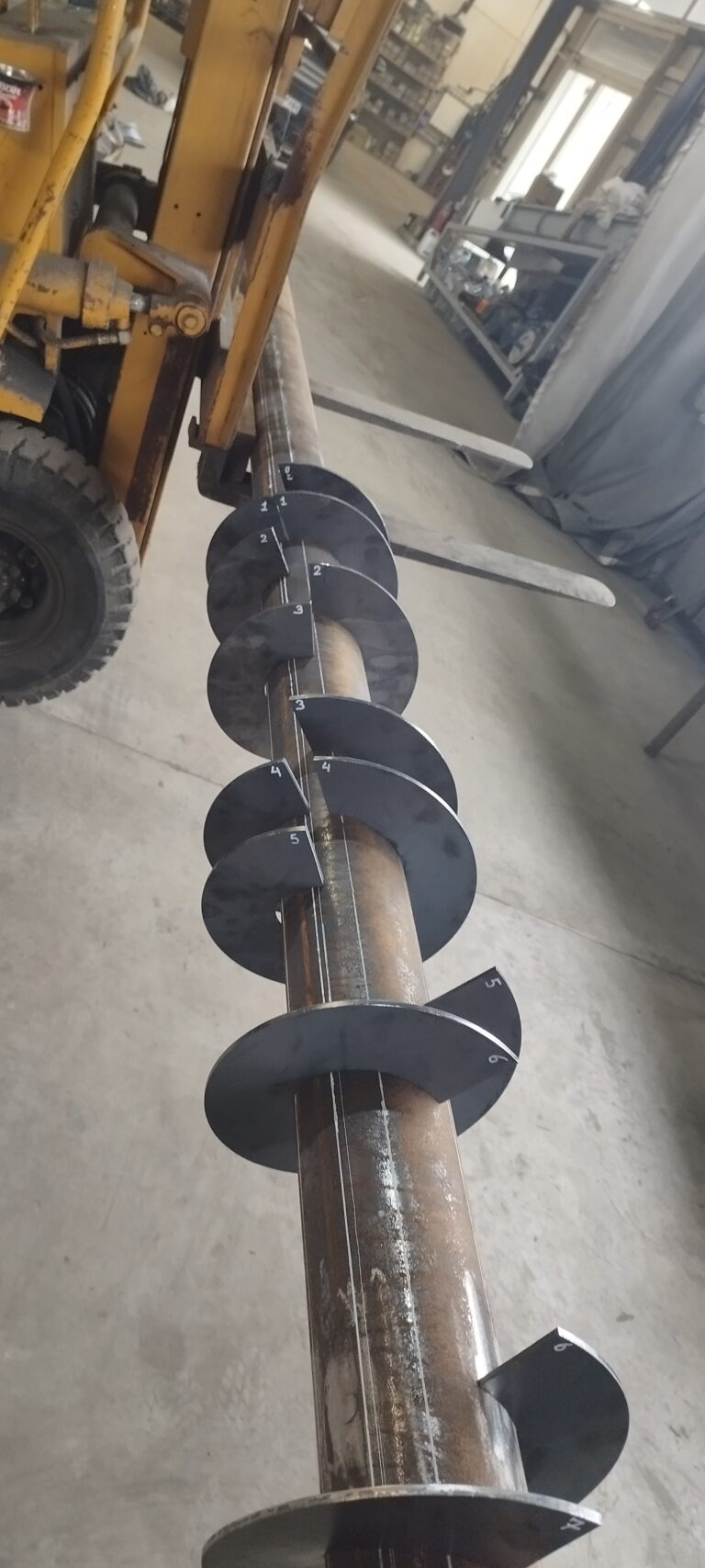
In the context of conveying systems and silo equipment, old or poorly maintained machinery is a ticking time bomb. A chain conveyor with worn links, a screw conveyor with worn bearings, a belt conveyor whose belt has torn several times – any one of these can stop a whole production line for hours, if not days.
The problem is that old components rarely fail suddenly. They give signals – increased vibration, strange noise, overheating, unusual energy consumption. But in the busy day-to-day of production these signals are often ignored. “We’ll fix it during the break”, “After this month”, “Once we finish this order”. Until one morning everything simply stops.
The real cost of downtime
When people talk about downtime costs, most think only of lost output. But the real cost is much higher and more complex.
Picture a cement plant. The bucket elevator feeding raw material to the silo suddenly stops. The gearbox has failed. There is no spare part in stock. Delivery from abroad will take 2 weeks. The whole production chain is blocked.
What happens? First, there is the direct loss from stopped production. According to the ABB study, most companies (47%) estimate it costs them between $10,000 and $100,000 an hour. For 29% of companies the cost is between $100,000 and $500,000 an hour. But that is only the beginning.
Then there is the knock-on effect. Customers waiting for deliveries need explanations. Supply contracts may be terminated. The company’s reputation suffers. Workers are left idle or reassigned to other tasks, which disrupts the whole organisation. The maintenance team works in emergency mode, often at night and at weekends, which raises labour costs.
And if the spare part has to be express-shipped from abroad? The price goes up by another 200–300%. Installation is urgent, which means extra costs. And that is not all – an emergency repair is often a temporary fix that only postpones the more serious modernisation that will have to happen anyway.
Why companies do not invest in modernisation
If modernisation is so important, why do so few companies do it proactively? The ABB report gives a clear answer: 37% say budget constraints are the biggest obstacle. Another 30% worry whether the modernisation will really work as it should. 28% admit they lack the in-house expertise to manage the process.
There is another problem too – 26% of managers say they find it hard to explain the return on investment to senior management. And here lies the paradox: everyone knows a breakdown is expensive, but it is hard to prove exactly how much you save by preventing it. Stopped production is visible and painful. A prevented breakdown is invisible – and therefore underestimated.
Interestingly, despite these challenges, 65% of companies have carried out modernisation in the last two years. This shows that more and more organisations understand that lifecycle management is not a luxury but a necessity for survival.
How conveying systems affect operational stability
In plants handling bulk materials, conveying systems are often the unsung heroes of the process. While everything works, nobody thinks about them. But the moment they stop, the whole plant is paralysed.
Take a typical flour mill. The raw material is unloaded from the truck and fed by a screw conveyor to the elevator. From there it goes to storage hoppers. Then the material is conveyed again to processing. The chain is long, and every link in it is critical.
If the conveyor bearing starts making noise or the elevator belt has cracks, production cannot continue. And because these systems often work in harsh conditions – dusty environments, abrasive materials, constant load – wear is inevitable. The question is not whether a problem will appear, but when, and how you will respond.
When is the time to modernise
According to the ABB study, companies that carry out even occasional but well-targeted modernisation experience significantly less downtime. Those that modernise from time to time report weekly stoppages in only 7% of cases, while 45% have no serious problems at all within the year.
This does not necessarily mean replacing the whole system. Sometimes it is enough to replace critical components – worn bearings, outdated motors, broken chains. In other cases it may be more sensible to upgrade the existing system with modern solutions instead of scrapping it entirely.
Interestingly, 60% of the respondents in the ABB study put long-term savings as the most important factor in their decision. That is the right way of thinking. Yes, the initial investment may look high. But when you compare it with the cost of a few weeks of downtime, the calculation suddenly becomes much clearer.
The environmental side of modernisation
Besides the financial benefits, modernisation brings significant environmental advantages that more and more companies are starting to value. The ABB report shows that 70% of industrial managers believe modernisation can cut CO2 emissions by 10 to 30% or more compared with replacing equipment completely.
These figures are not theory. When ABB compared the environmental footprint of modernising versus fully replacing an industrial drive, the results were impressive – modernisation saves between 50% and 57% of CO2 emissions. That is equivalent to 820 to 1,560 kg of CO2 per unit, or the emissions from driving a car 3,500 to 6,500 kilometres.
Why? Because modernisation reuses existing infrastructure – frames, casings, mounting parts. Instead of manufacturing everything again, you keep much of the equipment and replace only what is critical. This reduces the need for raw materials, production energy and transport of heavy components.
What you can do
If your plant still relies on old conveying systems or often faces unplanned downtime, it may be time to look more closely at the condition of your equipment. You do not have to do everything at once. Start with an audit of the critical components – those whose failure stops production completely.
Ask yourself a few questions: How many times did we have unplanned downtime in the last year? What were the causes? How much did it cost us? Which components are the most critical, and what condition are they in? Do we have spare parts for them?
Regular preventive maintenance is the first step. Lubricating bearings, checking wear, visual inspection of critical parts – simple things, but they make a huge difference. The next step is to plan the modernisation of the riskiest components before they break.
Finally, when you plan a new investment in equipment, do not look only at the initial price. Consider the long-term costs – reliability, ease of maintenance, availability of spare parts, energy efficiency. Cheap equipment often turns out to be the most expensive in the long run.
Conclusion
The data from the ABB study paints a clear picture: unplanned downtime is an expensive problem that affects almost half of the world’s industrial plants. At an average cost of nearly $170,000 an hour, every stoppage is not just an inconvenience – it is a serious threat to a company’s financial stability.
The good news is that the solution exists. Proactive equipment lifecycle management, regular preventive maintenance and timely modernisation can dramatically reduce the risk of downtime. Companies that invest in reliable equipment and maintain it carefully report far fewer problems and more stable operation.
The question is not whether you can afford to modernise your equipment. The question is whether you can afford not to.
Source: ABB Motion – Modernization for Resilience Report, 2025
Want to reduce downtime?
If you would like to discuss the condition of your conveying equipment or look at modernisation options, contact us. We will be glad to help you reduce risks and keep your production running smoothly.
Subscribe to our newsletter
Get news about completed projects, technical articles and practical solutions for conveying systems. We send only useful content – no spam.