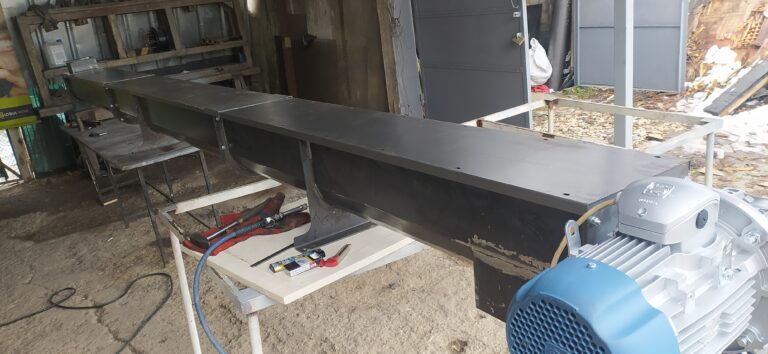
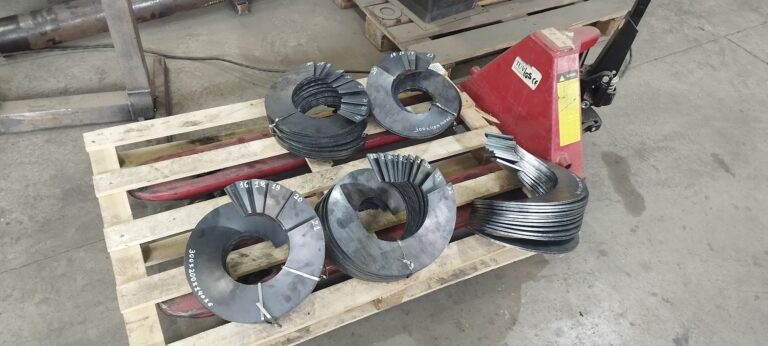
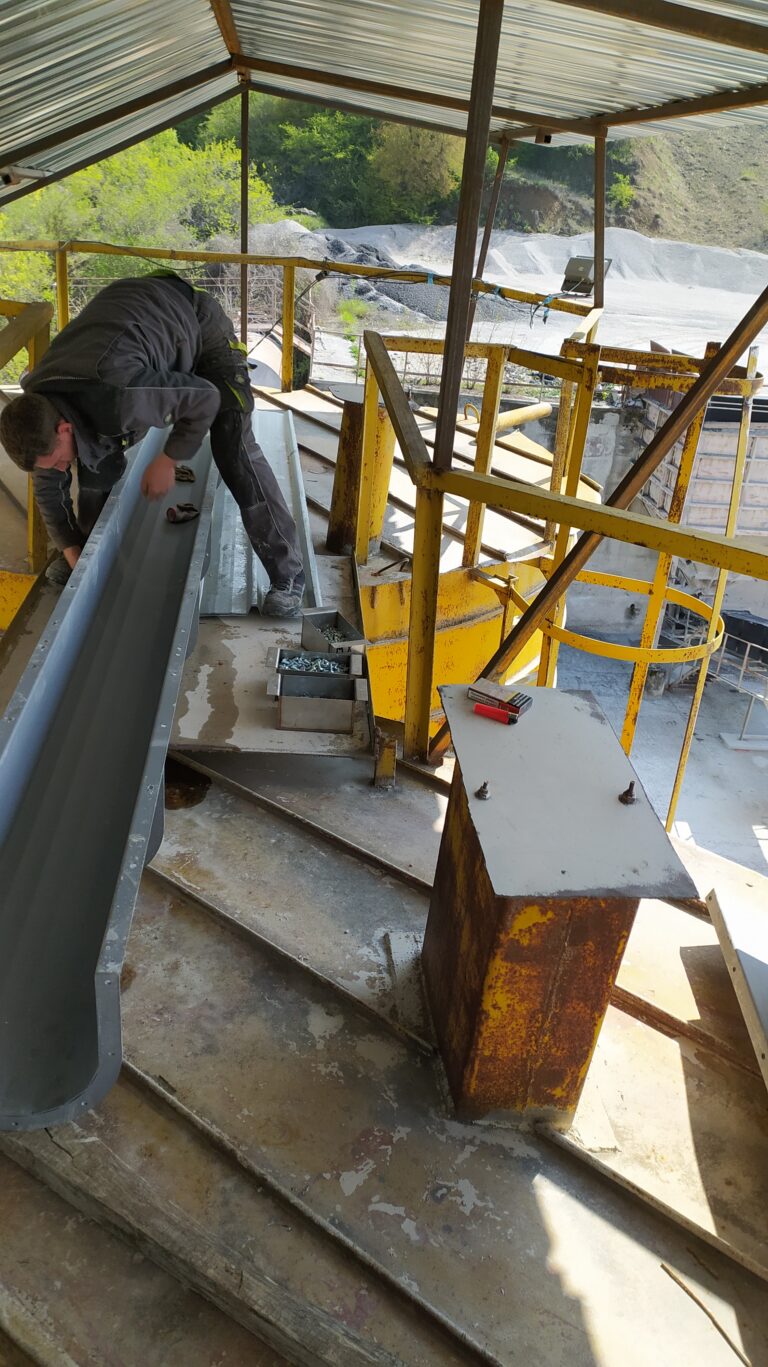
When buying a screw conveyor, chain conveyor or belt conveyor, the easiest thing is to compare the prices in the quotations. But the price of the machine is only the first cost. The real cost comes later – from wear, repairs and, above all, the days the production line stands still because the machine has stopped. In this article we show how to do the full calculation, with a five-year example, and where exactly the difference lies between a cheap machine and one that keeps working after its warranty period.
1. What one day of downtime costs
A conveying machine rarely works alone. It connects the silo to the mixer, the mill to the hopper or the line to the bagging station. When it stops, everything after it stops too. So the cost of one day of downtime is not the cost of the repair, but the sum of everything the plant loses:
Cost of a day of downtime = lost profit on output + wages of people waiting + overtime to catch up + penalties and late deliveries
Most technical managers know this figure for their plant. If you do not, it is worth working it out once – it changes the way quotations are compared. According to the ABB report on industrial downtime, unplanned stoppages are among the biggest hidden costs in production.
2. The full calculation over several years
To compare two machines fairly, work out their cost over the same period, for example five years:
Total cost = machine price + installation + all repairs and spare parts + days of downtime × cost per day of downtime + energy
An example with round numbers. Two quotations for a screw conveyor that runs 24/7 with an abrasive material. One day of downtime costs the plant €1,500.
| Over 5 years | Machine A (cheaper) | Machine B (more durable) |
|---|---|---|
| Machine price | 10 000 € | 12 500 € |
| Flight replacement | 3 times × €2,000 = €6,000 | 1 time × €2,200 = €2,200 |
| Bearings and seals | 1 500 € | 800 € |
| Days of downtime | 3 planned + 4 unplanned = 7 days | 1 planned day |
| Cost of downtime | 7 × 1 500 € = 10 500 € | 1 × 1 500 € = 1 500 € |
| Total | 28 000 € | 17 000 € |
The machine that is €2,500 more expensive in the quotation turns out €11,000 cheaper over five years. The numbers in the example are illustrative, but the ratio is typical: with 24/7 operation and abrasive material, downtime weighs more than the price of the machine.
3. Where the difference between the two machines lies
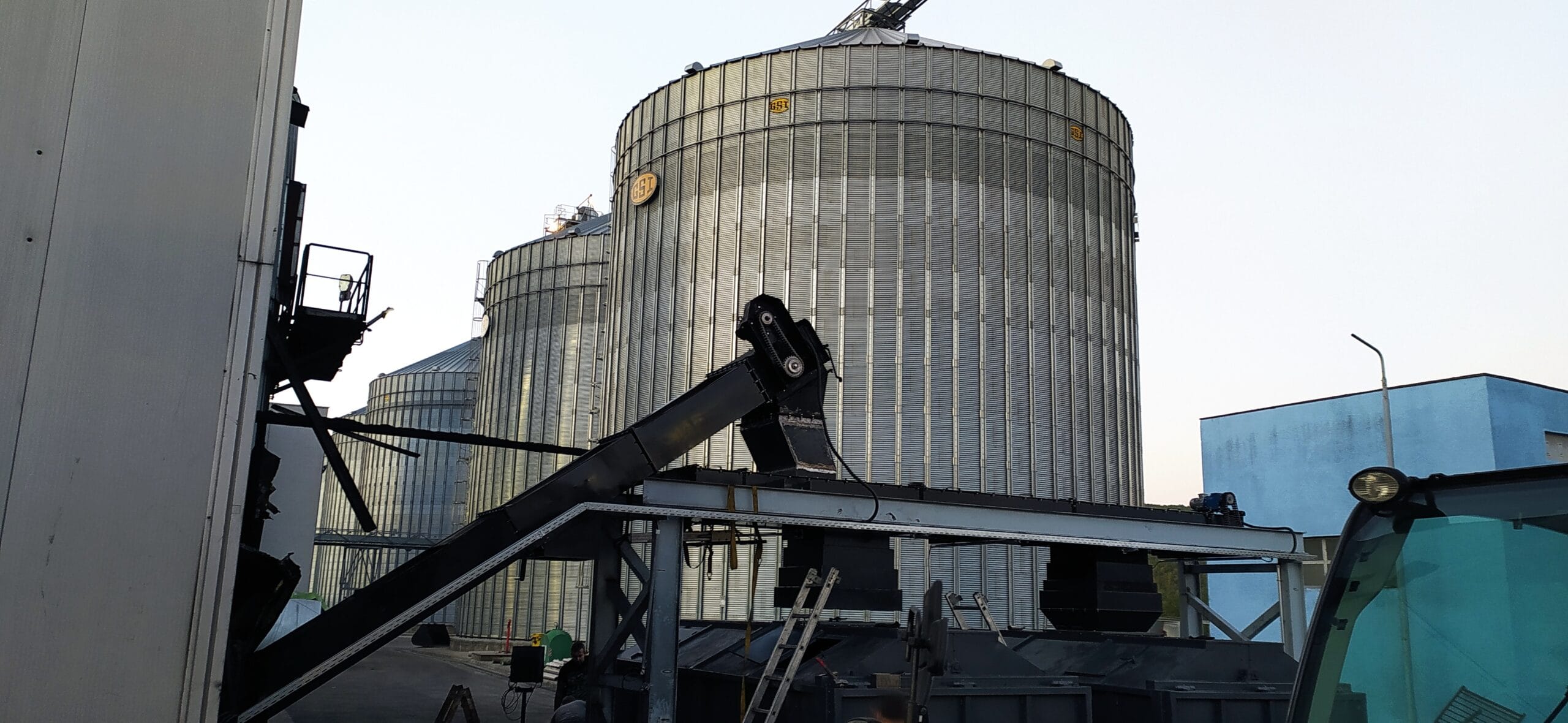
The difference usually cannot be seen in a photo. It lies in a few decisions made at the design stage.
| Solution | Cheap option | Durable option |
|---|---|---|
| Screw flight | thin, carbon (mild) steel | thicker or wear-resistant steel where the material rubs most |
| Chain conveyor paddles and guides | carbon (mild) steel | wear-resistant steel, e.g. Hardox |
| Geared motor | service factor about 1.0 – at the limit of its load | service factor 1.4 or more for 24/7 operation |
| Bearings | in the material zone, unprotected | outside the material zone, sealed |
| Maintenance | the machine has to be dismantled to inspect it | inspection covers, accessible bearings, standard spare parts |
The service factor (fs) shows how much the gearbox’s rated torque exceeds the torque the machine needs. A gearbox with fs 1.0 runs at its limit and is overloaded by every heavier feed or start under load. It heats up, the oil ages faster and the bearings and gears wear. For 24/7 operation with uneven loading we choose fs 1.4 and up. The difference in the gearbox price is small; the difference in its service life is large.
4. What you gain when the machine is built for your site
A catalogue machine is built for average conditions. When the material is more abrasive, wetter or heavier than average, it wears faster than promised. When the machine is designed for the specific material and duty, the wearing parts are sized in the drawing, not after the first breakdown.
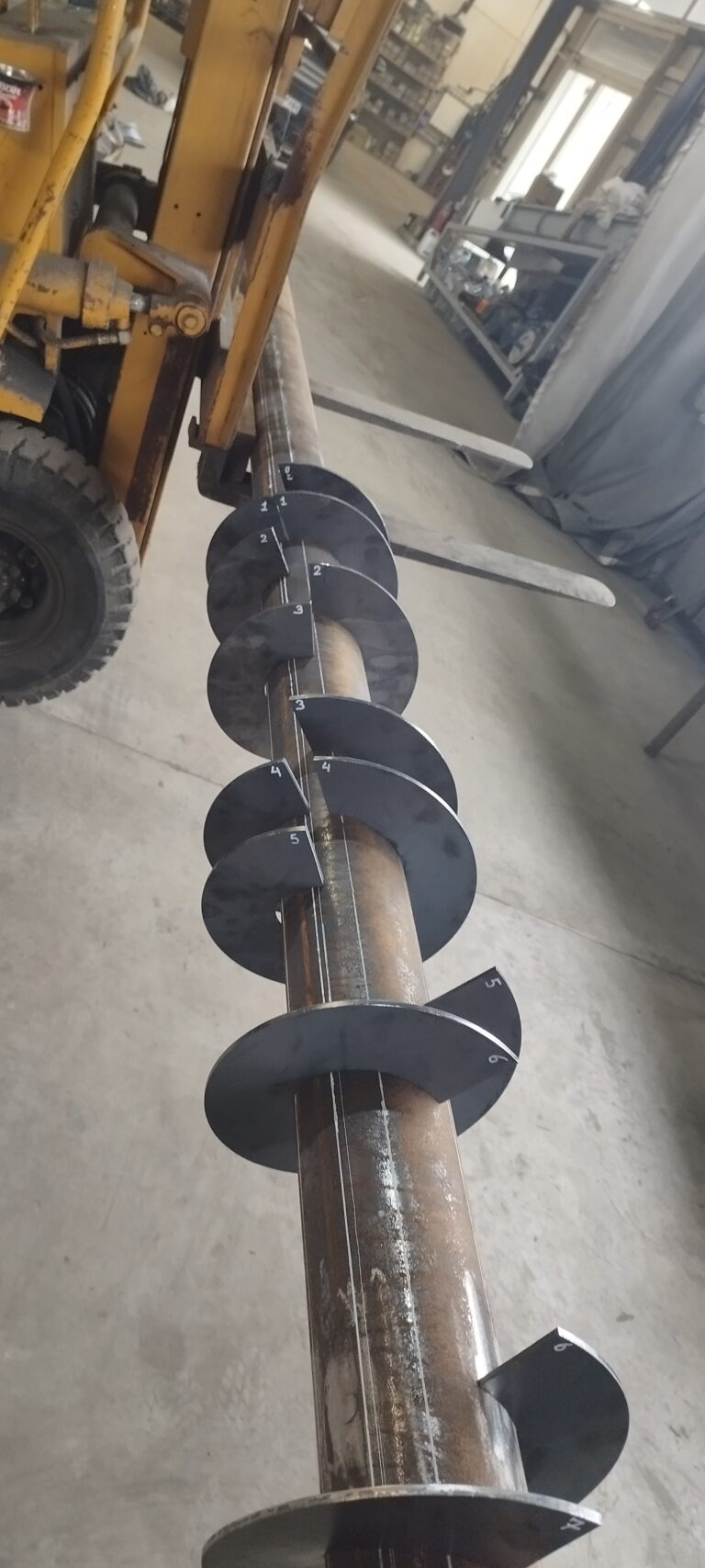
There is an advantage in repairs too. When the manufacturer has the drawings and can react quickly, spare parts are made in days instead of waiting months. We keep the drawings of the machines we build, so worn parts such as screw flights can be made to size and shipped, and only what really needs replacing is replaced.
5. What to ask before you choose
- What material and thickness are the wearing parts made of?
- What service factor was the geared motor chosen with?
- Where are the bearings and how are they protected from the material?
- How is the machine inspected and cleaned – are there inspection covers?
- How quickly are spare parts delivered, and does the manufacturer keep the drawings to make them to size?
These answers tell you more about future costs than the price in the quotation.
6. Common mistakes when comparing quotations
- Comparing only the final price. Two quotations with a different flight thickness or a different gearbox are not for the same machine.
- Unspecified duty. A machine for one shift and a machine for 24/7 operation are sized differently. If the duty is not stated in the enquiry, the quotations cannot be compared.
- Leaving out installation and connections. A cheap machine that does not fit the silo flanges costs extra days on site.
- Ignoring downtime. The most expensive cost is not in any quotation.
The more we know about the material, capacity and duty, the more accurately we size the machine. If we know it will run 24/7 with an abrasive material, we plan for it in the drawing.
See also screw flights made to size and the article Repair or new machine: which pays off when.