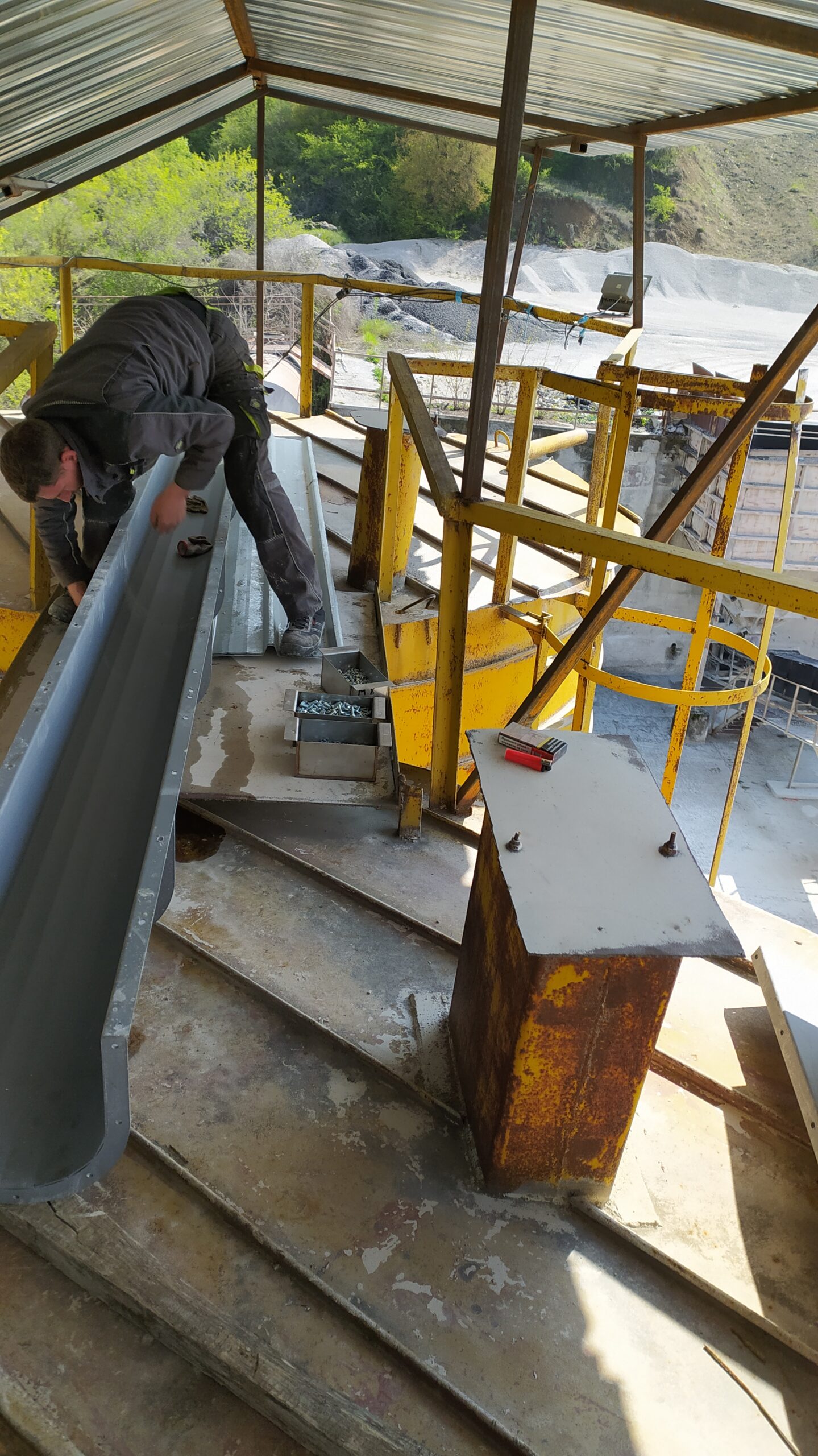
When a production line is waiting for a new screw conveyor, lead time matters as much as price. Every day without the machine means manual work, temporary fixes or a stopped line – we show what that costs in the article Downtime in industry. We do not keep screw conveyors in stock – each one is built to the dimensions, material and capacity of the specific site. Manufacturing usually takes about 20 working days, and the exact lead time is stated in the quotation.
Why days and not months? Because design, manufacturing and installation are done by one company in one workshop, and each stage starts as soon as the previous one ends. Below we describe what a screw conveyor goes through from enquiry to installation, and what can shorten or extend the lead time.
1. Clarification and design
Everything starts with the data: what the material is, what capacity is needed, the length, the angle the conveyor will work at, where the inlet and outlets are and how it will be fed. These determine the flight diameter and pitch, the material thickness, the type of casing – tube or trough – and the drive power. How capacity and power are calculated is explained in the article How to calculate screw conveyor capacity and power.
When the enquiry already contains complete data, the quotation and design are done quickly. If something is unclear – for example the exact position of the outlets or how the conveyor connects to the hopper – it is better to clarify it now. Changing a drawing takes minutes; rework in the workshop or on site takes days. That is why we spend about a third of the time on every job on design and clarifying details.
2. Materials and bought-in parts
Once the quotation is approved, materials and bought-in parts are ordered straight away: plate, tubes, bearings, seals and the geared motor. Carbon (mild) steel and standard geared motors are usually delivered quickly and do not delay manufacturing.
Special designs take longer. Stainless steel in a non-standard thickness, wear-resistant steel, a geared motor with a special design or ATEX protection – all of these can extend the lead time. When such parts are involved, we say so in the quotation, so there are no surprises.
3. Manufacturing in the workshop
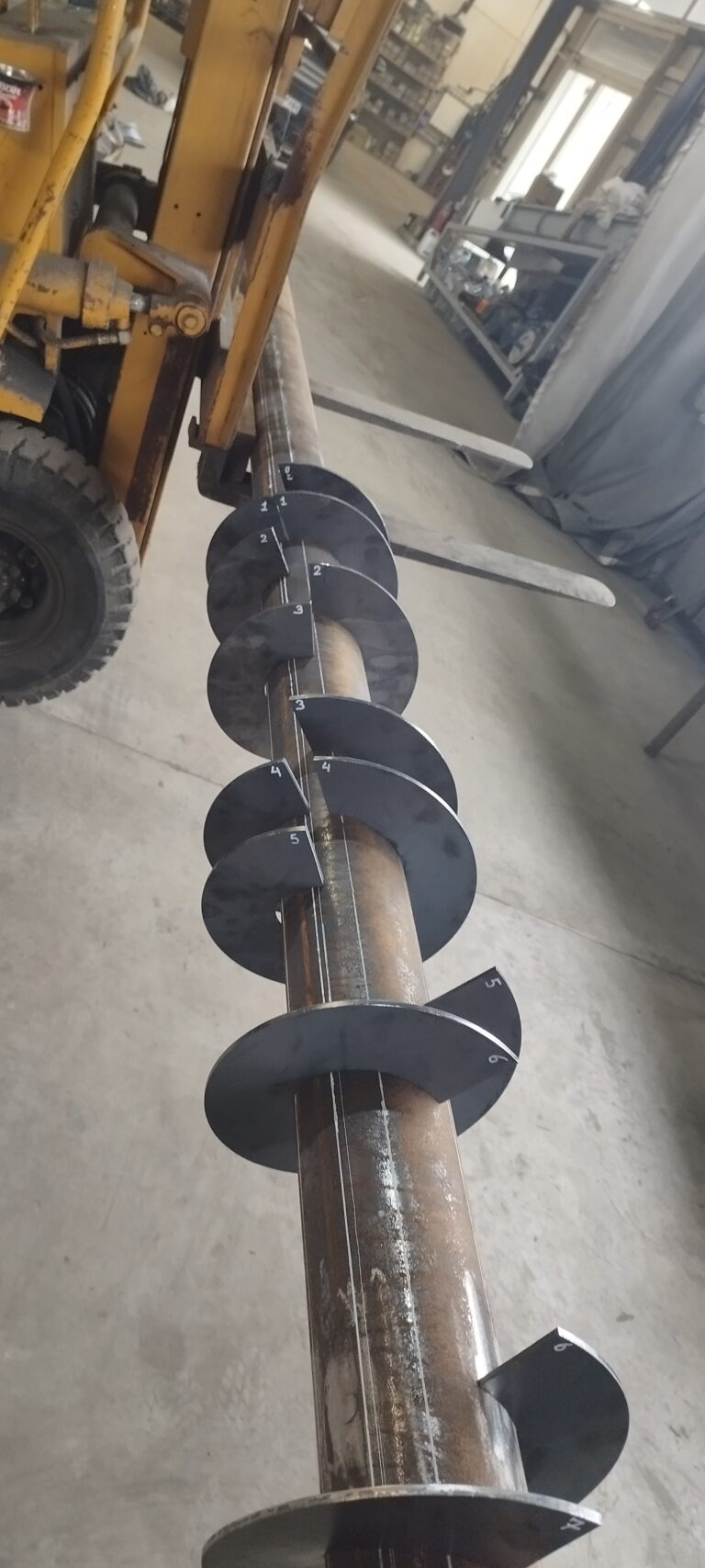
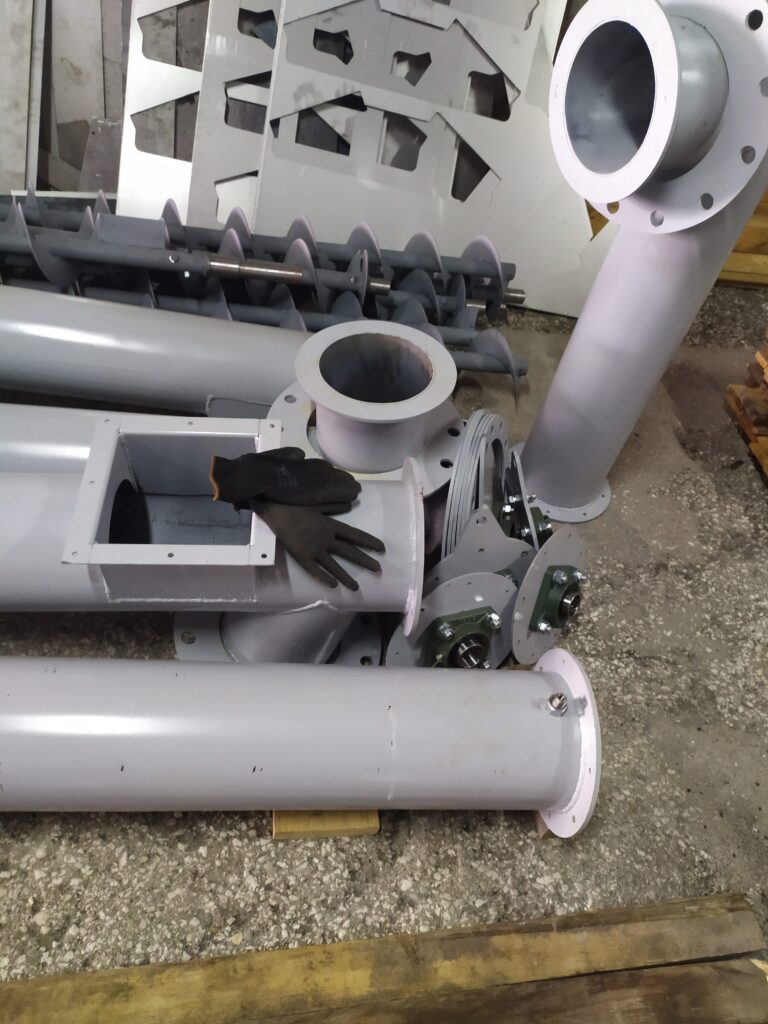
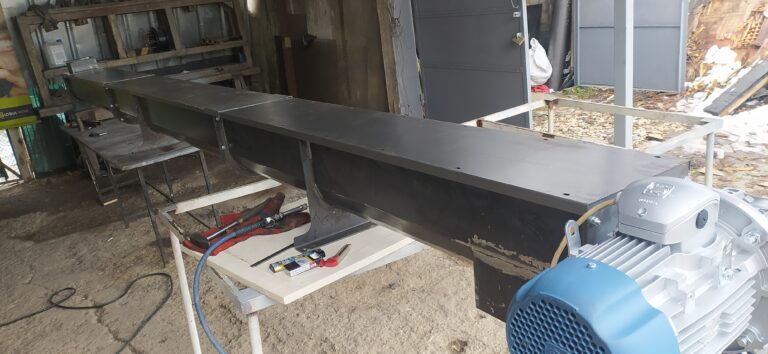
Manufacturing goes through several steps: cutting the plate, forming the flight segments and welding them onto the tube, making the casing with the inlet, outlets and inspection openings, and fitting the bearings, seals and drive. Finally the conveyor is painted – or cleaned, if it is stainless steel – and checked that the flight turns freely.
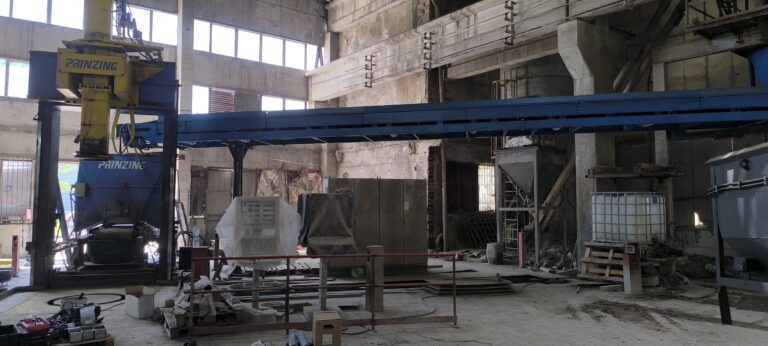
All of this is done in our own workshop, so we do not depend on subcontractors and we control the schedule ourselves. When tasks are clarified at the start, everyone in the team knows what to do and there are no surprises at the finish line.
4. Delivery and installation
We deliver across Europe and beyond; packaging is included and transport is quoted separately. The conveyor is delivered ready for installation, and longer machines in sections that are joined on site. If installation is needed, it is agreed as an additional service and planned together with the manufacturing time, so that it matches the site schedule.
5. The stages at a glance
| Stage | What happens | What it depends on |
|---|---|---|
| Clarification and design | data, quotation, drawings | how complete the data is |
| Materials and parts | plate, tubes, bearings, geared motor | standard or special design |
| Manufacturing | cutting, flight, welding, assembly, painting | size and complexity of the conveyor |
| Delivery and installation | transport, installation if needed | the site and its schedule |
6. What extends the lead time
- Incomplete data. If after the quotation it turns out that the length, angle or outlet positions are different, the design goes back a step.
- Changing requirements during the work. A change made after the flight or casing has been made almost always means rework.
- Special materials and drives. Parts with a long delivery time set the lead time of the whole conveyor.
- Holidays and suppliers. Public holidays and supplier delays can shift the schedule, so we take them into account when planning.
7. Common mistakes
- The conveyor is ordered at the last minute, when the old one has already stopped and the production line is waiting. Sometimes repair is the faster option – see Repair or new machine: which pays off when.
- The enquiry contains only length and diameter, without material and capacity – and the quotation is delayed by questions.
- Installation is not planned together with manufacturing, and the conveyor waits on site until space or a crew becomes available.
What to send us
With your first enquiry, tell us the material, the capacity you need, the length, the angle the conveyor will work at, where the inlet and outlets are and how it will be fed. A photo or sketch of the site helps a lot. The more complete the data, the faster the quotation – and the conveyor – arrive.
Looking for a similar solution?
See the screw conveyors we manufacture, or contact us for a quotation to your specification.
Subscribe to our newsletter
Get news about completed projects, technical articles and practical solutions for conveying systems. We send only useful content – no spam.