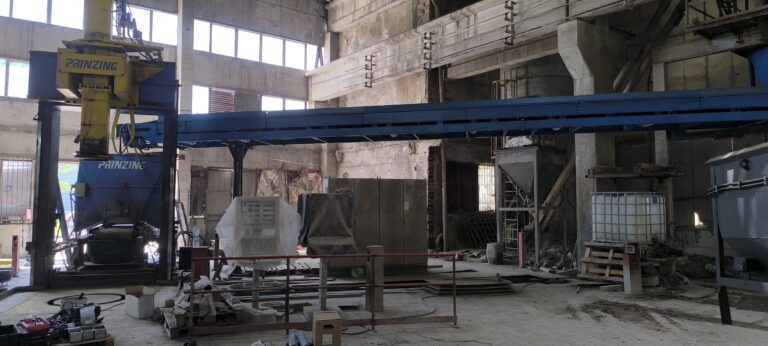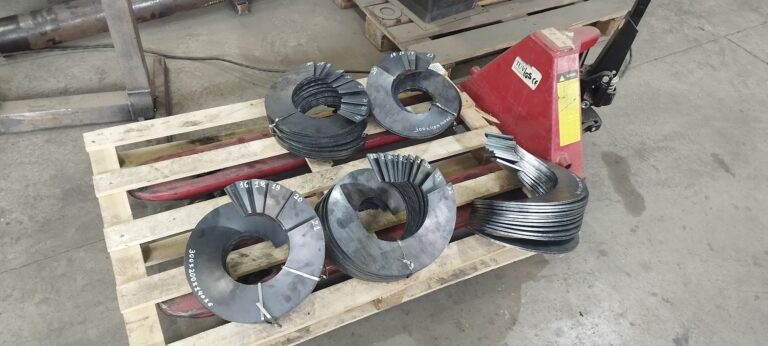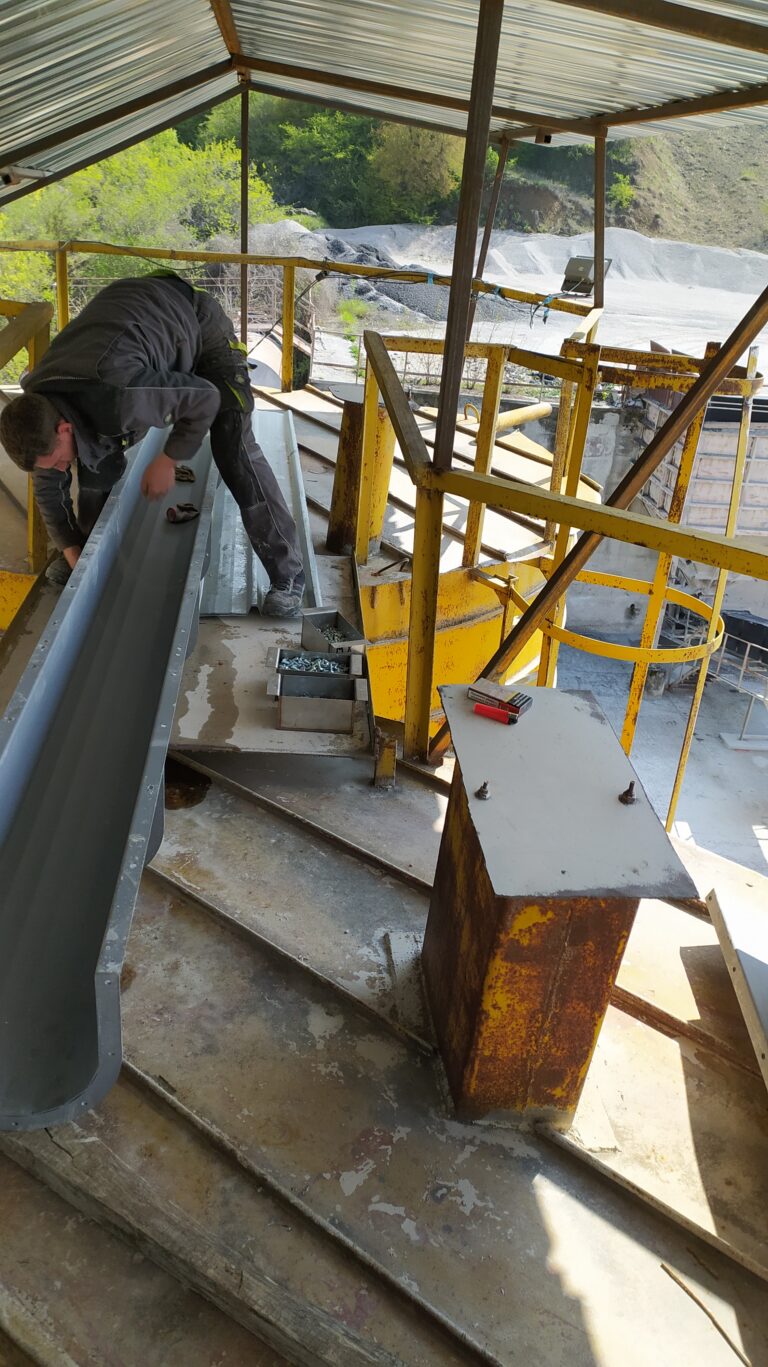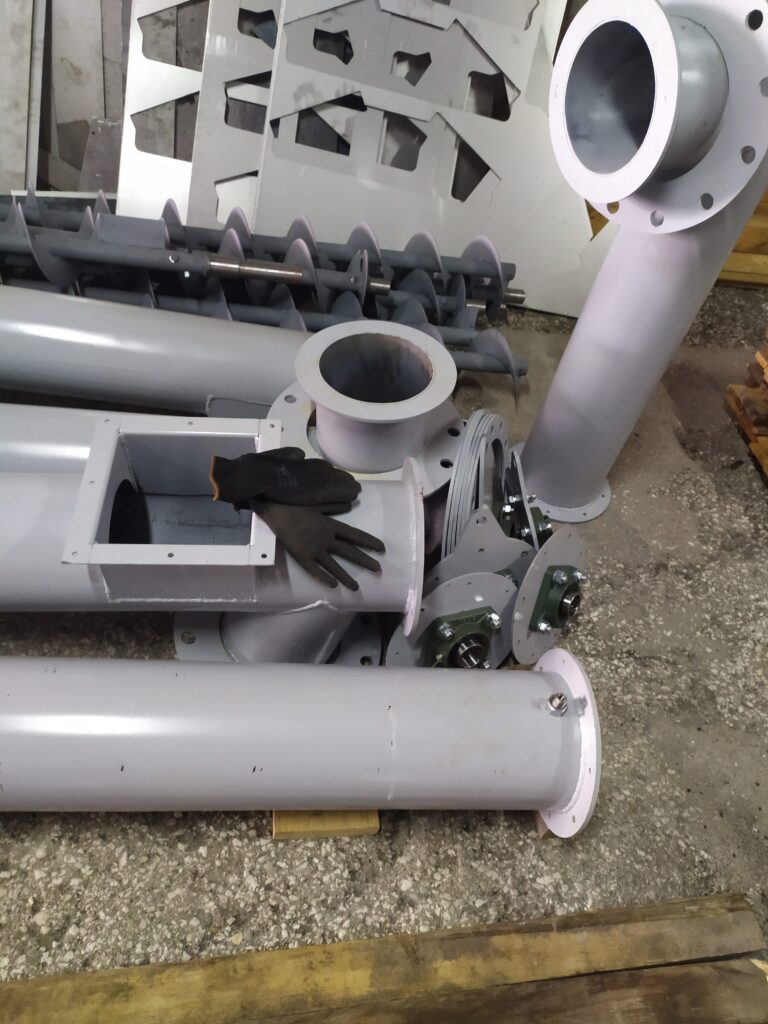
You walk into a modern factory and notice that the materials move by themselves. Grain rises from ground level to a silo 15 metres up. Packages travel quietly along the belt to palletising. Powdered raw materials disappear into a tube and seconds later appear exactly where they are needed. No forklifts driving back and forth. No workers carrying sacks on their shoulders. Everything flows smoothly, continuously, automatically.
That is the role of conveying systems in modern industry. Invisible when they work. Critical when they stop. In this article we look in detail at where and how conveyors are used, why they matter so much and what specific requirements each industry has.
Why conveyors became standard in industry
A few decades ago, moving materials around a plant was mostly manual work. Workers carrying sacks, forklifts going back and forth, breaks for rest. Output was limited by people’s physical capacity. The risk of injury was high. Mistakes were frequent.
Conveyors changed that for good. Suddenly materials could move continuously, 24 hours a day, 7 days a week, without fatigue and without mistakes. Output rose. Labour costs fell. Safety improved dramatically.
Efficiency and productivity
Picture a flour mill. Without a conveying system, unloading one truck with 20 tonnes of wheat would take hours of manual work or many forklift trips. With a well-designed system of screw conveyors and bucket elevators, the same truck is unloaded in 20–30 minutes, and the material goes straight into the silo, ready for processing.
Efficiency is not measured in speed alone. Conveyors provide accuracy – the right amount of material in the right place at the right time. This is critical for production lines where every step depends on the previous one.
Safety
Handling heavy materials has always been risky. 50 kg cement sacks carried on the shoulder. Hot material from the kiln. Toxic chemicals. Each of these carries a risk of injury.
Conveyors remove workers’ direct contact with hazardous or heavy materials. Enclosed systems such as tubular screw conveyors prevent dust. Automated processes reduce the need for people in risk zones. The result is a safer workplace and far fewer accidents at work.
Continuity
People get tired. They need breaks, shifts and days off. Conveyors work continuously as long as there is material to convey. In industries with a 24-hour production cycle, this is a critical advantage.
A cement plant runs day and night. The kiln cannot stop – the process requires continuous operation. Raw material must be fed constantly. The finished product must be taken away immediately. The conveying system provides this non-stop flow.
Grain industry and agriculture
When it comes to conveyor applications, the grain industry is perhaps the most classic example. Flour mills, feed mills, silos, grain stores – everywhere you see screw conveyors and bucket elevators at work.
A typical chain in a flour mill
A grain trailer arrives with 10 tonnes of wheat. An unloading screw draws it out of the trailer and feeds it to a horizontal conveyor. From there it goes to a bucket elevator that lifts it 15–20 metres. At the top the grain enters a distribution screw that directs it to the right silo. When it is time for processing, another screw takes the grain out of the silo and feeds it to the mill.
Every link in this chain is critical. If one stops, the whole production line is blocked. That is why equipment reliability is not a luxury – it is a basic requirement.
Why screw conveyors are so common here
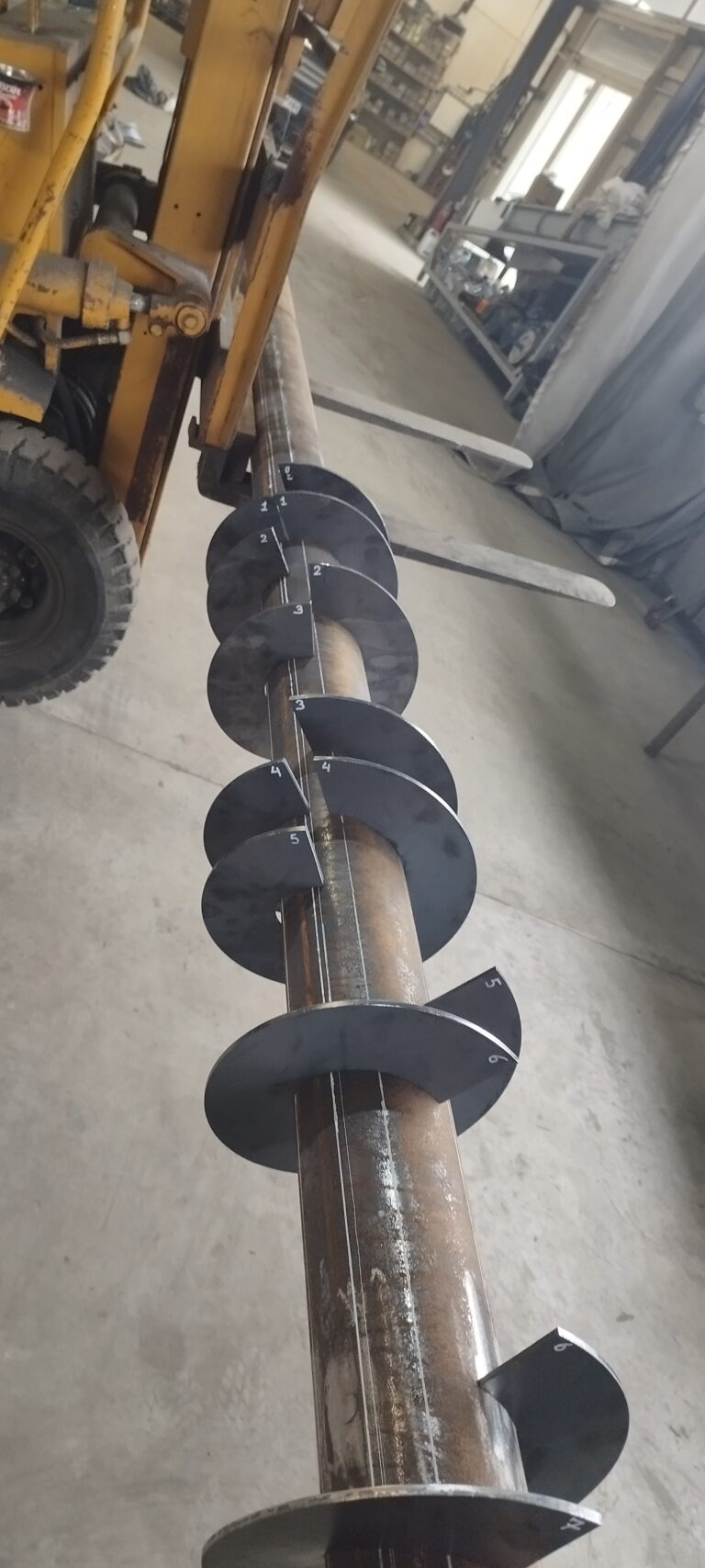
Enclosed system – no dust and no material loss. Gentle handling – grains are not broken in transit. Flexibility – they work horizontally, inclined and even vertically. Compactness – a small footprint for the capacity.
In the grain industry these features are critical. Dust is not just about cleanliness – it is about safety (explosion risk) and material loss. Broken grains lower product quality. Compactness allows installation in existing buildings without major reconstruction.
Food industry
Here the requirements are completely different. It is not only about efficiency – it is about hygiene, food safety and regulatory compliance.
Specific requirements
The construction material must be AISI 304 or 316 stainless steel – corrosion-resistant and approved for food contact. Surfaces must be smooth, with no places where residue can build up. All parts must be quick and easy to clean. Seals must be food-grade silicone or similar approved materials.
Applications
Bakeries – conveying flour from the silo to the mixers and moving dough pieces through the production line. Meat processing plants – feeding meat, mince or semi-finished products between production stages. Sugar plants – conveying sugar at different stages of refining. Dairies – moving powdered products such as milk powder or protein supplements.
In each of these cases cleanliness and hygiene come first. That is why belt conveyors and stainless steel screw conveyors are standard in this industry.
Construction materials industry
Cement plants, concrete batching plants, dry-mix plants – everywhere you see powerful conveying systems handling abrasive, powdered and heavy materials.
The challenges
Material abrasiveness is extremely high. Cement, lime and sand all wear surfaces down through constant contact. That is why chain conveyors here often use paddles and chains made of Hardox or another wear-resistant steel.
Dust creates two problems – a dusty workplace and explosion risk. Systems therefore have to be sealed, with good seals and dust extraction.
Typical systems
Cement plant: raw materials (limestone, clay) → crusher → screw conveyor → kiln → cooler → chain conveyor → silos → dosing → packing. Concrete batching plant: cement from silo → screw conveyor → hopper → mixer → ready-mix concrete.
In all these cases reliability is critical. A stopped cement plant means the kiln cools down, and restarting it is expensive and slow.
Energy and biomass
With growing interest in renewable energy, the production of wood and biomass pellets and briquettes has grown considerably in recent years.
Pellet production
Raw material (sawdust, straw, other biomaterials) → screw conveyor → dryer → screw conveyor → mill → screw conveyor → pelleting → cooling → belt conveyor → bagging/silo. At every stage the material is conveyed. The process is continuous. If one element stops, the whole production line stops.
Biomass power plant
Biomass from silo → screw conveyor → boiler → combustion → heat/power generation. The ash left after combustion is also removed with screw conveyors or chain systems.
Chemical and pharmaceutical industry
Here the requirements are the most complex. Not only hygiene and product safety, but also resistance to aggressive chemicals, contamination control and often ATEX (explosion-proof) designs.
Applications
Fertiliser production – conveying powdered chemicals, mixing, granulating. Plastics industry – moving granules between production stages. Pharmaceuticals – conveying active substances and excipients with the highest purity requirements.
In pharmaceuticals, big bag stations with integrated conveying systems are often used – unloading raw materials from big bags directly onto a conveyor, without human contact.
Recycling and waste management
Growing environmental awareness is expanding the recycling industry. Here too, conveyors play a key role.
Municipal waste sorting lines – belt conveyors carry materials past work stations where manual or automatic separation takes place. Plastics recycling – after shredding, the material is conveyed to washing, drying and granulating. Composting – organic waste moves through the stages of fermentation using conveying systems.
How to choose the right conveyor
Having looked at the different industries, one question remains: how do you choose the right type of conveyor for your production?
Critical questions
– What is the material – particle size, abrasiveness, moisture, temperature, chemical properties?
– What distance does it have to travel – horizontal, inclined, vertical?
– What capacity is needed – tonnes per hour?
– What are the operating conditions – temperature, dust, humidity?
– Are there specific requirements – hygiene, ATEX, corrosion resistance?
The answers to these questions determine whether you use a screw, a belt, a chain conveyor, an elevator or a combination of systems.
Conclusion
Conveying systems are the invisible backbone of modern industry. From a small bakery to a large cement plant, from a bio-farm to a pharmaceutical complex – everywhere, materials move automatically, efficiently and safely thanks to conveyors.
Every industry has specific needs. The right solution is not the “cheapest” or the “most expensive”. The right solution is the one that exactly meets the requirements of your production, works reliably and fits the budget.
Planning a new conveying system?
A new conveying system or an upgrade of an existing one – contact us for advice. We will help you choose the best solution for your industry and specific needs.
Subscribe to our newsletter
Get news about completed projects, technical articles and practical solutions for conveying systems. We send only useful content – no spam.