A grain screw conveyor moves grain from the intake hopper to the silo, between silos, to the dryer or cleaner and back – from the silo to the truck. It is used in grain stores, flour mills and feed mills for wheat, barley, maize, sunflower and other crops. To work fast and not break the grain, it has to be chosen for the capacity, height and the place where it will be used.
1. Where it is used
- Feeding grain from the intake hopper to the elevator or silo.
- Emptying silos and loading grain into trucks.
- Transferring between silos, to a dryer or to a cleaner.
- Dosing grain to the mill or mixer in a feed mill.
2. Fixed or mobile screw conveyor
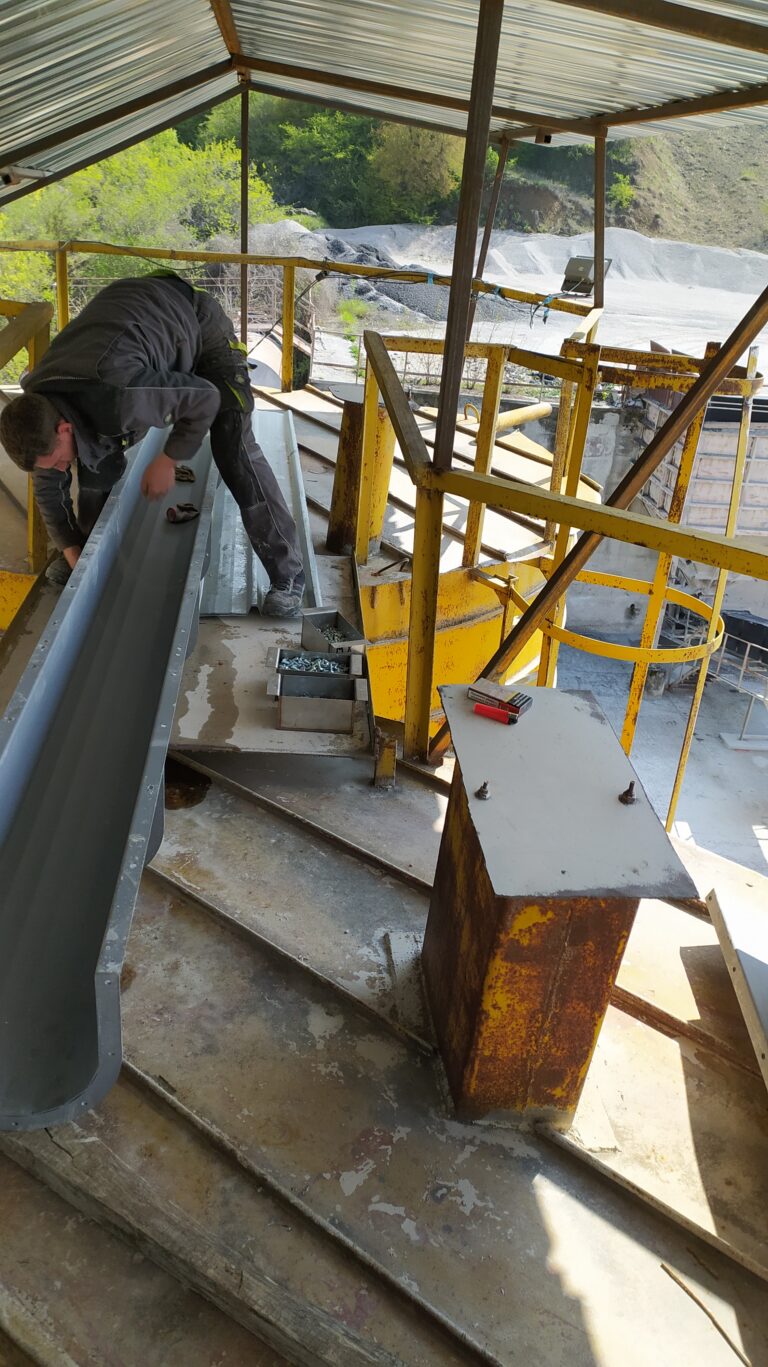
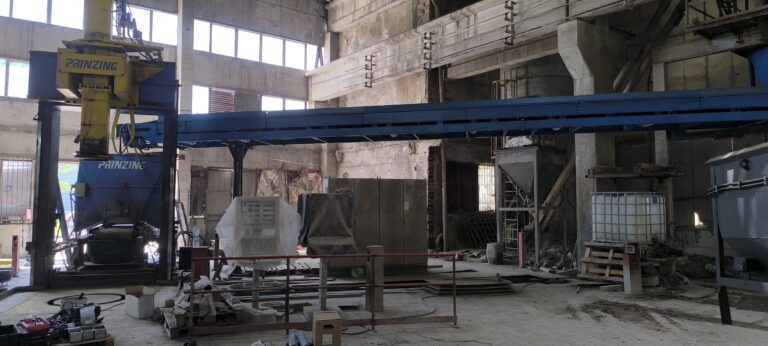
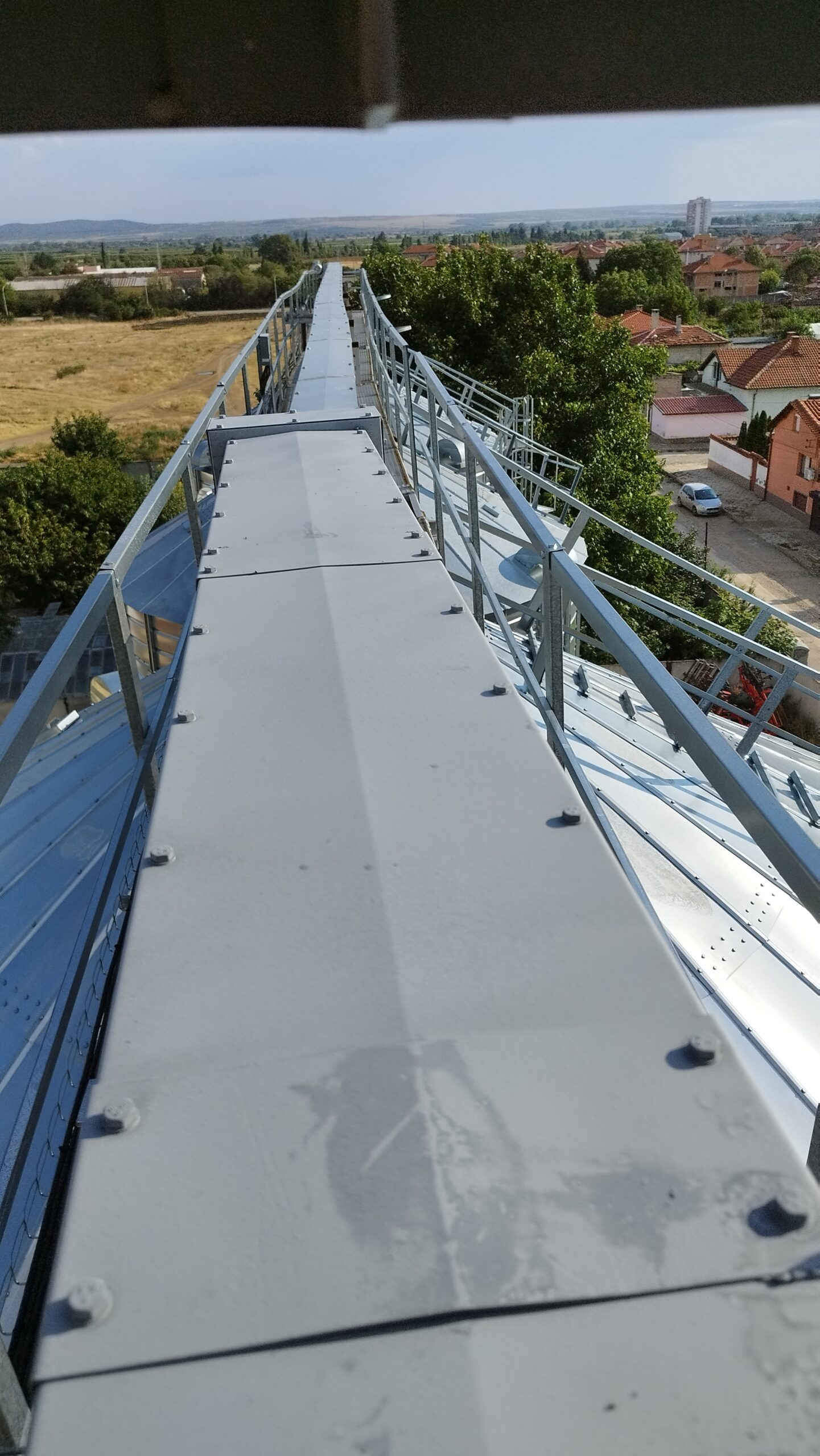
In grain stores and plants the screw conveyor is usually fixed – it is mounted to the silo, hopper or dryer and works as part of the process line together with bucket elevators and chain conveyors. It is made to the dimensions of the site, with inlets and outlets exactly where they are needed.
A mobile screw conveyor is on wheels and is moved between silos and yards when loading takes place in different places.
3. What determines capacity
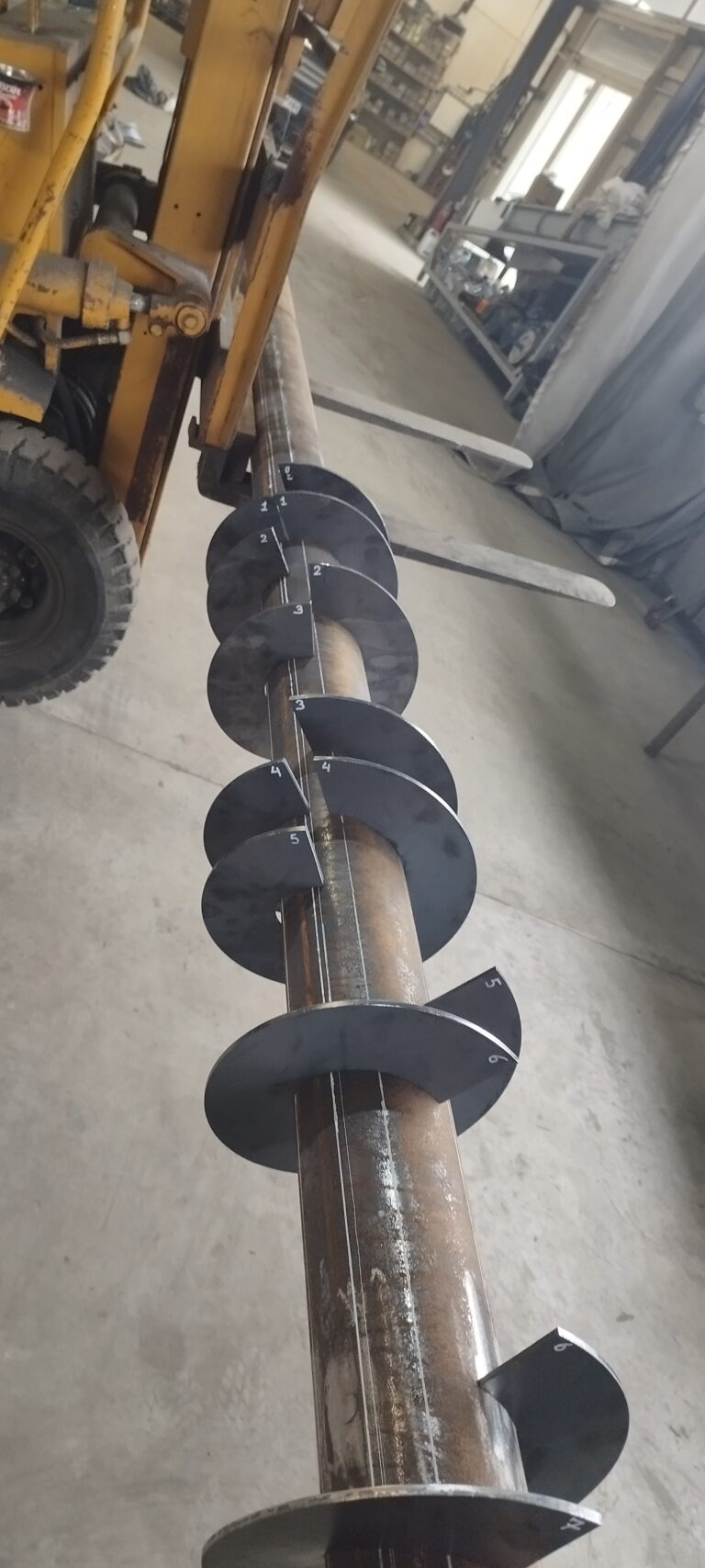
Capacity depends on the flight diameter, the speed and the angle the conveyor works at. The steeper it is, the less grain it moves per hour. So the required capacity, height and distance are considered together. More on the calculation in the article How to calculate screw conveyor capacity and power.
4. Drive
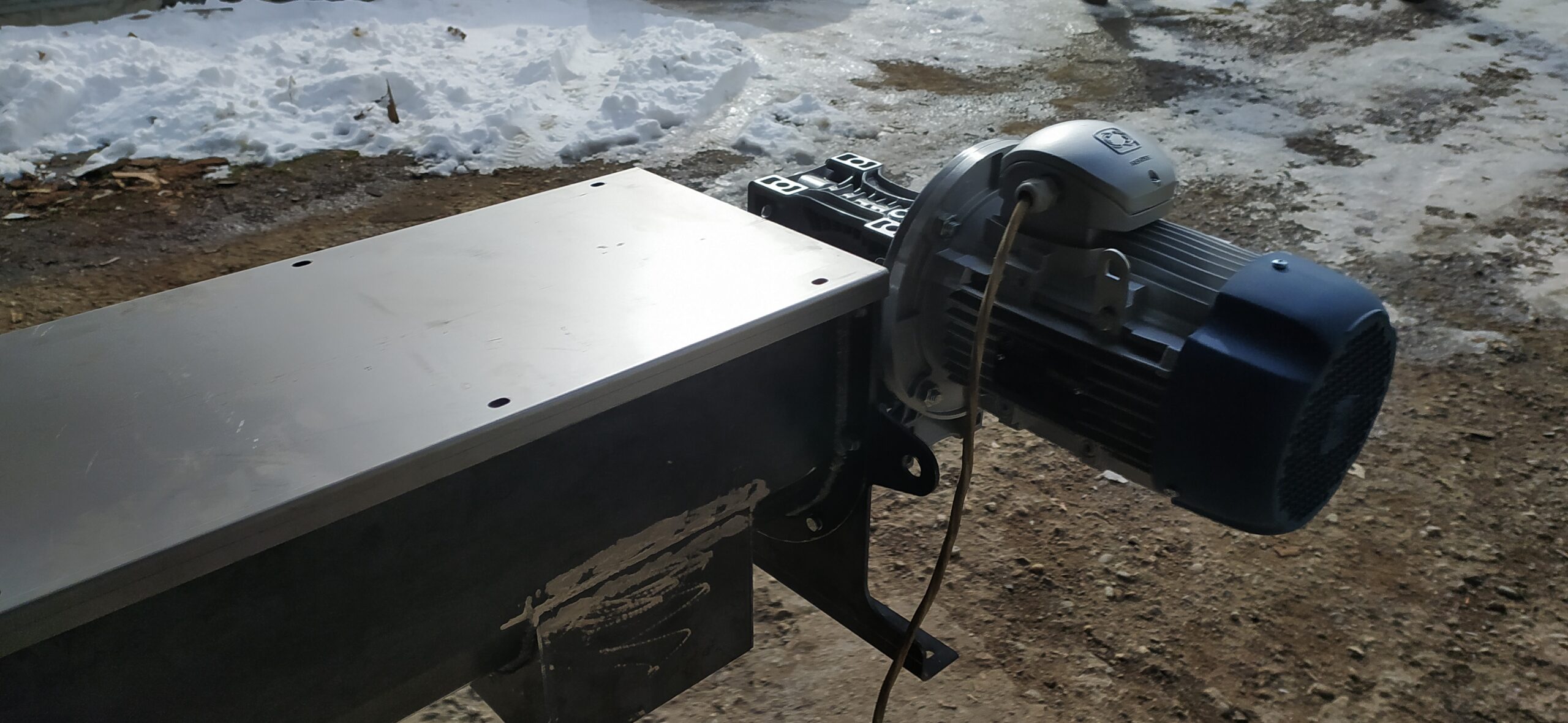
A fixed screw conveyor is driven by a geared motor mounted directly on the shaft. If capacity has to be adjusted – for example for dosing – a frequency inverter is added. Mobile screw conveyors can also be driven from a tractor PTO where there is no power supply.
5. New or used
A used screw conveyor is cheaper, but often has a worn flight, bearings and drive, and dimensions that do not exactly match the site. See 5 things to check on a used screw conveyor.
6. Common mistakes
- The conveyor is chosen by length alone, without taking the angle into account – and the capacity turns out lower than expected.
- Speeds that are too high break the grain.
- The screw conveyor is not matched to the elevator and silo, and material clogs at the transfer between machines.
What to send us
Tell us what grain you will convey, the capacity you need (tonnes per hour), where the route starts and ends, and how high the silo or hopper is. Also tell us what machines are before and after the conveyor. From this data we will propose the right screw conveyor.
Looking for a similar solution?
See the screw conveyors and bucket elevators we manufacture, or contact us for a quotation to your specification.
Subscribe to our newsletter
Get news about completed projects, technical articles and practical solutions for conveying systems. We send only useful content – no spam.