When a screw conveyor, chain conveyor or bucket elevator starts to stop, the first question is whether to repair it or replace it. The answer is not always “a new machine”. Repair is often faster, cheaper and puts the machine back to work for years. Sometimes, though, it only postpones the problem, and a few months later you pay twice. In this article we describe how we decide which is better – with the signs for each machine, the calculation we make and cases from our quotations.
1. What wears and how to recognise it
Most failures can be seen and heard before the machine stops. Here is what we look at when inspecting the different machines.
| Machine | What wears | How to recognise it |
|---|---|---|
| Screw conveyor | the flight (the edge gets thinner), bearings, seals, hanger bearings | capacity drops at the same speed, knocking, bearings heating up, dust at the flanges |
| Chain conveyor | the chain (stretches), paddles, sprockets, guides and trough bottom | the chain knocks and jumps, sprocket teeth are pointed, material stays on the bottom |
| Bucket elevator | the belt or chain, buckets, drums and sprockets | the belt slips, buckets catch the casing, material falls back into the boot |
| Belt conveyor | the belt, rollers, drive drum lagging, splice | the belt runs off to the side, rollers do not turn, slipping on start-up |
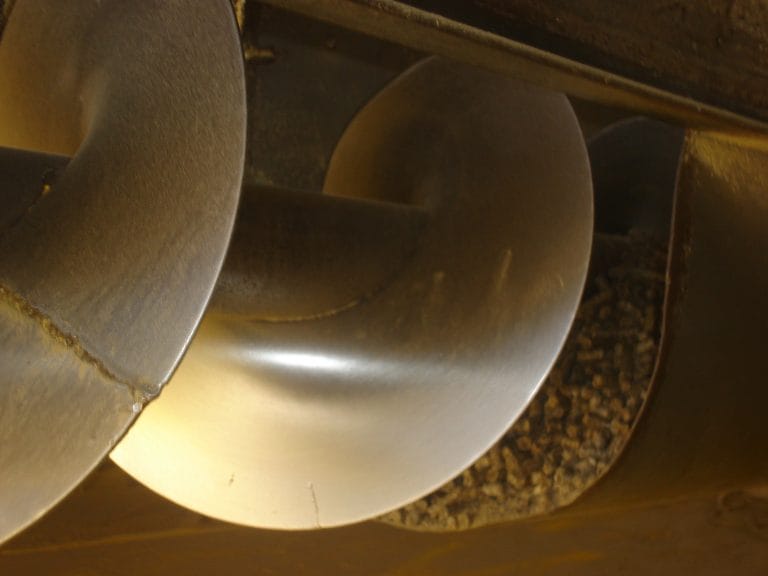
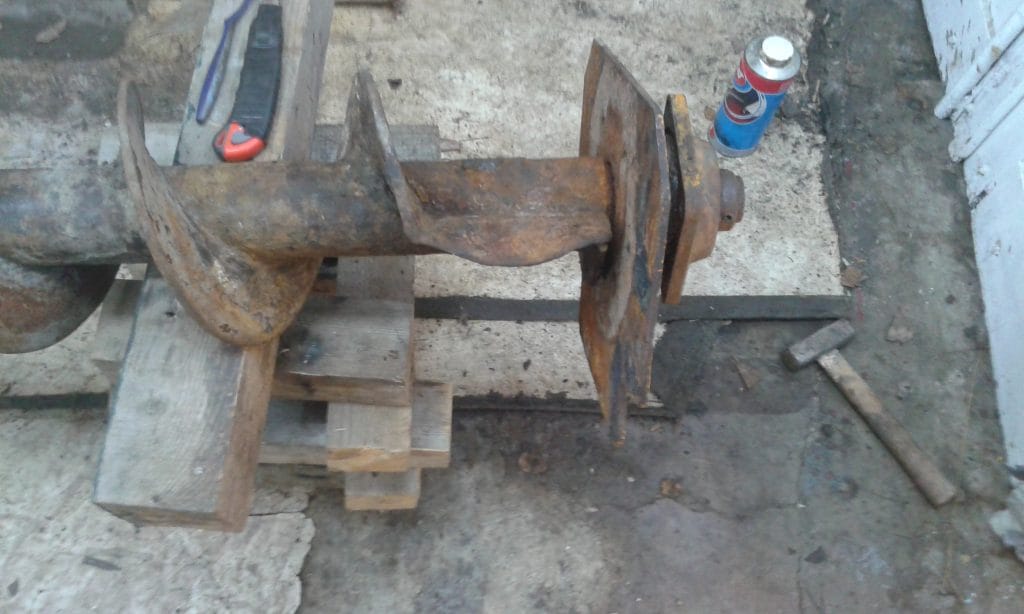
On screw conveyors the most common cause of falling capacity is a worn flight. As the edge gets thinner, the clearance between the flight and the trough or tube grows and some material falls back. The machine keeps working but carries less and uses more energy. When the clearance has become two to three times the original, the flight must be replaced.
2. The calculation: repair or new machine
The price of the repair alone does not say much. We compare the total cost over the next few years for both options:
Cost = price of the work + days of downtime × cost of one day of downtime + expected repairs until the end of the period
Repair usually wins on the first two parts: it costs less and the machine stops for a shorter time, because the casing, flanges and connections to the silo stay in place. A new machine wins on the third part if the old one is worn everywhere and other failures will start after the repair.
Example. The screw conveyor stops, and one day of downtime costs the plant €1,000. Repairing the flight and bearings takes 3 days on site, while replacing it with a new conveyor takes 2 days – but a new conveyor usually takes 4 weeks to manufacture, and the old one has to keep running in the meantime. If the casing is sound, repair is clearly better. But if the trough is already thin and will have to be replaced within a year, the calculation flips – it is better to replace the machine in one go.
3. When repair pays off
- the casing, trough or tube is sound and thick enough;
- only the moving parts are worn – flight, chain, buckets, belt, bearings;
- the capacity and material have not changed;
- the machine is built into a production line and replacing it would mean reworking the connections.
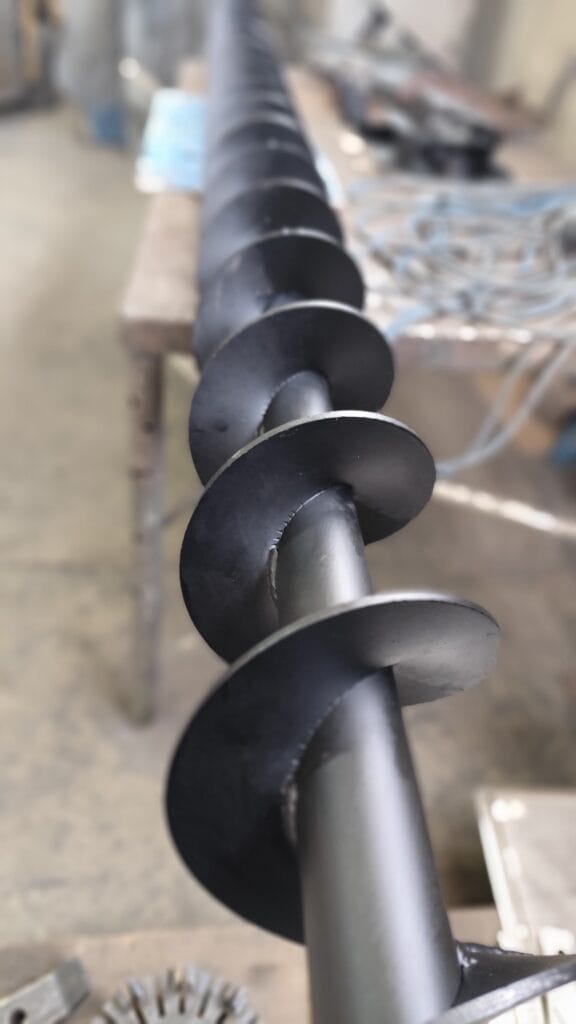
We make parts from a sample or a drawing, including for machines we did not build. In a repair, the new flight can be made of thicker or wear-resistant steel, so the next repair comes much later. That is why a repair often does more than restore the machine – it makes it more durable than when it was new.
4. When a new machine is better
- the trough or tube is thin or holed, and the frame is deformed;
- the same failure comes back after every repair – this often means the machine is wrongly sized or its purpose has changed;
- capacity has to increase or the material is different;
- the machine has to be moved or the production line is being rebuilt.
In these cases, repairing the old machine will not solve the problem. We redesign it for the new conditions and, where possible, keep the parts that are in good condition.
5. Cases from our work
| Machine and problem | What we proposed |
|---|---|
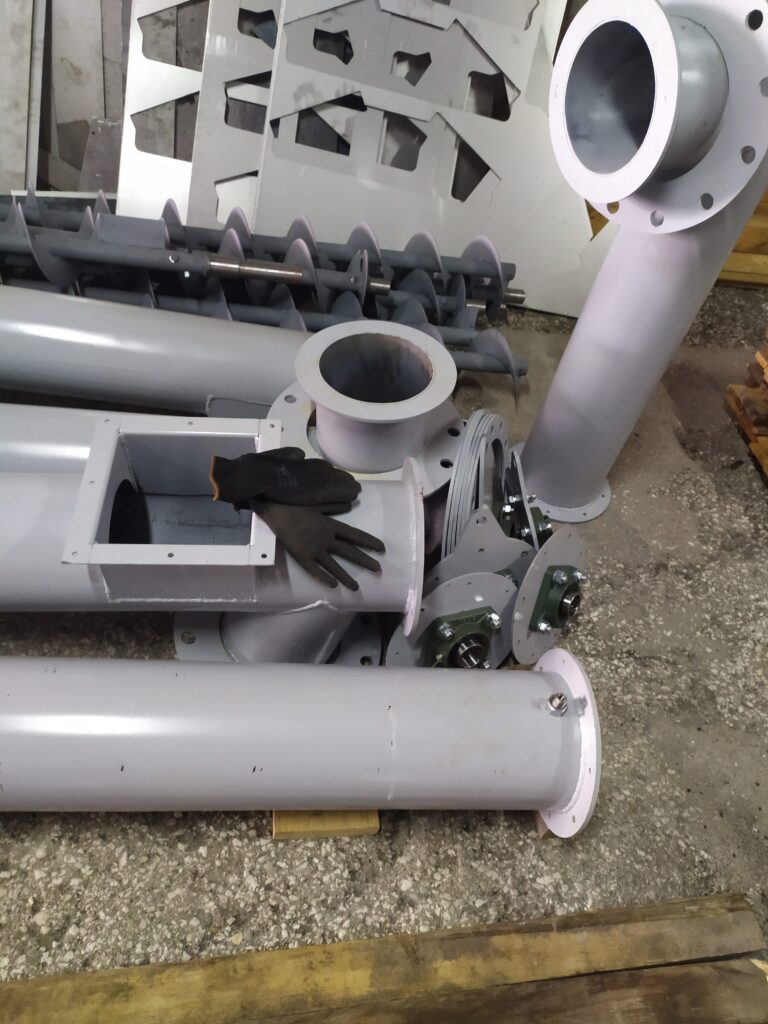
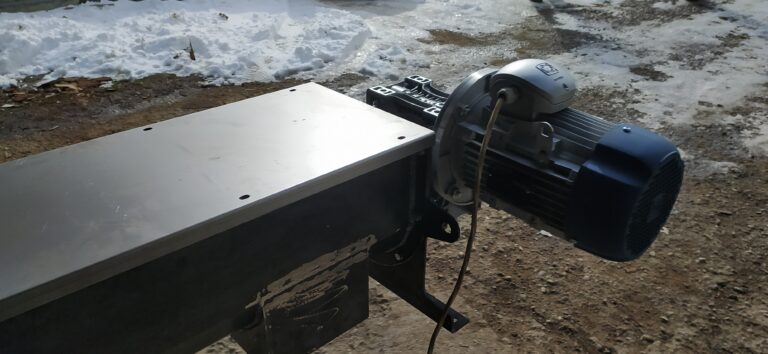
| Mobile tubular screw conveyor with worn body and shaft | keep the intake funnel, stand, motor and gearbox; replace the tube, screw shaft, seals and coating |
| Two screw conveyors with worn flights | new shaft, new 300 × 300 × 76 mm flight, 6/3 mm thick, new bearings, separators, new chain and sprockets |
| Bucket elevator with a torn belt | new 300 mm EP 630/4 elevator belt, 36 m, punched, spliced on site, and 70 buckets fitted |
| Chain conveyor with worn chain | new 110 m Z100 chain with 76.2 mm pitch, welded 8/5 mm paddles, new shafts and sprockets |
| Bucket elevator, parts to the client’s drawing | new elevator head and legs in S275JR to the client’s drawings |
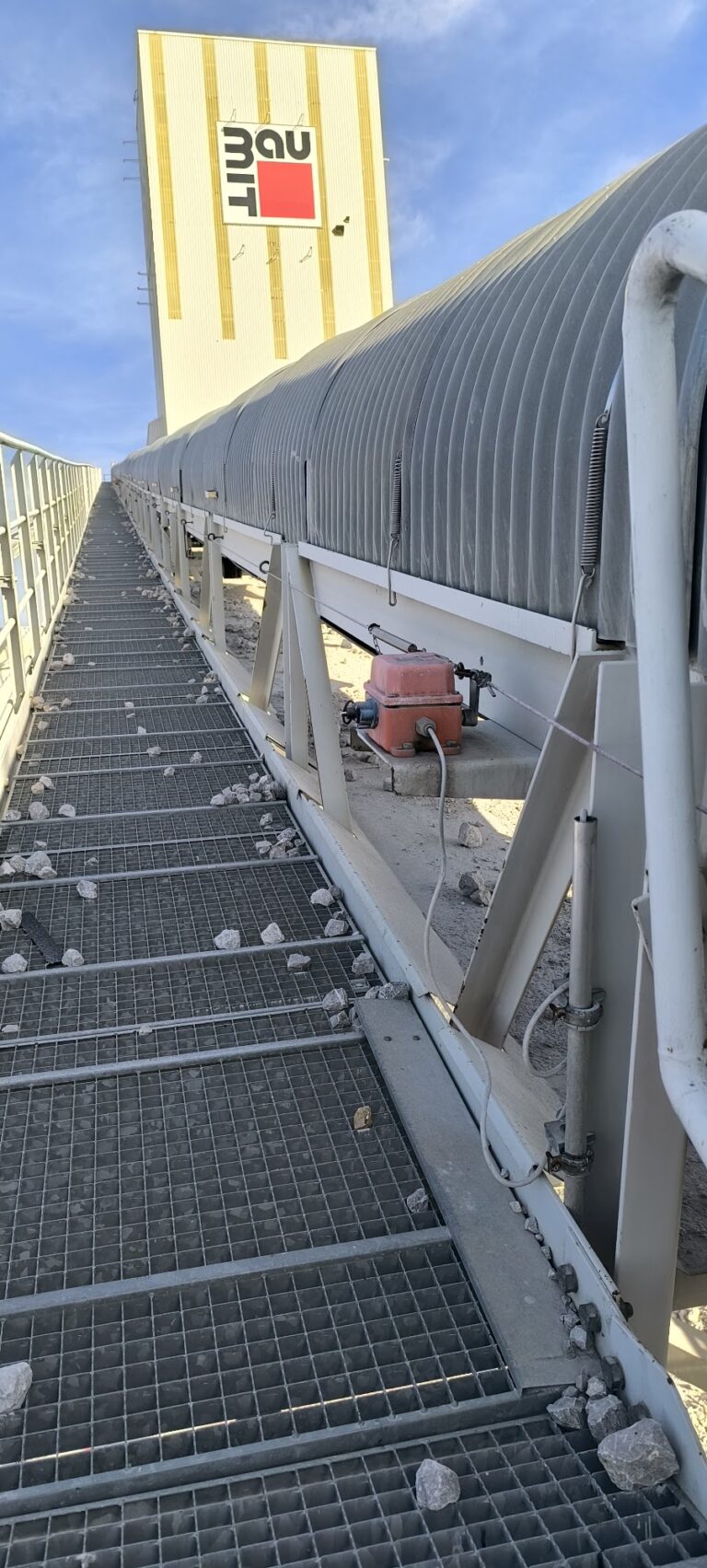
| Belt conveyor in a process line | parts for the existing conveyor to dimensions taken on site, plus a separate new conveyor |
6. Common mistakes
- Waiting until it stops completely. A machine that stops suddenly usually damages neighbouring parts too. A flight that could have been replaced on schedule takes the bearings and the shaft with it.
- Replacing only the visible part. A new chain on a chain conveyor with pointed sprockets wears out in months. A new elevator belt on worn drums slips.
- Ordering parts without exact dimensions. The pitch, diameters and thickness of the flight must be measured on site or taken from a drawing. Otherwise the part does not fit and weeks are lost.
- Repairing without changing the cause. If the flight wore out in a year, the same flight will wear out again in a year. Then you need thicker or more wear-resistant material.
How to decide
Send us photos of the machine and the worn parts, the dimensions you have, and a description of the problem. Then we tell you what can be repaired and what must be replaced, with a price and lead time for each option, so you can decide with the numbers in front of you.
See also what a stopped line costs and screw flights and segments made to size.
Looking for a similar solution?
Need a repair or a new machine? Contact us for a quotation to your specification.
Subscribe to our newsletter
Get news about completed projects, technical articles and practical solutions for conveying systems. We send only useful content – no spam.