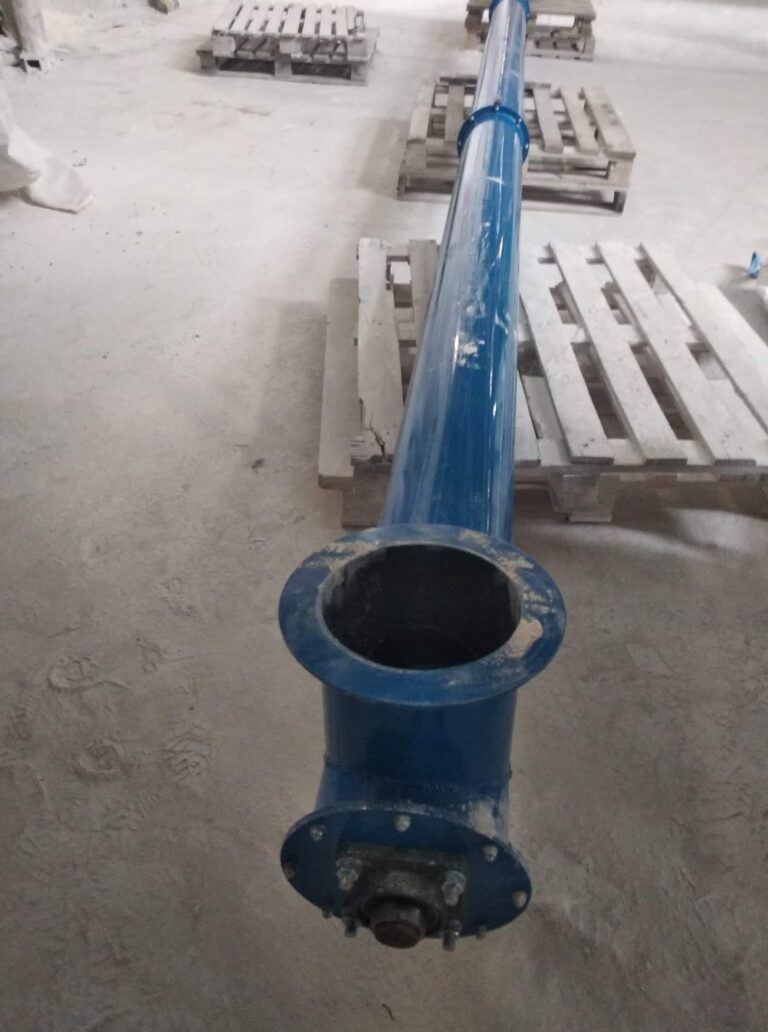
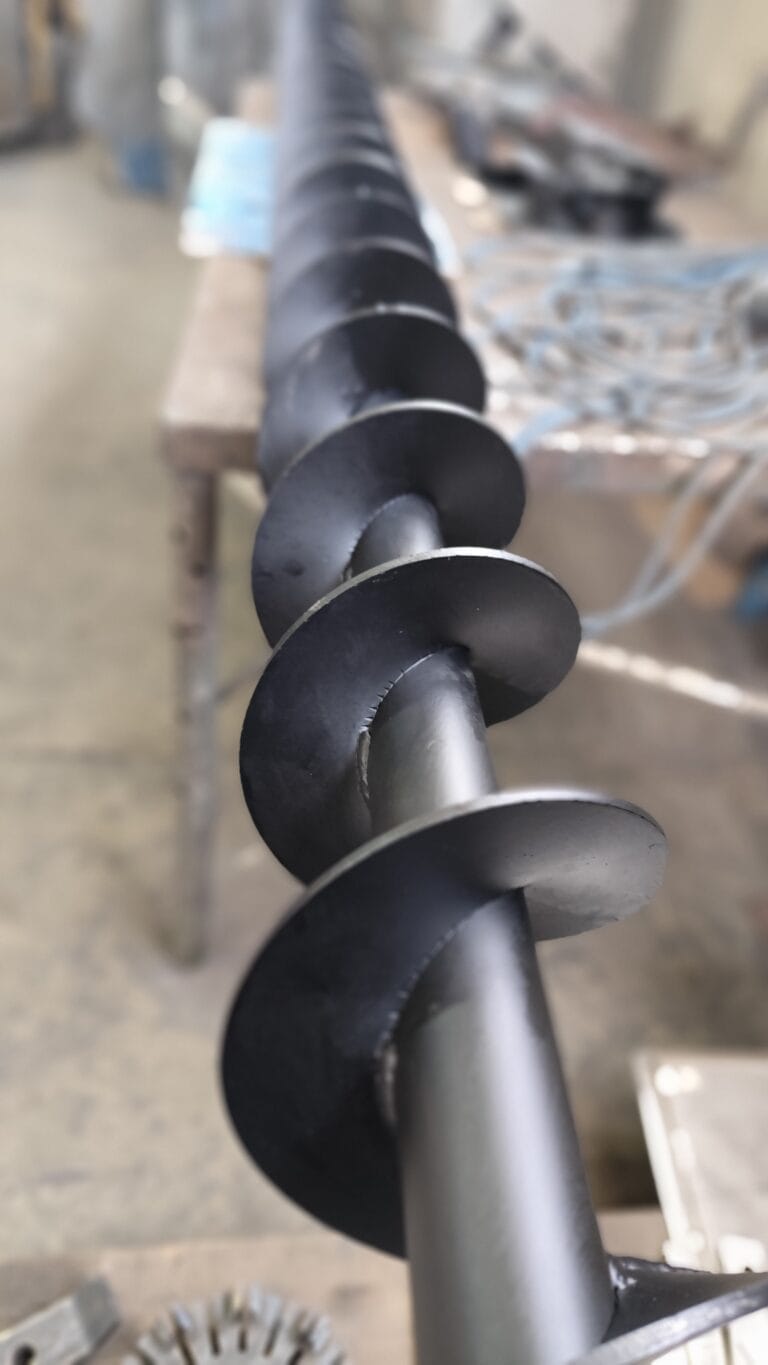
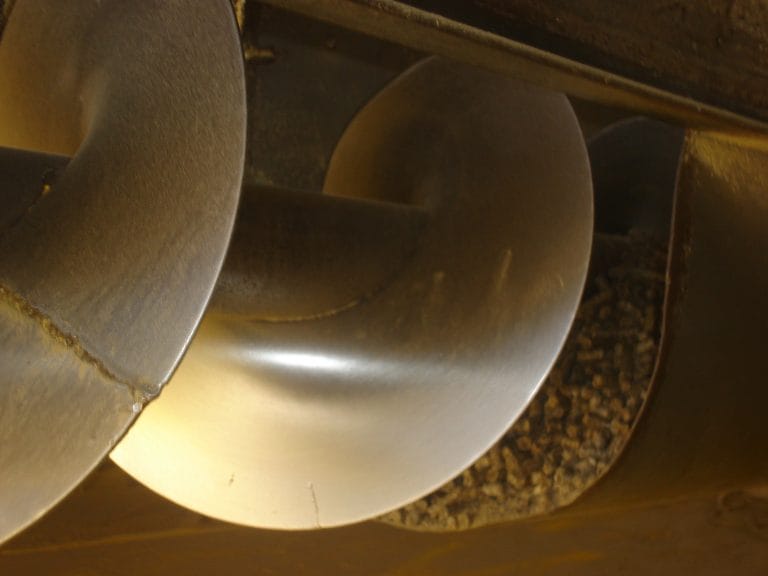
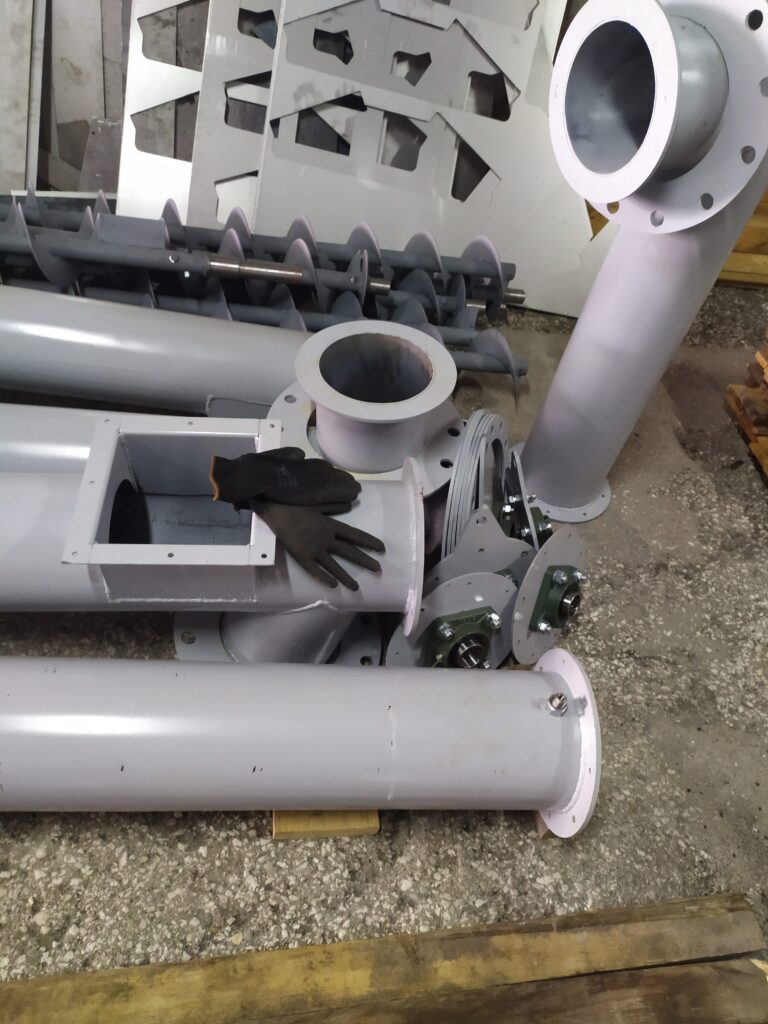
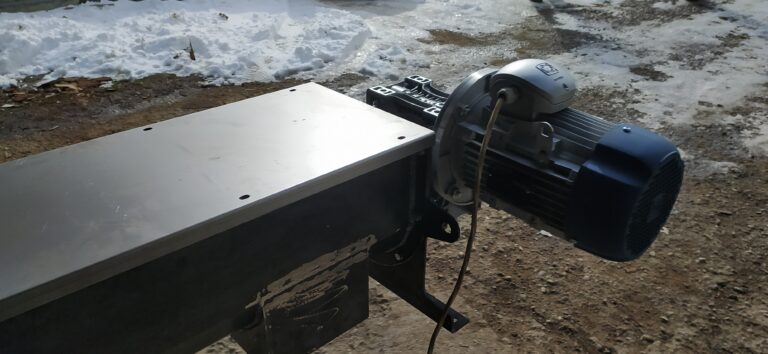
The chain conveyor, also known as a redler, is one of the most widely used machines for horizontal conveying of bulk materials in grain stores, feed mills, cement and lime plants and heavy industry. From the outside it looks like a simple closed channel, but a few decisions inside it determine whether it will run for years without trouble or stop every season. In this article we explain how a chain conveyor works, which parts decide how long it lasts, and when it is the better choice for a process line.
1. How a chain conveyor works
An endless chain with paddles moves inside a closed casing. The material enters through the inlet at the top, settles on the bottom, and the paddles push it as a dense mass to the outlet. The chain returns along the upper part of the casing. The drive is at one end, and at the other end is the take-up station, which keeps the chain correctly tensioned.
Because the material moves as a mass rather than being thrown or tipped over, the chain conveyor carries a large capacity at a low chain speed. This means less friction, less dust and less breakage of the material – important for grain, pellets and granulates. The casing is closed, so the material is not spilled and does not get wet.
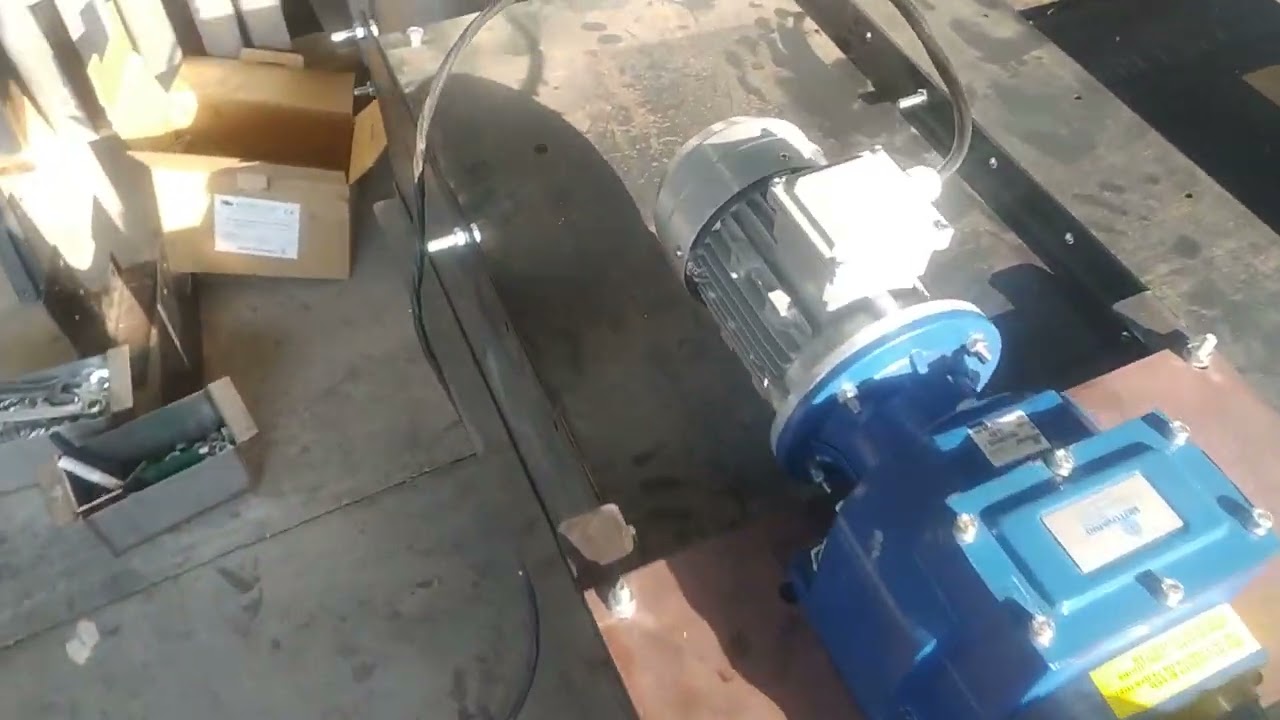
See a chain conveyor in operation:
2. The parts that determine durability
| Part | What is chosen | Why it matters |
|---|---|---|
| Chain | single or double, depending on width and load | a correctly chosen and tensioned chain runs smoothly, without impacts |
| Paddles | polyamide, polyethylene or steel, shaped for the material | sticky material releases more easily from polymer paddles, abrasive material wears steel ones less |
| Bottom and guides | carbon steel or wear-resistant liners – Hardox, polyethylene | the bottom takes all the friction of the material and wears first |
| Shafts and sprockets | sized to the chain | a worn sprocket quickly wears a new chain too |
| Drive | geared motor with an adequate service factor and overload protection | if the conveyor jams, the protection stops it before the chain breaks |
| Casing | painted carbon steel, hot-dip galvanised or AISI 304 / 316 stainless steel | the choice depends on the material and whether the machine is outdoors |
The chain and the sprockets work as a pair. If only the worn chain is replaced and the old sprockets are kept, the new chain wears out within months. That is why both are inspected together during a repair.
3. What the capacity depends on
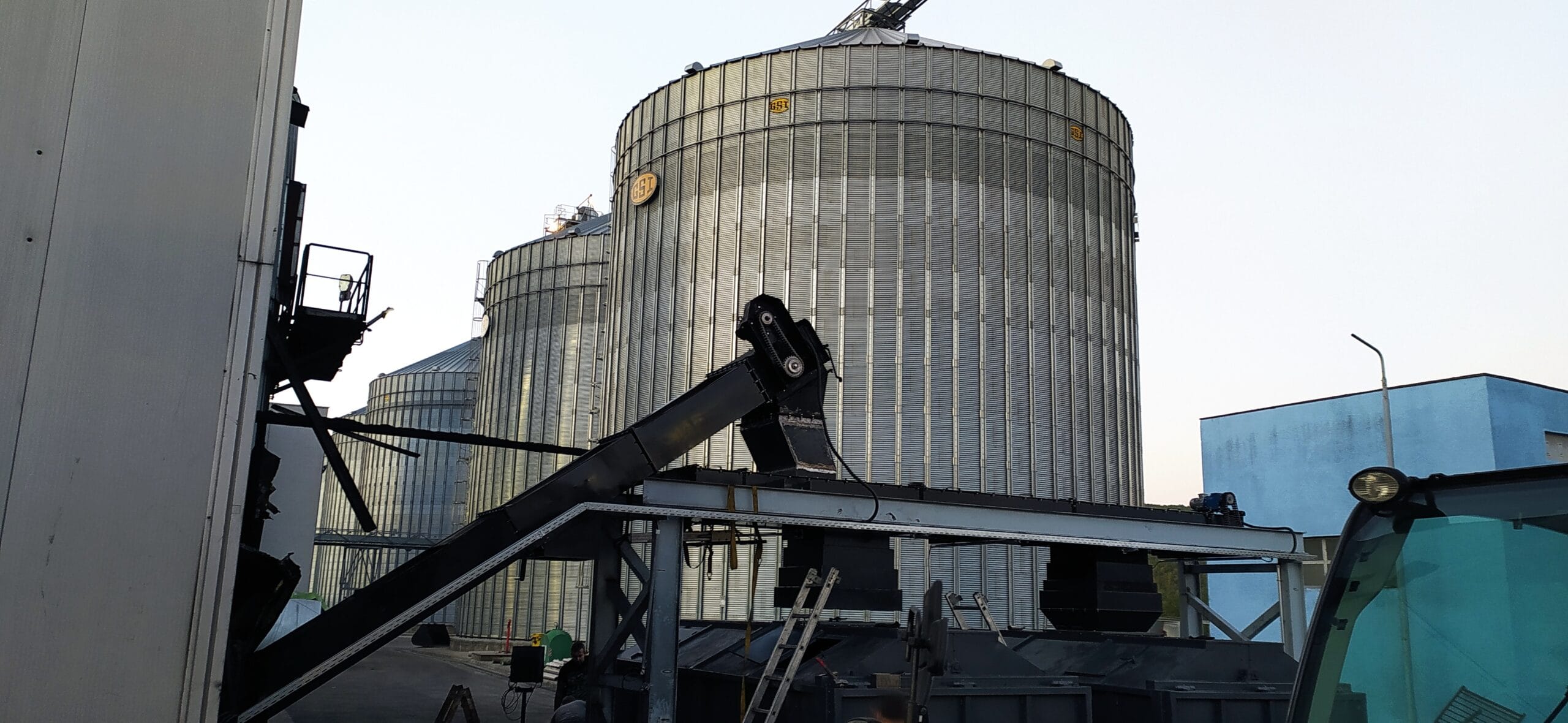
The capacity of a chain conveyor is determined by the width and height of the casing and by the chain speed. Our chain conveyors are built with casing widths from 150 to 1400 mm and capacities from 5 to over 200 m³/h. The standard length is up to 50 m, and longer routes are built from modules that are easier to install.
A higher chain speed is not the right way to increase capacity. It increases the wear of the chain, the bottom and the paddles. If more capacity is needed, it is better to choose a wider or taller casing.
4. When a chain conveyor is the better choice
- Large capacity over medium and long distances – where a screw conveyor becomes too heavy and uses a lot of energy.
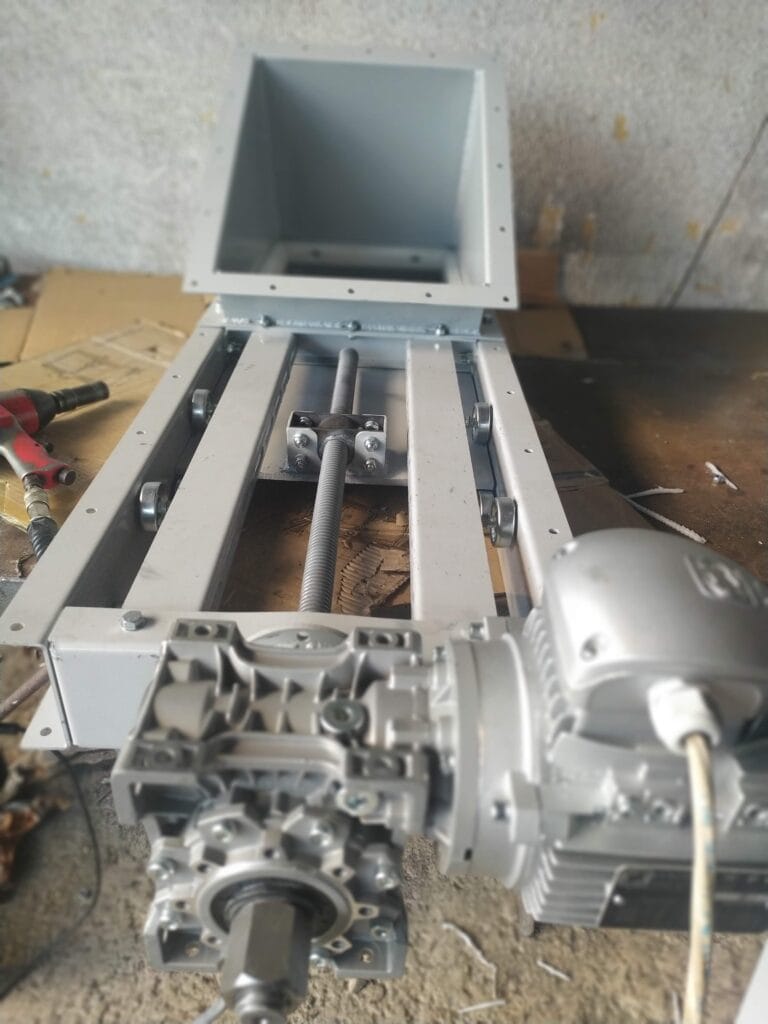
- Several outlets along the route – the material can be distributed to several silos or hoppers, with each outlet opened and closed by a slide gate.
- 24/7 operation – with a correctly chosen chain and a wear-resistant bottom, a chain conveyor is built for continuous duty.
- Material that must not break – grain, pellets and granulates, which are carried as a mass without being tipped over.
5. Signs that a chain conveyor needs inspection
- the chain knocks or jumps at the sprockets;
- the sprocket teeth are pointed or worn thin;
- material remains on the bottom after the conveyor stops;
- the take-up station has reached the end of its travel and the chain can no longer be tensioned.
Most of these problems can be fixed without a new machine – with a new chain, sprockets, paddles or bottom liners.
6. What to know before requesting a quote
The more we know about the task, the more accurately we can size the machine. It helps to have at hand the material and its bulk density, the required capacity, the length of the route and whether it is inclined, how many outlets are needed, and whether the machine will work outdoors or in shifts. If some of this information is missing, that is not a problem – we clarify it together.
For more on types, materials and technical data, see the page on chain conveyors and redlers.